India is poised to significantly upgrade its underwater combat capabilities through the ambitious Project-75I (P-75I) initiative.
Partnering with Germany’s thyssenkrupp Marine Systems (TKMS) and domestic manufacturer Mazagon Dock Shipbuilders Limited (MDL), the Indian Navy is set to acquire six advanced, non-nuclear attack submarines in a deal estimated at nearly ₹70,000 crore ($8 billion).
This collaboration will yield the largest conventional submarines ever inducted into the Indian fleet, reflecting a major strategic shift in maritime defence.
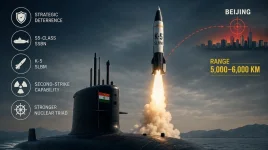
According to defence sources, the new submarines will be heavily customized hybrids based on Germany's cutting-edge U-212CD architecture.
While European navies, such as those of Germany and the Netherlands, are procuring standard U-212CD platforms with a submerged displacement of roughly 2,800 tons, the Indian models will undergo massive enlargement.
Internally referred to as the "U-214NG" (Next Generation), these platforms will be specially tailored to meet the rigorous operational demands of the Indian Navy.
The upcoming German-designed variants are projected to feature a submerged displacement of around 3,400 to 3,500 tons.
This sheer size will comfortably outstrip the current record-holders in India’s conventional fleet—the Russian-origin Sindhughosh-class (Kilo-class) boats, which displace about 3,076 tons underwater.
Furthermore, when compared to the French-designed Kalvari-class submarines recently built under Project-75, which displace between 1,700 and 1,800 tons, the future TKMS submarines will have nearly double the underwater mass.
The substantial increase in weight and length directly supports India’s strategic requirements in the Indian Ocean Region and the broader Indo-Pacific.
As Chinese naval presence expands, the Indian Navy demands submarines capable of extended patrol missions, greater operational reach, and minimal acoustic detection.
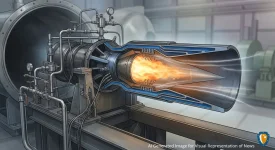
The expanded hull space accommodates crucial upgrades, including a highly advanced Air Independent Propulsion (AIP) system for prolonged submersion without needing to surface.
It also allows for larger battery sections, expanded sensor arrays, indigenous combat management systems, and a vertical launch system to increase the payload of heavy torpedoes and land-attack cruise missiles.
Beyond enhancing pure combat readiness, this program is a cornerstone for India’s push toward manufacturing self-reliance.
Under comprehensive Transfer of Technology (ToT) agreements, all six submarines will be built domestically at MDL in Mumbai.
Open-source data indicates that the indigenous manufacturing content is expected to rise progressively from 45 percent in the first vessel to 60 percent by the final boat, ensuring that India establishes a robust and durable ecosystem for future submarine construction.