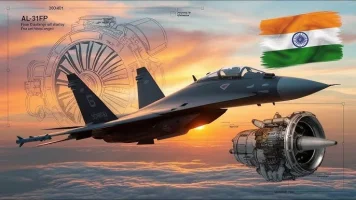
The Indian Air Force (IAF) is fundamentally transforming its national security shield by upgrading the Integrated Air Command and Control System (IACCS).
Previously a high-speed automated network, the system is now evolving into an AI-native decision-support architecture.
Developed in collaboration with Bharat Electronics Limited (BEL), this "digital spine" of India’s air defence is being redesigned to detect, track, and neutralise aerial threats with unprecedented speed and precision.
Intelligent Sensor Fusion: Creating a Clearer Picture
The core of this upgrade lies in how the IAF processes information.Traditionally, human operators had to manually correlate different radar tracks to identify a target.
The new AI layer automates this by instantly merging data from:
- Ground-based radars across the country.
- AWACS (Airborne Warning and Control Systems) like the indigenous Netra.
- Space-based sensors and satellite feeds.
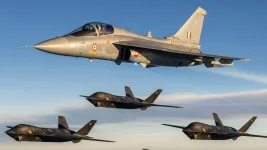
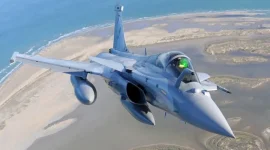
- Fighter aircraft sensors, including the Rafale and Tejas.
This is vital for detecting "stealthy" or low-observable targets and decoys that might trick a single radar.
The system now cross-references movement patterns to confirm a threat's identity, significantly reducing the chances of false alarms.
Faster "Kill-Chains" via Decision Support
In modern warfare, seconds matter. The new Decision Support System (DSS) acts as an intelligent advisor to military commanders.Once a threat is confirmed, the AI calculates the best way to stop it by evaluating altitude, speed, and trajectory.
Instead of waiting for manual calculations, the system instantly recommends the most efficient weapon for the job, such as:
- Long-range:Project Kusha (India’s upcoming indigenous long-range system) or the S-400.
- Medium-range: The Akash-NG (New Generation) missile system.
- Air Intercept: Deploying Tejas or Rafale fighters.
Managing Complex "Swarm" Attacks
Modern threats often arrive in "swarms"—a mix of cruise missiles, drones (UAVs), and manned jets appearing all at once.The AI upgrade introduces dynamic threat prioritization. It scores every incoming target based on how dangerous it is and its proximity to high-value assets like cities or bases.
This ensures that expensive, high-end interceptors are saved for the most dangerous threats, while smaller drones are handled by appropriate short-range systems.
Strengthening Tri-Service "Jointness"
For a truly robust air defence, the Army, Navy, and Air Force must work as one.The upgraded IACCS is designed to "talk" directly to other service networks, such as the Indian Army’s Akashteer (an automated air defence control system) and naval warships.
This interoperability ensures that all three services see the same map, drastically reducing the risk of fratricide (accidental friendly fire) in crowded and chaotic airspaces.
Moving from Reactive to Predictive Defence
Under the UDAAN initiative, the IAF is using machine learning to look into the future.By analyzing years of flight data and historical patterns, the AI can predict likely routes an enemy might take or identify time windows when an attack is most probable.
- Predictive Analytics: Allows the IAF to pre-position missiles and jets before a threat even appears.
- Proactive Stance: Shifts the strategy from simply reacting to an intrusion to anticipating and blocking it in advance.
The Road Ahead: Challenges and Resilience
Despite these massive leaps, the transition to AI-driven defence comes with hurdles.The IAF is focusing heavily on cybersecurity to protect the network from hacking.
There is also the challenge of ensuring AI remains reliable during Electronic Warfare, where enemies might try to "jam" or confuse sensors with digital noise.
The move away from legacy, manual planning toward a near-real-time automated loop represents a massive leap in India's technological sovereignty.
This AI integration ensures that India’s air defence remains resilient against the saturation-style attacks characteristic of 21st-century conflicts.