IAF Plans to Deploy First Four Tejas Mk1A Sqn at Rajasthan Forward Air Bases to Improve Pakistan Border Defence

IAF Plans to Deploy First Four Tejas Mk1A Sqn at Rajasthan Forward Air Bases to Improve Pakistan Border Defence


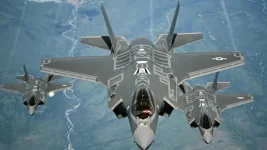
The Indian Air Force (IAF) is set to significantly bolster its western front by deploying the first four squadrons of the indigenous Tejas Mk1A fighter jet to forward air bases in Rajasthan.

This strategic move aims to enhance rapid response capabilities and ensure high operational frequency along the border with Pakistan.

Strategic Hubs at Nal and Phalodi​

According to sources, Nal Air Force Station in Bikaner will serve as the primary base for the new fleet.

It is scheduled to host the first and third squadrons of the Tejas Mk1A as they are inducted.

These advanced aircraft will replace the veteran MiG-21 "Bison" units, which have been the mainstay of the base for decades.

Phalodi Air Force Station, another critical forward location in Rajasthan, has been designated to house the second Tejas Mk1A squadron.

Authorities are currently expanding the base's infrastructure to support a growing number of indigenous fighter jets in the coming years.

Together, Nal and Phalodi will form the core of India’s Light Combat Aircraft (LCA) operations in the western theatre.

Shift in Operational Doctrine​

The decision to station these agile, modern platforms so close to the international border reflects a shift in the IAF’s combat strategy.

By positioning the Tejas Mk1A at forward bases, the Air Force minimizes the time required to respond to aerial threats.

This proximity allows for a sustained "Quick Reaction Alert" posture and enables the fleet to fly a higher number of sorties during active contingencies.

Advanced Capabilities and Infrastructure​

The transition from the legacy MiG-21s to the Tejas Mk1A represents a major technological leap for India's border defence.

The Mk1A variant is equipped with:
  • AESA Radar: Providing superior target detection and tracking.
  • Electronic Warfare (EW) Suite: Enhanced protection against enemy radar and missiles.
  • BVR Missiles: The ability to engage threats from long distances using indigenous weapons like the Astra.
  • Mid-air Refueling: Extending the range and endurance of missions.
To prepare for these arrivals, both Nal and Phalodi have seen extensive infrastructure developments.

These include the construction of hardened aircraft shelters (HAS) to protect the fleet from external strikes, as well as modernized maintenance hangars and specialized mission planning centres.

Strengthening Atmanirbhar Bharat​

The deployment follows a massive push for self-reliance in the defence sector.

The IAF has a total of 180 Tejas Mk1A jets on order from Hindustan Aeronautics Limited (HAL).

This roadmap not only modernizes the fighter fleet but also ensures that India’s most sensitive borders are protected by locally developed technology, reducing dependence on foreign spare parts and maintenance during times of conflict.
 
HAHA LOL!
headline is like joke to me, given the plight of HAL & IAF!

Its akin to say, i would fly out to Planet Saturn first to spend night to see all the moons in my WARP DRIVEN SPACE PLANE!!
-- Note: catch is when this space plane would be available ???
one of my friend started his career at HAL factory floor, and he saw this MODEL of LCA, as of May 2026 he retired but good lord mercy, IAF haggling with HAL to deliver it in combat ready form.
Not sure why they even need it, just go full force on AMCA use economies of scale and export to make it like staple plane using private firms and ditching this HAL rubbish.
 
Last edited:
Haha, People comment without knowing the things. Tejas was designed by ADA, bel and indian air force with GE-404 engines and other imported components. HAL was just an observer in design phase. HAL is just responsible for manufacturing it and delivering.
 
@ank321
Haha, People comment without knowing the things. ? ?
whats the dispute here? HAL had this model sitting at HAL factory floor. HAL is the physically assembling it. HAL employees had lunch sitting around it.
 
Haha, People comment without knowing the things. Tejas was designed by ADA, bel and indian air force with GE-404 engines and other imported components. HAL was just an observer in design phase. HAL is just responsible for manufacturing it and delivering.
Whatever it is responsible for it was supposed to delivered more than 2 years back...the technologies they are proud of now have become obsolete and irrelevant ...these aircraft are now just part of squad numbers and weapons delivery....the organization needs to be privatizsed for it to be relevant in todays world
 
All is not lost, I understand the frustration.
But Tejas mk1a is still a best alternative against the low cost JF17 blunder which is produced by Pakistan at its Kamra facility.

Indian Defence analysts understand that Tejas mk1a cant carry Astra mk3...hence theyre relying more on standoff strikes using Astra mk1 and hopefully/potentially Astra mk2. I am not sure about jamming suites exact capability, but it seems DRDO is working hard to ensure the jamming suite of Tejas mk1a remains competent for the foreseeable future.

There was some upgrades with regards to its pilon as well to be able to carry dual ASRAAM missiles in the same pillion. It that is successful that Tejas mk1a will be able to carry more missiles.
 
Tejas flight time is of 30 to 40 mins in full tank. How can this plane able to meet its defencive or offencive role in such a small time. Placing it near border will not be a easy. Enemy can destroy it on ground in war situation.
 

Forum statistics

Threads
7,167
Messages
65,698
Members
5,351
Latest member
Tennysonnidhii
Back
Top