- Views: 856
- Replies: 1
The Indian Air Force (IAF) is pushing for unprecedented domestic manufacturing in its latest fighter jet acquisition.
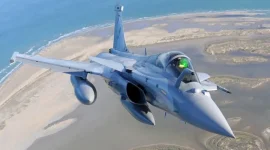
Under the Medium Role Fighter Aircraft (MRFA) framework, New Delhi is pursuing a Government-to-Government (G2G) agreement with France to procure 96 Rafale F4 jets, mandating that up to 60 percent of the aircraft's components be manufactured within India.
India officially submitted a Letter of Request (LoR) to the French government in late May, initiating the negotiation process.
According to defence sources, Paris is scheduled to present its formal response by September to meet the requested timeline.
If both nations successfully finalise the terms and sign a contract by early 2027, deliveries are projected to begin in 2030.
The initial 18 aircraft will be delivered directly from Dassault Aviation's facilities in France in a flyaway condition, while the remaining 78 will be built in India.
The proposed production roadmap outlines a phased approach to domestic manufacturing, deeply aligning with the government's 'Atmanirbhar Bharat' initiative.
The first Rafale assembled on Indian soil will be required to have a minimum of 40 percent local content.
As the production lines mature, this localisation rate will progressively scale up, reaching 60 percent for the final batches.
Achieving this historic milestone will require extensive technology transfer from French original equipment manufacturers (OEMs).
Indian public and private sector enterprises will need to develop the capacity to produce complex aerostructures, advanced avionics, mechanical assemblies, and mission-critical wiring.
In a parallel move to standardise the national inventory, the IAF plans to upgrade its currently operational fleet of 36 Rafale F3-R fighters to the newer F4 configuration.
Upgrading the existing jets ensures that the entire Rafale fleet utilises common software, mission systems, and maintenance protocols.
This standardisation will drastically reduce logistical complexities, lower servicing costs, and streamline operational deployments for the Air Force.
The Rafale F4 standard marks a significant technological leap for the platform.
While earlier variants focused heavily on aerodynamic performance, the F4 standard is designed specifically for network-centric warfare.
Open-source data reveals that the F4 package includes powerful upgrades to the Thales RBE2 Active Electronically Scanned Array (AESA) radar, integration of the highly accurate Talios targeting pod, and advanced helmet-mounted displays for pilots.
It also boasts state-of-the-art satellite communication links, software-defined radios, and secure high-capacity data servers to enhance real-time battlefield collaboration.
These sophisticated networking features are built to integrate seamlessly with highly contested, multi-domain environments.
The F4 standard also serves as a bridge to the future, ensuring that the Rafale remains fully interoperable with next-generation assets like loyal wingman drones and France’s broader Future Combat Air System (FCAS).
Beyond significantly boosting the combat edge of the Indian Air Force, this monumental G2G deal holds the potential to transform India's domestic aerospace sector.
The strict 40-60 percent localisation mandate will cultivate a highly skilled supply chain, bring cutting-edge aviation technologies to Indian shores, and create a sustainable maintenance ecosystem for decades to come.