- Views: 2K
- Replies: 4
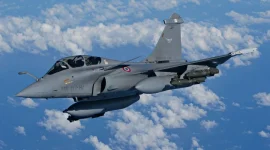
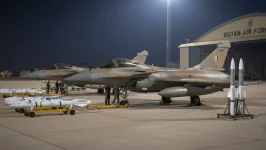
The ongoing talks between India and France's Dassault Aviation for the procurement of 114 multi-role Rafale combat jets have reached a pivotal stage.
The emphasis has expanded from merely buying the aircraft to securing lasting technological independence regarding future weapons combinations and jet upgrades.
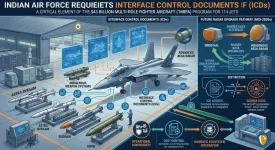
The core of this negotiation is the Interface Control Document (ICD). This vital technical software framework will dictate whether India can independently link its own domestically produced weapons to the Rafale and upgrade the jet's combat software without relying on the foreign manufacturer.
The Indian Air Force (IAF) has drawn up a specific list of advanced, home-grown weapons it expects to be compatible with the new fleet.
A key priority is the Astra Mk2, a beyond-visual-range air-to-air missile.
Capable of striking targets approximately 220 kilometres away, the Astra Mk2 will vastly improve the aircraft's aerial combat superiority.
Adding this missile to the Rafale's arsenal represents a significant leap towards ending the nation's reliance on imported air-to-air weaponry.
Another critical requirement is the integration of the BrahMos-NG (Next Generation) cruise missile.
This weapon is a smaller, lighter variant of the renowned BrahMos supersonic missile, expected to boast a range exceeding 300 kilometres.
By successfully pairing the BrahMos-NG with the Rafale, the IAF will secure a powerful capability to strike heavily guarded land and naval targets from a safe distance, substantially broadening the fighter's tactical reach.
Current development timelines indicate that the BrahMos-NG is slated for its first flight test around 2026, with production expected to commence by 2027-28, aligning well with the broader modernisation schedule of the IAF.
The IAF's strategy also incorporates the Rudram family of anti-radiation missiles—specifically the Rudram-1, Rudram-2, and Rudram-3. These missiles are purpose-built for the suppression and destruction of enemy air defence systems.
In modern aerial conflicts, such systems are indispensable, allowing pilots to safely dismantle hostile radar networks and surface-to-air missile batteries in heavily contested airspace.
Furthermore, the IAF is actively pursuing compatibility for two subsonic air-launched cruise missiles that are presently in the development phase.
Once ready, these munitions will add yet another layer to the Rafale's long-range precision strike abilities across various combat scenarios.
Integrating these diverse systems highlights India's wider objective of establishing a completely self-reliant weapons ecosystem for its primary combat jets.
Alongside the procurement of new jets, the IAF intends to modernise its existing squadron of 36 Rafales, moving them from their current F3R configuration to the more capable F4+ standard.
This F4+ version is anticipated to be the baseline for the 114 newly ordered aircraft. It boasts upgraded radar and sensor fusion, superior electronic warfare suites, and enhanced data-linking for seamless network-centric warfare operations.
Looking to the future, the IAF reportedly aims for a batch of the new aircraft—likely between 24 and 30 jets—to be delivered in the highly advanced F5 standard.
Slated for the 2030s, the F5 configuration focuses on next-generation combat requirements.
It features deeper integration with artificial intelligence, improved survivability against jamming, and the unique ability to seamlessly command and coordinate with stealthy "loyal wingman" combat drones (UCAVs) directly from the cockpit.
The firm insistence on obtaining the ICD stems directly from India's desire to bypass the roadblocks encountered in previous fighter jet acquisitions, where the original equipment manufacturer retained strict control over what could be added to the plane.
By acquiring full interface access, India guarantees that its Rafale fleet will remain flexible, easily upgradeable, and perfectly suited to meet future security challenges, all without the need to seek repetitive permissions from foreign vendors.