- Views: 2K
- Replies: 3
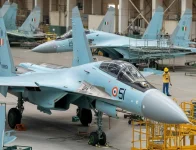
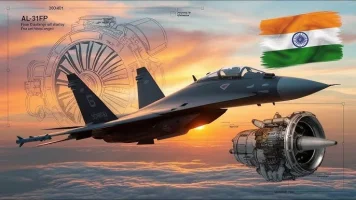
The Indian Air Force (IAF) is implementing a comprehensive modernization of its Sukhoi Su-30MKI fleet, transitioning the aircraft from a traditional close-combat fighter into a sophisticated long-range "sniper" platform.
This strategic pivot aims to secure Indian airspace by neutralizing threats at extreme distances, ensuring that enemy aircraft are engaged well before they can pose a direct risk to the mainland.
This shift in aerial combat philosophy is a direct response to the proliferation of advanced, long-range missile systems in the region, such as the PL-15 utilized by neighboring air forces.
At the core of this upgrade is the indigenous Virupaksha Active Electronically Scanned Array (AESA) radar.
Developed with Gallium Nitride (GaN) technology, this radar replaces the older Russian-made systems, offering superior resistance to electronic jamming and significantly enhanced detection capabilities.
The Virupaksha radar features approximately 2,400 transmit-receive modules, providing a detection range of up to 400 kilometres against standard targets.
Crucially, the system is designed to detect low-observable or stealth aircraft at distances exceeding 200 kilometres, providing Indian pilots with a decisive "first-look, first-shot" advantage in modern contested environments.
The offensive power of the upgraded Su-30MKI will be anchored by the Astra family of indigenous air-to-air missiles.
The Astra Mk1, already in service, provides a range of 160 kilometres, while the upcoming MkII extends this reach to 220 kilometres using dual-pulse rocket motor technology for better end-game manoeuvrability.
The most advanced iteration, the Astra MkIII, incorporates solid-fuel ducted ramjet (SFDR) propulsion, allowing it to strike high-value targets at distances of 350 kilometres.
To further diversify its arsenal, India is also exploring the integration of the Israeli Sky Sting missile, which boasts a 250-kilometre range and advanced electronic counter-countermeasure capabilities.
To ensure the safety of the pilot and platform while operating at these distances, the "Super Sukhoi" configuration includes a robust electronic defence suite.
This domestic system utilizes digital jammers to disrupt enemy tracking and fibre-optic towed decoys to divert incoming missiles away from the aircraft.
Furthermore, the upgrade emphasizes networked warfare; the Su-30MKI can now operate in "silent mode," receiving targeting data from Netra or Phalcon Airborne Early Warning and Control (AEW&C) platforms.
This allows the fighter to launch missiles without activating its own radar, thereby remaining hidden from enemy sensors while the missile receives mid-course updates via secure data links.
The Indian government's Cabinet Committee on Security is expected to soon provide final financial clearance for the first phase of this project, which involves the modernization of an initial batch of 84 aircraft. The upgrades will be carried out by Hindustan Aeronautics Limited (HAL) at its Nashik facility.
This massive undertaking is not only a boost for indigenous 4.5+ generation fighter technology but also secures the Su-30MKI’s role as the primary pillar of India's aerial defence strategy for the next twenty years.