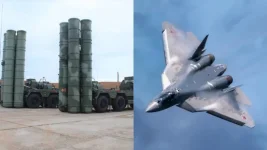
India’s air defence capabilities are set for a major upgrade as the country expects the delivery of its fifth and final S-400 Triumf surface-to-air missile squadron by November 2026.
Simultaneously, New Delhi is actively advancing negotiations with Russia to procure five additional S-400 squadrons, alongside Pantsir-S1 point defence systems, to establish a robust, layered shield against modern aerial threats.
Status of Current and Future Procurements
Under a $5.43 billion contract signed in 2018, India ordered five S-400 regiments from Russia. The first three systems were inducted between 2021 and 2023, with the fourth arriving earlier this year.The fifth unit, due in November, is slated for deployment in the eastern sector to monitor and counter threats along the border with China.
Building on this foundation, the Indian government has initiated the acquisition of five more S-400 squadrons, a deal estimated at over ₹50,000 crore.
Moscow has officially submitted a Bill of Quantities (BOQ) proposal detailing construction and material costs.
Formal cost negotiations will now commence, after which the proposal will require clearance from the Ministry of Finance and final approval by the Cabinet Committee on Security (CCS).
Combat Proven in Operation Sindoor
The urgency to expand the S-400 fleet is heavily influenced by the system's performance during the May 2025 military confrontation with Pakistan, codenamed Operation Sindoor.During the conflict, the S-400 demonstrated unprecedented long-range interception capabilities.
The system is credited with a total of six kills, including downing a Pakistani airborne early warning and control (AEW&C) aircraft at a record distance of 314 kilometers across the Indus River, and a JF-17 fighter jet nearly 200 kilometers inside Pakistani airspace.
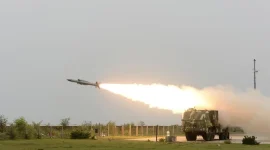
Working in tandem with indigenous Akash-Tir systems, the S-400 effectively denied Pakistani fighter jets access to the Indian border.
Countering the Drone Threat with Pantsir-S1
While the S-400 proved highly effective against high-value aircraft, the 2025 conflict exposed the vulnerabilities of large missile batteries to asymmetric threats.Pakistani forces deployed kamikaze drones in attempts to target S-400 units stationed at the Adampur and Bhuj airbases. To mitigate this, India is negotiating the procurement of the Russian Pantsir-S1 missile and gun system.
The Pantsir-S1 is specifically designed to act as a close-in "bodyguard" for the S-400, neutralizing low-flying loitering munitions and drone swarms that manage to slip past the longer-range interceptors.
Deepening Strategic Ties
Dmitry Shugayev, head of the Russian Federal Service for Military-Technical Cooperation, has publicly acknowledged the potential for further S-400 deliveries to India.Strategic defence cooperation between the two nations is expected to be a key agenda point during Russian President Vladimir Putin’s scheduled visit to New Delhi for the BRICS summit from September 11 to 13, 2026.
Beyond air defence, discussions are highly likely to focus on advancing joint efforts in the hypersonic missile sector.