- Views: 2K
- Replies: 8
India has expressed its interest in joining the French-led development of a sixth-generation combat aircraft should the existing European partnership face a permanent breakdown.
Recent diplomatic communications indicate that New Delhi is prepared to fill the void if Germany exits the Future Combat Air System (FCAS) framework, potentially shifting the geopolitical landscape of military aviation.
Potential Realignment of the FCAS Program
Initial high-level discussions have reportedly taken place between New Delhi and Paris. Indian officials have signaled a clear "readiness to engage" in the co-development and co-manufacture of the New Generation Fighter (NGF), the primary piloted jet within the FCAS architecture.This move comes as the trilateral agreement between France, Germany, and Spain faces significant internal pressure.
The FCAS project was originally designed to replace the ageing Rafale and Eurofighter fleets by 2040.
However, as of early 2026, the program is stalled by persistent industrial disputes between Dassault Aviation and Airbus.
These disagreements center on leadership roles, intellectual property rights, and design authority, leading some analysts to suggest the current partnership structure is no longer viable.
Diverging National Requirements
A primary point of contention involves the specific operational needs of the partner nations:- France: Prioritizes a carrier-capable aircraft compatible with its future PANG aircraft carrier to maintain independent maritime defence capabilities.
- Germany & Spain: Favour a heavier, long-range interceptor optimized for continental air superiority to replace their respective Eurofighter fleets.
India’s operational requirements, which span both high-altitude land borders and vast maritime territories, align closely with the French vision for a versatile, carrier-compatible platform.
Technical Specifications and Capabilities
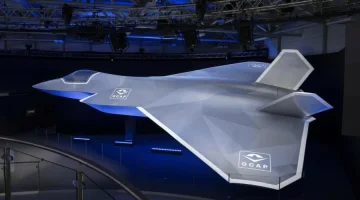
The New Generation Fighter is envisioned as a "heavy" platform, significantly larger than current multi-role jets.With a projected maximum take-off weight (MTOW) of approximately 32,000 kilograms, it enters the weight class of the American F-22 Raptor.
The NGF is designed to function as a "mothership," controlling a network of "Remote Carrier" drones. Key technical features include:
- Stealth Design: Advanced airframe shaping for low radar cross-section.
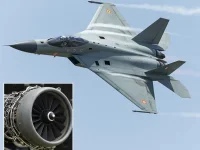
- Variable Cycle Engine: Developed by the EUMET joint venture (Safran, MTU, and ITP Aero), this engine can switch between fuel-efficient cruise and high-thrust combat modes.
- Payload: Expansive internal weapon bays to maintain stealth while carrying heavy mission loads.
Synergies with India’s Aerospace Goals
India’s potential entry into the project would complement its domestic Advanced Medium Combat Aircraft (AMCA) program.While the AMCA remains the cornerstone of India’s indigenous stealth ambitions, the NGF would occupy a heavier tier in the Indian Air Force's future structure.
Strategic cooperation is already deepening; in early 2026, India and France’s Safran formalized a deal to co-develop a 120-kilonewton engine for the AMCA Mk2.
This existing collaboration provides a technological foundation for India to step into a more advanced 6th-gen ecosystem.
By joining such a program, India aims to secure "strategic autonomy" in propulsion and stealth technology, reducing long-term reliance on third-party nations for its primary defence hardware.