- Views: 2K
- Replies: 3
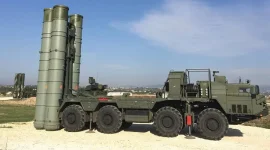
Amid complex global security challenges, India is on track to finalise the induction of its cutting-edge S-400 Triumf air defence system.
The final two squadrons of this advanced missile shield are slated to arrive from Russia in 2026. Official sources indicate that the fourth unit will be delivered as early as April, while the fifth and final system is expected by November.
This timeline will successfully conclude the landmark $5.43 billion defence agreement that New Delhi and Moscow signed in October 2018.
Under the original agreement, India purchased five S-400 squadrons, three of which have already been delivered and successfully integrated into the Indian Air Force.
Locally named the 'Sudarshan Chakra', this system is widely regarded as a revolutionary asset for the military.
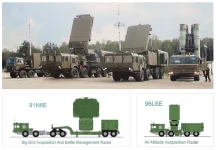
It can simultaneously detect, track, and destroy a wide variety of aerial threats—including stealth fighter jets, cruise and ballistic missiles, and unmanned drones.
Data highlights that the system utilises a multi-layered net of interceptor missiles, such as the long-range 40N6 and medium-range 48N6, allowing it to strike targets at distances from 40 kilometres up to an impressive 400 kilometres.
The system also recently proved its operational worth by intercepting multiple threats during the 2025 India-Pakistan border clashes under Operation Sindoor.
The steady delivery of these final units is the result of continuous, high-level diplomatic and military dialogues between the two nations.
Following recent meetings between India's Defence Minister Rajnath Singh and his Russian counterpart Andrey Belousov, Moscow strongly reaffirmed its commitment to the agreed timeline.
This assurance serves as a significant boost for India, given the global supply chain disruptions and the ongoing conflict in Ukraine that had previously threatened to delay military exports.
To ensure these missile systems remain fully combat-ready, India's Defence Acquisition Council (DAC) has also cleared the purchase of an additional 288 interceptor missiles specifically for the S-400 fleet.
Valued at approximately Rs 10,000 crore, this acquisition will drastically increase the availability of defensive ammunition for various combat scenarios.
This specific procurement is part of a much larger Rs 2.38 lakh crore defence upgrade package recently approved by the government, which also includes modern strike drones and transport aircraft to comprehensively modernise the armed forces.
The arrival of these final systems is highly timely, as modern warfare increasingly relies on long-range precision weapons and coordinated drone attacks—tactics frequently observed in current Middle Eastern conflicts.
The S-400 provides India with a highly adaptable, multi-layered shield capable of tracking up to 80 targets at once and engaging them at various altitudes, ensuring continuous protection against complex and overwhelming aerial assaults.
Once the final two squadrons are fully operational by late 2026, India's skies will be protected by one of the most sophisticated long-range air defence architectures in Asia.
The complete deployment of the 'Sudarshan Chakra' highlights New Delhi's ongoing strategic commitment to heavily fortifying its national airspace and maintaining a strong deterrent in an unpredictable geopolitical landscape.