- Views: 2K
- Replies: 3
In a major step toward strengthening its long-range strike capabilities and tactical readiness, the Indian Army is preparing to finalize a purchase of 300 Dhanush 155 mm howitzers.
These indigenous weapon systems are intended to form the core of 15 newly established artillery regiments. High-ranking officials within the Ministry of Defence indicate that the proposal is slated for official approval during an upcoming top-level departmental review.
This initiative represents the second substantial order for the Dhanush platform, highlighting a national commitment to achieving self-sufficiency in sophisticated defence manufacturing.
These howitzers are produced by domestic public sector entities, spearheaded by Advanced Weapons and Equipment India Limited (AWEIL).
The system’s development was made possible through the transfer of technology from the Swedish Bofors guns, which were famously integrated into the Indian military inventory during the 1980s.
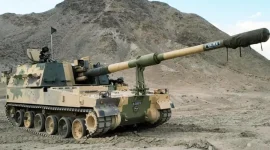
The Dhanush is a 155 mm, 45-calibre towed artillery piece that serves as a modernised, locally-built evolution of the older Bofors FH-77B.
While it retains the fundamental design strengths of its predecessor, the Dhanush features significant technical upgrades.
These include superior metal alloys for durability, refined recoil mechanisms, digital aiming systems, and a notably increased effective range.
A critical feature of this system is its compatibility with standard 155 mm shells and the Bi-Modular Charge System (BMCS).
The integration of BMCS allows the howitzer to reach much greater distances, providing essential heavy fire support across diverse landscapes, ranging from the high-altitude peaks of the Himalayas to the vast northern plains.
Current technical data suggests the Dhanush can engage targets at ranges of approximately 38 km, a significant improvement over the 27 km reach of the original 39-calibre Bofors guns.
To date, the Indian Army has commissioned 114 Dhanush units from its initial contract, with four regiments already operational. Two more regiments are expected to be activated shortly, bolstering the firepower of various regional commands.
The new procurement of 300 additional guns will vastly increase the total inventory, facilitating the creation of 15 additional regiments.
Each regiment typically comprises 18 guns. This expansion is a vital component of the Field Artillery Rationalisation Plan (FARP), which seeks to standardise the Army's artillery around the 155 mm calibre to ensure dominance in modern, precision-based ground warfare.
This latest order also serves as a vote of confidence in the Dhanush following its successful navigation of early technical hurdles and rigorous field testing.
Having undergone extensive refinements to improve its reliability, the platform is now considered a mature and dependable cornerstone of India's military modernisation strategy.
Ultimately, the acquisition of these 300 howitzers is a strategic move beyond simple equipment replacement. It demonstrates the Indian Army's resolve to rely on homegrown technology, streamline its logistics, and maintain a formidable deterrent through scalable and powerful long-range artillery.
Technical Specifications at a Glance
| Feature | |
|---|---|
| Calibre | 155 mm / 45-calibre |
| Maximum Range | ~38 km (with BMCS/Extended Range shells) |
| Rate of Fire | 3 rounds in 15 seconds (Burst); 60 rounds per hour (Sustained) |
| Indigenisation | Over 80% (aiming for 90%+) |
| Navigation | GPS-aided Inertial Navigation System |