The Indian Navy's highly anticipated S-5 class nuclear-powered ballistic missile submarine (SSBN) project might be restricted to a primary batch of just four vessels, rather than the six originally proposed.
This adjustment comes as naval planners are actively exploring options to shift towards a much larger and more advanced follow-on submarine design by the late 2030s.
This strategic program, initially conceptualized around 2006, represents a massive leap in India's underwater deterrence capabilities.
Recent reports from defence sources indicate that the preliminary construction phase, specifically the steel-cutting process, for the lead S-5 submarine commenced discreetly in late 2025.
These activities are taking place at the Shipbuilding Centre (SBC) in Visakhapatnam, officially launching the physical build of the country's next-generation sea-based nuclear platform.
Additional reports suggest that new manufacturing facilities, such as the submarine complex near Cochin Shipyard, could also play a role in supporting this massive endeavour.
To ensure rapid progress and keep the industrial supply chain active, the government has given the green light for the concurrent construction of the first two vessels of this new class.
By building them simultaneously, the Navy hopes to fast-track their eventual commissioning and avoid any idling of crucial production lines.
In the past, strategic circles often discussed a dedicated fleet of six S-5 submarines. However, current long-term naval strategies and official clearances point to a firm commitment of only four submarines in the initial run.
The possibility of building two extra vessels remains open, but this will heavily depend on future operational needs and subsequent design evolutions.
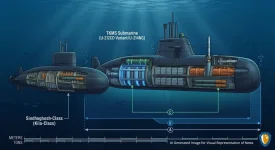
When submerged, the standard S-5 class is projected to have a displacement of around 13,500 tonnes.
This makes the vessel nearly double the size of India's current Arihant-class submarines, placing it in the same heavyweight category as the strategic submarines fielded by the world's major nuclear-armed nations.
The decision to scale down the guaranteed initial order from six to four submarines is thought to stem from revised force structure assessments.
These calculations were heavily influenced by the successful development of the upgraded, larger Arihant-class variants, specifically the S4 and S4* models, which boast increased missile capacity.
These "stretched" Arihant models were purpose-built to serve as a vital stepping stone until the S-5 fleet becomes operational.
With these capable interim vessels in place, naval leadership likely estimates that four highly advanced S-5 submarines will be more than adequate to ensure non-stop, at-sea nuclear deterrence.
Consequently, the older Arihant-class vessels will be slowly reassigned to secondary tasks, such as crew training and providing supplementary deterrence support.
Despite the impressive specifications of the S-5, defence insiders suggest that this class will not be the ultimate endpoint for India's maritime nuclear strike capabilities.
Defence strategists are currently exploring the feasibility of an even bigger variant, colloquially termed the "S-5 Plus." While it would keep the core design principles of the baseline S-5, this super-sized derivative could see its displacement soar to nearly 17,000 tonnes.
Such a massive upgrade would naturally introduce a host of enhancements. The S-5 Plus would likely carry more ballistic missiles, boast superior underwater endurance, and utilize state-of-the-art noise-reduction technologies.
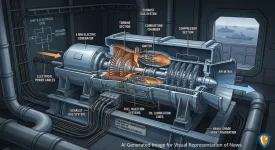
Furthermore, it is expected to be powered by a significantly larger reactor—potentially the 190 MW to 200 MW Compact Light-water reactor currently being developed by the Bhabha Atomic Research Centre (BARC)—which would exponentially boost its operational readiness.
In addition to the S-5 Plus concept, there are signs that India might choose a completely different path by initiating an entirely distinct "S-6" class program. This would mean abandoning the gradual upsizing of the S-5 in favour of a radically new submarine architecture.
Should the S-6 project move forward, it would bring a blank-slate design engineered specifically for next-generation nuclear propulsion.
This futuristic vessel would feature massive missile silos, cutting-edge stealth acoustics, and the ability to launch the most advanced long-range submarine-launched ballistic missiles currently in development.
Defence analysts estimate that India could eventually build between two to four of these highly advanced follow-on submarines. The exact number will be dictated by the nation's evolving strategic security needs as it looks toward the 2040s and the decades that follow.
For now, the Indian Navy's top priority is firmly fixed on the prompt manufacturing and commissioning of the lead S-5 submarine. Current timelines project that this formidable vessel will officially join the naval fleet sometime around 2033 or 2034.
Over the upcoming decades, the S-5 class is set to become the undisputed cornerstone of India's maritime nuclear forces. Its induction will dramatically enhance both the survivability and the sheer credibility of the nation's broader nuclear triad.
To achieve its strategic goals, the new submarine fleet will be heavily armed with advanced K-series SLBMs, specifically the upcoming K-5 and heavily MIRVed K-6 missiles.
These future missile variants are designed to achieve intercontinental ranges—striking targets up to 8,000 to 9,000 kilometres away—ensuring that India retains a highly secure and devastating second-strike capability from the hidden depths of the Indian Ocean.