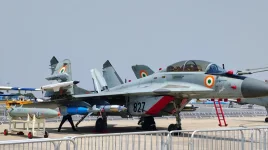
In a significant move to strengthen its naval aviation capabilities, the Indian Navy has launched a major initiative to modernise its fleet of MiG-29K carrier-borne fighter jets.
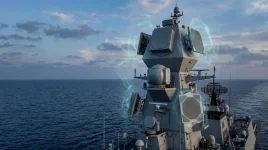
The aircraft will be equipped with the state-of-the-art Uttam Mk2 Active Electronically Scanned Array (AESA) radar, developed domestically by the Defence Research and Development Organisation’s (DRDO) Electronics and Radar Development Establishment (LRDE).
This indigenous technology will replace the older Russian-made Zhuk-ME mechanically steered radars currently in use.
The decision to overhaul the aircraft's primary sensor follows a critical internal review conducted in late 2025.
Naval evaluations showed that the legacy Zhuk-ME radars had suffered a severe performance drop of approximately 40 percent.
This significant degradation was heavily linked to the harsh, saline, and highly humid conditions typical of sea-based operations, which proved too demanding for the existing Russian hardware to handle reliably over time.
To overcome these environmental challenges, the Navy is turning to domestic technology, ensuring long-term reliability and a greater degree of technological independence.
The chosen replacement, the Uttam Mk2, represents a massive leap forward in combat capability.
Because it uses modern AESA technology, the radar can electronically steer its beams without moving parts, allowing it to instantly scan and track multiple targets in the air and on the water simultaneously.
Furthermore, it offers vastly superior protection against enemy electronic warfare and jamming attempts, making the MiG-29K much more lethal in both air-to-air combat and anti-ship strike missions.
Because the sea environment is highly corrosive, the ongoing 2026 procurement tenders include strict requirements for "maritime hardening."
The new Uttam radars will be built with specialised protective coatings and materials designed to withstand salt-laden ocean air.
This extreme durability is vital for ensuring the fighters remain fully operational while deployed on continuous patrols across the vast Indian Ocean Region.
Beyond improved detection, the new radar serves as a vital bridge for arming the fighters with advanced Indian-made weapons.
Once the Uttam Mk2 is installed, the MiG-29K fleet will be able to fire domestic Astra Mk1 and Mk2 Beyond-Visual-Range (BVR) air-to-air missiles, which boast ranges exceeding 100 kilometres.
This integration will directly reduce the Indian Navy's reliance on imported Russian R-77 missiles, marking a major milestone in India's journey towards complete self-reliance in defence manufacturing.
This comprehensive upgrade programme is fundamentally driven by revised timelines for India's next-generation carrier aircraft, the Twin Engine Deck-Based Fighter (TEDBF).
With the indigenous TEDBF now projected to enter active service only between 2038 and 2040, the current fleet of over 40 MiG-29K jets will have to hold the line.
Upgraded and modernised, these fighters will remain the primary backbone of India's naval air power, operating from the decks of aircraft carriers INS Vikramaditya and INS Vikrant for at least the next fifteen years.