India’s maritime nuclear deterrence is on the verge of a historic transformation. With the recent, quiet induction of the INS Aridhaman (the S4 nuclear-powered ballistic missile submarine), the Indian Navy is officially upgrading its underwater strike capabilities from regional coverage to intercontinental reach.
While the newly operational submarine currently relies on the K-4 missile—which can hit targets up to 3,500 kilometres away—the defence sector is actively preparing for the next major milestone.
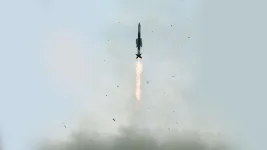
Testing for the formidable K-5 submarine-launched ballistic missile (SLBM), including preliminary "pop-up" launches and full-range flights, is projected to commence between late 2026 and early 2027.
To accommodate this massive leap in firepower, the INS Aridhaman and the upcoming S4* submarine have undergone substantial physical upgrades.
The original boats in this class, INS Arihant and INS Arighaat, displace roughly 6,000 tonnes and were limited by a smaller hull size and shallower launch bays. In contrast, the S4 features a "stretched" 7,000-tonne hull design.
This crucial expansion provides the necessary depth and structural support to house the massive, three-stage ballistic missiles required for intercontinental missions.
The upcoming K-5 missile marks a drastic technological jump from its predecessor.
The current K-4 is a two-stage, solid-fueled weapon designed primarily to deter regional threats. The K-5, however, uses a three-stage solid-fueled system that pushes its strike range to an estimated 5,000 to 6,000 kilometres.
This extended reach effectively elevates the K-5 into the intercontinental ballistic missile (ICBM) category, serving as the underwater equivalent to India's land-based Agni-V.
While the missile will still carry a payload weighing roughly two tonnes, the technology inside the nose cone has been completely revolutionized.
The defining feature of the K-5 is the planned integration of Multiple Independently Targetable Re-entry Vehicles (MIRV).
Following the successful testing of MIRV technology on land-based missiles under "Mission Divyastra," this capability is now heading to sea.
MIRV allows a single missile to carry multiple nuclear warheads—likely between four and six—that can separate and strike entirely different targets.
This is a game-changer for strategic deterrence, as launching multiple warheads from a single missile can easily overwhelm and saturate an adversary's ballistic missile defence shields, virtually guaranteeing a successful strike.
The expanded architecture of the INS Aridhaman perfectly complements these new weapons.
By doubling the vertical launch system to feature eight large missile tubes, the submarine provides naval commanders with unprecedented tactical flexibility.
The vessel is no longer limited to a single type of weapon; it can carry a customized mix of short-range K-15 missiles (750 kilometres), intermediate K-4s, and long-range K-5s.
This modular capability means the submarine can easily adapt to changing defence requirements without needing to return to drydock for major structural refits.
From a strategic perspective, equipping the S4 with the K-5 missile fundamentally changes India’s position on the global stage.
Previously, India's underwater nuclear triad was confined to deterring threats within the Asian continent.
The K-5 shatters that boundary, giving the Indian Navy the power to hold targets at risk across the globe.
Most importantly, it allows the submarine to launch these strikes while remaining deeply submerged in the highly secure patrol zones of the Indian Ocean.
Ultimately, this progression highlights the coming-of-age of India’s sea-based nuclear forces.
The original INS Arihant served primarily to prove that India could build and operate a nuclear submarine.
The INS Aridhaman, however, is a heavily armed, frontline combat vessel built to scale with future defence innovations.
By future-proofing the submarine to handle next-generation weapons like the K-5, India guarantees that its underwater deterrent will remain a credible and potent force for decades to come.