Analysis India’s 6th-Gen Fighter Dilemma: Balancing GCAP and FCAS Options Against Tech Transfer, Budget Risks, and Indigenous AMCA Priorities

India’s 6th-Gen Fighter Dilemma: Balancing GCAP and FCAS Options Against Tech Transfer, Budget Risks, and Indigenous AMCA Priorities


As India pushes forward with its homegrown Advanced Medium Combat Aircraft (AMCA) project, which targets a prototype flight by 2029, a vital strategic question is taking shape: how should the nation approach sixth-generation combat aviation?

Recent developments highlight New Delhi's delicate balancing act between the UK-Italy-Japan Global Combat Air Programme (GCAP) and the French-led Future Combat Air System (FCAS).

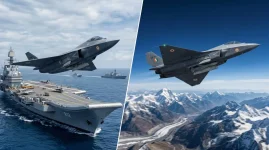
With China rapidly advancing its stealth fleets and testing sixth-generation prototypes, India's pursuit of next-generation air dominance has become more urgent.

Defence experts and economists widely acknowledge that participating in either multinational initiative would grant India exposure to highly advanced technologies.

However, each path presents distinct financial burdens, industrial rewards, and long-term strategic uncertainties.

Furthermore, any international commitment must be carefully weighed against India’s indigenous AMCA programme to ensure the country’s defence budget is not stretched beyond its limits.

GCAP: Financial Stability and New Dialogue Status​

The GCAP project, a collaborative effort between the UK, Japan, and Italy, is viewed by experts as possessing a relatively steady management and financial framework.

Industry calculations indicate that acquiring just a 10% industrial share could cost India roughly US$6.5 to US$7.5 billion during the development stage, while a more substantial role could push lifecycle investments past US$10 billion.

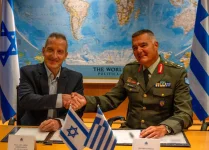
Recently, in late August 2026, India officially joined the GCAP as a 'Dialogue Partner'. This status allows New Delhi to closely study the programme's technological capabilities without a formal obligation to purchase or manufacture the jets.

Although participating in GCAP would demand massive funding, observers note that the initiative is bolstered by an efficient administrative structure.

The three core nations have largely stayed united on their funding and strategic goals. This unity minimises the chances of extended budgetary conflicts and serious timeline delays, which typically cause development costs to skyrocket.

FCAS: Deep Industrial Ties and Recent Restructuring​

The FCAS programme presents a unique alternative.

Initially conceived jointly by France, Germany, and Spain, it was estimated to be one of Europe's costliest defence ventures, with expenses likely topping €100 billion.

However, following a recent split in June 2026 over workshare disputes, France is now driving the crewed fighter component largely on its own under Dassault Aviation.

Despite these shifts, the French-led ecosystem heavily complements India’s current aerospace alliances. In fact, India's Defence Ministry informed Parliament in August 2026 that it has already begun concerted efforts to co-join the FCAS project.

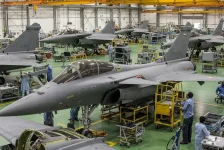
India enjoys robust ties with French aerospace firms, most notably through the procurement of Rafale jets.

Furthermore, French manufacturer Safran is actively negotiating a major partnership with the Defence Research and Development Organisation's (DRDO) Gas Turbine Research Establishment (GTRE).

This collaboration aims to jointly create a 120KN high-thrust engine intended to power the upcoming AMCA Mk2.

Because of these well-established relationships, analysts predict that collaborating with France could lower integration expenses.

It would also offer India smoother access to critical sixth-generation technologies, such as advanced propulsion systems, stealth materials, modern digital engineering, and cutting-edge manufacturing processes.

Additionally, experts frequently point out that the FCAS initiative includes plans for a carrier-based fighter variant.

This specific model could align perfectly with the Indian Navy’s future aviation needs, possibly eliminating the financial burden of developing a separate, homegrown naval stealth fighter.

The Crucial Role of Technology Transfer​

The depth of technology transfer and domestic manufacturing opportunities will be a critical deciding factor for New Delhi.

Many defence experts observe that France has traditionally been more willing to share technology and collaborate industrially with India compared to other Western nations.

Consequently, observers suggest that the French-led FCAS could present superior opportunities for India's domestic industries to advance in areas like systems integration, composite materials, and advanced metallurgy.

On the other hand, the GCAP initiative promises top-tier advancements in radar systems, sensor fusion, next-generation engines, and electronic warfare.

Yet, specialists warn that joining GCAP at this stage could subject India to stricter limits on intellectual property and manufacturing workshares.

Without aggressive negotiations to ensure comprehensive technology access, India's domestic production benefits could remain restricted.

Balancing with Indigenous AMCA Priorities​

The most significant limitation in this strategic puzzle remains India’s domestic fifth-generation fighter project. The AMCA is already one of the most heavily funded aerospace initiatives in the nation's history.

Attempting to finance the AMCA's development while simultaneously pouring billions into an international sixth-generation consortium would place tremendous strain on India's future defence budgets.

Defence economists refer to this situation as a "dual-programme dilemma." Should India decide to allocate billions toward either FCAS or GCAP alongside the AMCA, it would also need to spend heavily on expanding testing facilities, engineering personnel, manufacturing infrastructure, and operational resources.

For this reason, experts firmly believe that any international partnership must be strategically designed to support and enhance the AMCA project, rather than drawing vital resources away from it.

Evaluating Political and Programme Risks​

When evaluating financial and political stability, the two options contrast sharply. The GCAP consortium has moved forward relatively smoothly, with minimal public friction among the UK, Italy, and Japan.

In stark contrast, the FCAS project has been plagued by ongoing arguments over programme leadership, intellectual property rights, and industrial responsibilities between Germany and France, which ultimately led to their recent split on the crewed fighter development.

Experts caution that dealing with unpredictable political turbulence and shifting partnerships could drive up development expenses for new members and severely delay the delivery of combat-ready aircraft.

Making the Right Economic Choice​

Looking through an industrial lens, many analysts maintain that FCAS provides greater synergy due to India’s deep-rooted ties with French aerospace giants like Dassault and Safran.

Expanding upon these existing partnerships could decrease infrastructure expenses, boost local manufacturing, and facilitate the transfer of vital technologies that directly benefit the AMCA.

Even so, these same experts warn that the FCAS route involves elevated programme-management risks, especially given its history of industrial disputes and recent structural changes.

In contrast, GCAP stands out as a more financially reliable option, supported by clear governance and consistent funding from its three core members.

However, analysts conclude that this stability comes with a trade-off: India's recent entry as a dialogue partner is a positive step, but securing a formal role would require a massive initial financial commitment and intense negotiations to acquire valuable manufacturing shares and intellectual property rights.
 
I think Dassault would likely expect a large investment from India for limited workshare.

After the demise of FCAS, what aircraft Dassault proposes to build next is not yet known, I think that India would be wise to engage in talks with Dassault ASAP to see whether Dassault proposes to continue with the FCAS 6G design if a foreign partner (India) can be found.
 
I say India should join with Japan, UK and Italy in the GCAP venture as this will give India what we want and need most - future adaptive engines, stealth technologies, modern electronics and metallurgical expertise and with four partners to share the financial burden the investment required will be less. It's a better deal all round
 
I think, we should talk to both groups, and get a sense of cost, timeline, IPR and level of tech transfer. Internally we should have ball park figures of numbers required, say decade wise. For example, if the induction is at 2050, how many of our legacy jets ( heavy to med heavy fighters), need to be replaced? Is the IAF looking to expand? If timeline goes to 2060, almost the entire Su-30 fleet and the initial lot of 36 Rafales would require replacement. How capable would the AMCA Mk2 turn out to be??

We need to have at least ball park answers to many questions that can be matched to the answers by the two sixth gen groups.

That I feel should help make a more informed decision.
 
What benefits will India bring to either project, apart from finance. Dassault weren't prepared to give workshare and technology transfer to Airbus for FCAS, why would they do it for India? They butted heads with the UK on the initial Panavia Tornado project and left, then did the same with the Eurofighter. They are not likely to transfer cutting edge technology and advance areas of expertise by decades to India for a few Rupees. As soon as India has the technology they won't need the partnership. Look at the Covax scheme during covid. India were given the AstraZeneca vaccine for free to manufacture on mass and distribute. As soon it was given to them they said they were keeping all they could make. Who would trust them? Let their own Donkeys make their own fighter jets. Even with Meteors and Rafales they are still getting their arses handed to them by PAF.
 
What benefits will India bring to either project, apart from finance. Dassault weren't prepared to give workshare and technology transfer to Airbus for FCAS, why would they do it for India? They butted heads with the UK on the initial Panavia Tornado project and left, then did the same with the Eurofighter. They are not likely to transfer cutting edge technology and advance areas of expertise by decades to India for a few Rupees. As soon as India has the technology they won't need the partnership. Look at the Covax scheme during covid. India were given the AstraZeneca vaccine for free to manufacture on mass and distribute. As soon it was given to them they said they were keeping all they could make. Who would trust them? Let their own Donkeys make their own fighter jets. Even with Meteors and Rafales they are still getting their arses handed to them by PAF.
Your reference to Astrazeneca, clearly proves that you are an uneducated mule. Go, and check out how many countries India sent vaccines to. A huge part of it was free, because a lot of them were poor countries who could not pay under the ruined economies.

It is a suggestion which I know you are unlikely to accept, but I would still say it.

This is a pretty educated and informed forum. Think carefully before posting trash here. Members are not kind towards trash.
 
Let their own Donkeys make their own fighter jets. Even with Meteors and Rafales they are still getting their arses handed to them by PAF.
France does not have one very rare species of donkeys that Pakistan has which is "Two Legged Donkeys" only Pakistani donkeys claim to make Jet Fighter not French.
 
Yes they did, but delayed, they held vaccines for themselves initially and didn't hold their end of the deal. I really can't see France providing the technology transfer with India. They have history of not doing this. They are clever and heavily protect national sovereignty. Selling India an astonishingly expensive weapons system they can't make or maintain themselves is not good for India.
 
Yes they did, but delayed, they held vaccines for themselves initially and didn't hold their end of the deal. I really can't see France providing the technology transfer with India. They have history of not doing this. They are clever and heavily protect national sovereignty. Selling India an astonishingly expensive weapons system they can't make or maintain themselves is not good for India.
I am normally not so direct but in this case I will be. You are a liar.

As far as deals with France is concerned, you do not have to be concerned. Let Indians worry about their welfare.

Kindly stop your trolling if you do not have anything meaningful to contribute.
 
I am normally not so direct but in this case I will be. You are a liar.

As far as deals with France is concerned, you do not have to be concerned. Let Indians worry about their welfare.

Kindly stop your trolling if you do not have anything meaningful to contribute.
I am not a liar.
My meaningful contribution is an opinion like everyone else's. I think India should build sovereign, they have decades of research into gas turbine technology and multiple established, sovereign fighter jet programs. Pakistan is buying cheap an Chinese, this offers no resilience and means we are very much at the mercy of the Chinese in the event of a conflict. India is in a position where it will soon be competitive with its own sovereign program.
 
I am not a liar.
My meaningful contribution is an opinion like everyone else's. I think India should build sovereign, they have decades of research into gas turbine technology and multiple established, sovereign fighter jet programs. Pakistan is buying cheap an Chinese, this offers no resilience and means we are very much at the mercy of the Chinese in the event of a conflict. India is in a position where it will soon be competitive with its own sovereign program.
BBC and Time. LOL. They compete for dishonesty with Al Jazeera. The least you could have is find a decent rag ( yes these are nothing but rags now). 50 years ago the BBC and Time were respected, independent and honest. Today the BBC does not have the guts to call out the Pakistani grooming gangs of Bretain.

As I said before, let India and France worry about their partnership. You stay focussed on terrorism export and begging, the two specialisations of your probable country of origin.
 
Wow, thats islamaphobia and racism, plain to see, shame on you. You've been reading too much right wing news instead of real news.
 
50 years ago the BBC and Time were respected, independent and honest. Today the BBC does not have the guts to call out the Pakistani grooming gangs of Bretain.

Mmmm... not so sure about that.

In plans announced on Monday, the government pledged more data on the make-up of grooming gangs, including ethnicity, to help ensure suspects "cannot hide behind cultural sensitivities as a way to evade justice".

It comes as Home Secretary Suella Braverman made several comments about the ethnicity of abusers in high-profile gangs.

In the Mail on Sunday she said "the perpetrators are groups of men, almost all British-Pakistani".

To the BBC she said the gangs were "overwhelmingly" made up of British-Pakistani males.


A few more BBC reports on child grooming -
 
Last edited:
50 years ago the BBC and Time were respected, independent and honest. Today the BBC does not have the guts to call out the Pakistani grooming gangs of Bretain.

In plans announced on Monday, the government pledged more data on the make-up of grooming gangs, including ethnicity, to help ensure suspects "cannot hide behind cultural sensitivities as a way to evade justice".

It comes as Home Secretary Suella Braverman made several comments about the ethnicity of abusers in high-profile gangs.

In the Mail on Sunday she said "the perpetrators are groups of men, almost all British-Pakistani".

To the BBC she said the gangs were "overwhelmingly" made up of British-Pakistani males.


A few more BBC reports on child grooming -
 
Wow. Most of your doctors and dentists are of Pakistani background and are the backbone of the NHS. You can't jusge a whole country over the actions of a tiny few.
 
I say India should join with Japan, UK and Italy in the GCAP venture as this will give India what we want and need most - future adaptive engines, stealth technologies, modern electronics and metallurgical expertise and with four partners to share the financial burden the investment required will be less. It's a better deal all round
No specifics as to the specification of the engine for GCAP have been made public in the UK. As far as I know it is not likely to have an adaptive cycle engine, in which case that tech would not become available by joining GCAP.

Japan wanted an aircraft in service by 2035. Perhaps an adaptive cycle engine could not be guaranteed to be ready in time for that. A further clue to me are reports saying that the governments concerned are pushing for GCAP to enter service as early as 2033 and the head of the Italian firm concerned in GCAP saying that would be possible. I do not think that would be possible if the aircraft had an adaptive cycle engine.
 
I say India should join with Japan, UK and Italy in the GCAP venture as this will give India what we want and need most.
I still think French one is more feasable for India to have colaborative engagement, alot of development has already been happened in GCAP. As far as that japanese XF9-1 engine is concerned, it has already been offered to India.India can buy GCAP if it needs after 2035, but FCAS is projected till 2040 & beyond where India might take advantage.
(Our Tejas Mk1A/Mk2 is based on similar to french designs so FCAS might also work.)

That XF9-1 engine, India can co-develope some varient of it with IPR for Heavy Weight Super-Maneuverability Aircraft (similar to Sukhoi-57) for Sukhoi-30MKI replacement. which might be possible based on current India-Japan relations.
 

Forum statistics

Threads
7,986
Messages
68,281
Members
5,768
Latest member
VKukreti
Back
Top