India’s pursuit of an indigenous autonomous combat capability reached a major turning point this month.
The Defence Procurement Board (DPB) has recommended the acquisition of 60 Ghatak stealth unmanned combat aerial vehicles (UCAVs) for the Indian armed forces.
This move signals a transition from experimental technology to a formal military programme, placing the project on the desk of the Cabinet Committee on Security (CCS) for final financial and developmental sanction.
From Prototypes to Production
The proposal submitted by the Ministry of Defence (MoD) seeks permission to build at least three full-scale prototypes.These aircraft will serve as the primary platforms for validating advanced defence technologies, including:
- Low-Observable Geometry: Airframe designs that reflect radar waves away from the source.
- Internal Weapons Bays: Enclosures that hide munitions within the fuselage to maintain a smooth, stealthy exterior.
- Autonomous Mission Systems: AI-driven software allowing the drone to fly and execute tasks with minimal human intervention.
By using internal research funds, the firm aims to ensure that manufacturing can begin immediately once the CCS provides the "Go Ahead."
The Propulsion Milestone: Dry Kaveri Engine
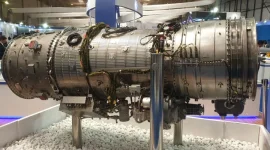
A critical factor for the programme’s success is the Dry Kaveri engine, a non-afterburning variant of the original Kaveri turbofan.Unlike fighter jet engines designed for supersonic bursts, the Dry Kaveri is optimised for the high endurance and fuel efficiency required by a long-range UCAV.
According to latest reports, the engine is slated for high-altitude flight trials in mid-to-late 2026.
These tests will be conducted using an Ilyushin Il-76 flying testbed in Russia, where engineers will monitor thermal stability and performance at altitudes of up to 13,000 metres.
The formal induction of the Ghatak into the Indian Air Force is contingent upon this engine receiving its final performance certification.
Strategic Role and Technical Edge
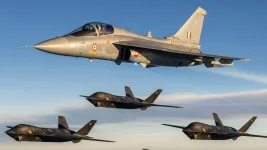
The Ghatak is designed as a "flying-wing" aircraft, a shape that naturally lacks vertical fins and sharp angles, significantly reducing its radar cross-section (RCS).It will also feature serpentine air intakes, which curve inward to shield the engine’s spinning compressor blades from enemy radar.
| Feature | Specification (Projected) |
|---|---|
| Maximum Take-Off Weight | 13 Tonnes |
| Internal Payload | 1.5 - 2 Tonnes |
| Top Speed | High-Subsonic (Approx. Mach 0.9) |
| Primary Missions | SEAD/DEAD (Suppression/Destruction of Enemy Air Defences) |
In modern warfare, the Ghatak will likely operate as a "loyal wingman," flying ahead of manned fighter jets to neutralise enemy surface-to-air missile (SAM) batteries and radar installations.
This strategy ensures that high-value manned assets can operate in contested airspace with a significantly lower risk of being targeted.