- Views: 2K
- Replies: 1
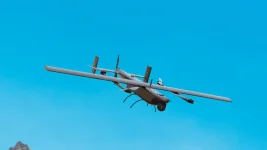
Indian defence manufacturing firm Nibe Limited is actively developing a cutting-edge loitering munition designed to strike targets up to 1,000 kilometers away.
This landmark project highlights a major leap for the domestic private sector in creating autonomous, deep-strike weapons.
By building systems that can execute precision attacks deep inside hostile territory, India is taking significant steps toward neutralizing enemy threats without risking human pilots.
The technological foundation of this new weapon system is entirely domestic.
According to Balakrishnan Swamy, the Chief Technology Officer and Strategy Head at NIBE, the company is building this munition from the ground up using its own proprietary design architecture.
This approach deliberately avoids relying on imported platforms or licensed foreign technology.
Nibe Limited, which recently expanded its manufacturing capabilities with a major aerospace and defence plant in Pune, is aligning this ambitious project closely with the national push to establish sovereign military supply chains.
Reaching a distance of 1,000 kilometers will place this upcoming platform among the longest-range "kamikaze drones" currently in development globally.
Loitering munitions operate as a hybrid between a traditional cruise missile and an unmanned aerial vehicle (UAV). They are launched toward a general target zone where they can circle, or "loiter," in the sky for an extended duration.
Once a specific target is verified by onboard sensors or human operators, the drone dives into it, detonating its explosive payload with pinpoint accuracy.
This operational model offers battlefield commanders unmatched tactical flexibility compared to standard missiles, which generally follow strict, pre-planned flight paths.
With a loitering munition, operators can actively search for hidden targets, change their target selection mid-flight, or completely cancel the attack if civilians or friendly forces enter the area.
Such adaptability makes these drones highly effective at hunting down mobile threats like anti-aircraft missile batteries, moving radar vehicles, enemy command posts, and vital supply convoys.
The push for a private Indian company to master this strategic-level technology underscores a shift in the country's defence posture.
While NIBE has not yet released exact specifications regarding the drone's warhead size, engine type, or stealth features, reaching a 1,000-kilometer milestone requires sophisticated engineering.
To survive in heavily defended modern battlefields, such a drone will demand highly fuel-efficient propulsion, secure communication links that resist electronic jamming, and robust autonomous navigation systems that can function even if GPS signals are blocked.
Owning the fundamental design is a critical advantage for India's strategic autonomy.
By controlling the core software, guidance algorithms, and physical architecture, NIBE ensures that the Indian armed forces can freely upgrade, modify, and deploy the system without being restricted by foreign export rules or international sanctions.
This seamlessly supports the government's "Atmanirbhar Bharat" initiative, which has recently accelerated the induction of shorter-range domestic autonomous systems like the Nagastra-1 into the armed forces.
Globally, the necessity for long-range, cost-effective strike drones has become undeniable.
Recent combat operations in regions like Ukraine and the Middle East have proven that loitering munitions can systematically dismantle expensive air defence networks, destroy heavy armor, and disrupt national infrastructure while imposing a massive financial toll on the defending military.
By advancing this 1,000-kilometer indigenous platform, India is ensuring its armed forces are equipped to command the rapidly evolving landscape of unmanned warfare.