In the aftermath of the military engagements known as Operation Sindoor, Islamabad is moving swiftly to upgrade its national airspace security.
To achieve this, Pakistan is heavily investing in new long- and medium-range surface-to-air missile (SAM) batteries from Beijing, alongside state-of-the-art unmanned aerial vehicles (UAVs) from Ankara.
According to top-level intelligence reports, the Pakistan Air Force (PAF) is integrating a multi-layered Chinese anti-aircraft shield.
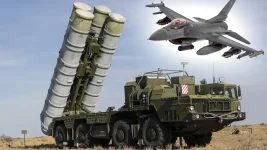
The cornerstone of this planned acquisition is the HQ-9, a sophisticated long-range SAM system heavily influenced by the Russian S-300 family but equipped with advanced Chinese active radar homing technology.
Capable of tracking and striking targets up to 250 kilometers away, the HQ-9 is built to intercept incoming fighter jets, ballistic projectiles, and cruise missiles.
This high-altitude shield is being supplemented by the HQ-16, HQ-17, and L-17 medium- and short-range interceptors, which are designed to provide a comprehensive, tiered air defence umbrella against closer threats.
Beyond missile systems, Islamabad is turning to its strategic partner Turkey to expand its autonomous flight fleet. The PAF is actively procuring Karayel unmanned aircraft, along with specialized loitering munitions.
Built by the Turkish aerospace firm Lentatek (formerly Vestel Savunma), the Karayel is a Medium-Altitude Long-Endurance (MALE) drone designed for both intelligence gathering and precision strike missions, often carrying micro-munitions.
Furthermore, the inclusion of Turkish-made loitering munitions—commonly referred to as "kamikaze drones"—gives Pakistan a capability that has recently proven highly effective in global conflicts for suppressing enemy air defences and neutralizing radar installations.
This accelerated arms acquisition is a direct response to vulnerabilities identified within Pakistan's air defence grid during the May 2025 clashes.
During Operation Sindoor, the deployment of Indian stand-off munitions, including the formidable supersonic BrahMos cruise missiles and other precision weapons, exposed significant tactical gaps in Islamabad's ability to counter modern, multi-directional aerial attacks and drone swarms.
Strategically, the newly acquired Chinese missile batteries are expected to be positioned along Pakistan’s eastern frontier to deter Indian aerial operations.
Meanwhile, the Turkish combat drones and loitering munitions are anticipated to operate near the Line of Control (LoC), serving dual purposes of continuous border surveillance and providing an offensive tactical strike option.
New Delhi is keeping a close watch on these military developments. In response to the shifting balance, the Indian Air Force (IAF) and the Ministry of Defence are aggressively prioritizing the modernization of their electronic warfare (EW) infrastructure.
India is also reinforcing its own aerial borders by expanding the deployment of its long-range S-400 'Sudarshan' system, augmenting its indigenous Akash missile squadrons, and rapidly integrating advanced counter-drone technologies developed by the Defence Research and Development Organisation (DRDO).