- Views: 2K
- Replies: 8
British aerospace major Rolls-Royce has presented a comprehensive new strategy for India’s Advanced Medium Combat Aircraft (AMCA) engine initiative, revealing that their co-developed powerplant will be built with massive growth capabilities that extend well beyond the baseline 120kN requirement.
Sashi Mukundan, Executive Vice President of Transformation at Rolls-Royce India, has clarified that the proposed architecture for India’s next-generation fighter is not capped at the initial 120kN target.
Instead, the core design incorporates substantial margins, allowing the engine to be upgraded to the 140kN thrust class in the future without requiring a completely new design process.
This development is highly strategic because it signifies that Rolls-Royce is pitching a foundational propulsion family rather than a standalone, single-use fighter engine.
Adopting a unified core architecture that can be modified for diverse military and civilian uses reflects the current standard practice among top-tier global aerospace manufacturers.
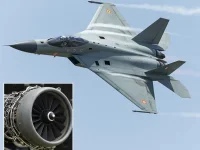
Currently, India is seeking a 120kN-class engine to propel the advanced versions of the AMCA stealth fighter.
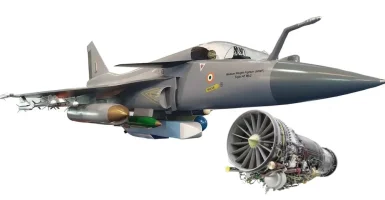
While the initial AMCA Mk1 production block will rely on the American GE F414 engine, the more advanced Mk2 variant requires an indigenous, high-thrust solution—a need made more urgent by recent cost increases associated with imported engines.
A scalable upgrade path to 140kN guarantees that India's future fighters will have the necessary power to handle heavier payloads, longer ranges, superior supercruise capabilities, and the high energy demands of modern electronic warfare and directed-energy weapons.
Designing a 140kN-ready engine aligns perfectly with India's long-term aerospace goals.
Across the world, next-generation combat jets require massive thrust to support larger stealth airframes, advanced avionics, and companion drone networks.
By integrating this growth potential from day one, New Delhi can bypass the immense financial burden of starting a fresh engine development cycle decades down the line.
Rolls-Royce has backed its capability to deliver this by highlighting its previous experience working on the F136 engine program for the fifth-generation F-35 fighter.
Equally important is the company's commitment to creating derivative engines for uses entirely outside of the combat aviation sector.
Rolls-Royce confirmed that this new baseline architecture could be adapted to create a broader family of powerplants for naval vessels, commercial airliners, and other specialized aerospace platforms.
This multi-domain approach offers a monumental opportunity for the Indian defence sector. Rather than pouring funds into an engine that only fits the AMCA, India would build foundational industrial capabilities that benefit the broader economy.
Naval variants derived from this core could power the next generation of Indian warships, while civil iterations could provide the technological stepping stones required for India to launch its own commercial aviation manufacturing sector.
This strategy mirrors the successful economic models of dominant aerospace nations, where military engine research is adapted for commercial markets to ensure long-term profitability and consistent production lines.
Sharing a common technological base drastically lowers the research and development costs across different national projects.
These commitments align with a broader expansion roadmap recently outlined by Rolls-Royce CEO Tufan Erginbilgic, who envisions India as the company's fourth major global propulsion hub—joining the United Kingdom, the United States, and Germany.
To support this, the company plans to double its Indian workforce to roughly 10,000 employees and significantly boost its local supply chain sourcing.
This proposed hub would handle everything from initial design and manufacturing to testing, maintenance, and future engine upgrades.
Crucially, this localized development plan is paired with an offer for 100% technology transfer and complete Indian ownership of all intellectual property (IP).
Under the proposed timeline, this partnership aims to test the engine core by 2030 and achieve a first flight by 2034.
This means India would not only secure a 120kN engine but also possess the complete legal rights and technical blueprints needed to independently evolve the engine for future generations.
As the Indian Ministry of Defence weighs this clean-sheet design offer against a competing bid from France's Safran—which is based on the M88 engine family—the promise of scalability to 140kN may serve as a decisive factor.
While fulfilling the AMCA's immediate needs is the top priority, the chance to build a fully sovereign, multi-purpose propulsion ecosystem makes the British proposal a highly strategic option for India's long-term self-reliance