- Views: 3K
- Replies: 13
India's defence manufacturing sector is actively developing long-range "kamikaze" drones, often called loitering munitions, that rival the renowned Iranian Shahed-136.
Several private enterprises are creating these home-grown weapons to supply both the Indian armed forces and international buyers.
Solar Industries India Limited, already well-known for producing the Pinaka rocket system, is a prominent player in this space. They are engineering a strike drone with an impressive operational range exceeding 900 to 1,000 kilometres.
This ambitious project is a joint effort with the Bengaluru-based CSIR-National Aerospace Laboratories (NAL). The partnership merges Solar Industries' proven expertise in explosives and propulsion with NAL's deep knowledge of aerospace engineering and aerodynamics.
The final product is intended to match the capabilities of the Shahed-136, a platform that has transformed modern battlefield tactics through its extensive deployment in recent global conflicts.
Open-source data indicates this upcoming drone will likely feature a 25-kilogram high-explosive payload guided by India's NAViC satellite navigation network.
Weapons in this category operate as highly affordable, disposable strike drones. They can hover over a battlefield for extended periods—often several hours—before autonomously diving into their targets and detonating.
Because they are inexpensive, militaries can launch them in massive swarms to overwhelm and deplete expensive enemy air-defence networks, making them a crucial asset for striking high-value infrastructure.
Solar Industries is not alone in this endeavour. A vibrant and competitive ecosystem of Indian defence startups is now focused on producing cost-effective, long-range attack drones:
- NewSpace Research & Technologies (NRT): Recently showcased at the World Defense Show in Riyadh, NRT is developing the Sheshnaag-150. This fixed-wing, modular drone boasts a range of over 1,000 kilometres and a 5-hour endurance. Notably, it is equipped with advanced artificial intelligence that enables networked swarm attacks, allowing multiple drones to communicate, re-task dynamically, and strike collaboratively.
- VEM Technologies: Based in Hyderabad, this company has entered the race with its Chaser loitering munition. Leveraging an extensive background in producing aerospace structures and subsystems for prominent Indian missile projects like BrahMos, the company is designing the Chaser to strike targets at distances up to 1,000 kilometres using sophisticated electro-optical targeting to ensure precision.
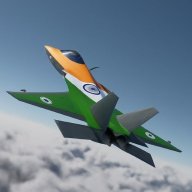
- IG Defence: Joining the fray is this Noida-based startup, which recently unveiled Project KAL. This sleek, delta-wing attack drone is engineered for deep-penetration strikes, matching the 1,000-kilometre range and 3-to-5-hour flight endurance of its competitors. Project KAL is specifically designed to seek and destroy strategic assets such as radar stations and logistical hubs deep inside hostile territory.
This multi-vendor approach accelerates technological breakthroughs and guarantees a resilient, high-volume production supply chain during wartime.
The strategic value of these one-way attack drones has skyrocketed following their prominent role in the Russia-Ukraine war and Middle Eastern conflicts. They have proven exceptionally lethal against air-defence units, fuel depots, and communication nodes.
Because they cost only a fraction of traditional cruise missiles, armed forces can deploy them in large clusters. This tactic forces adversaries to expend multi-million-dollar interceptor missiles to shoot down drones that cost only tens of thousands of dollars to build.
To maximise this asymmetric advantage, Indian defence firms are prioritising extreme cost efficiency. Industry reports suggest that manufacturers are targeting a unit price comparable to or even cheaper than the widely used Iranian Shahed-136, which typically costs between $20,000 and $50,000.
This aggressive pricing model makes them some of the most economical long-range strike weapons in development today.
By merging low production costs with advanced, homegrown technology and flexible customisation, Indian manufacturers are positioning themselves to dominate the expanding global market for suicide drones.
Nations worldwide are urgently looking to acquire inexpensive, long-distance strike capabilities to perform strategic operations without bearing the financial burden of complex cruise missile arsenals.