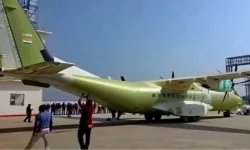
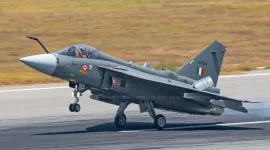
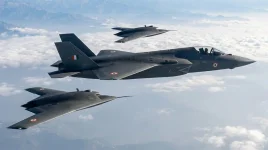
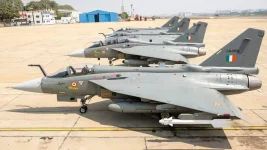
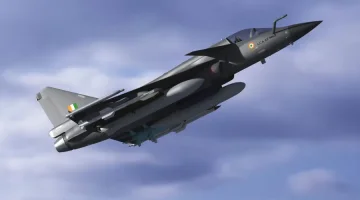
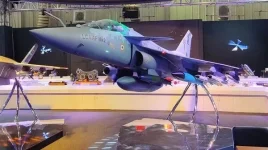
The induction of the highly anticipated Light Combat Aircraft (LCA) Tejas Mk1A into the Indian Air Force (IAF) is likely to encounter additional setbacks.
A crucial progress review meeting between Hindustan Aeronautics Limited (HAL) and the IAF, originally slated for late April or early May, has been deferred.
The postponement reportedly occurred because HAL has not yet submitted a required progress update detailing the resolution of ongoing technical and certification challenges.
This review was intended to be a decisive evaluation of the aircraft's mandatory operational capabilities.
With the meeting delayed, officials anticipate further pushbacks in the planned induction of the first fighter jet, which was initially targeted for the coming months.
Currently, several critical operational milestones are yet to be achieved.
These include the successful execution of missile firing tests, the full validation of the aircraft's weaponry, and the complex integration of the Israeli EL/M-2052 Active Electronically Scanned Array (AESA) radar with the jet's electronic warfare (EW) systems.
The Mk1A variant, part of a landmark 83-aircraft deal signed in February 2021 worth approximately Rs 48,000 crore, relies heavily on these advanced avionics to maintain its combat edge over older platforms.
Frustrated by the shifting timelines, the IAF is demanding a concrete delivery schedule from the state-owned aerospace manufacturer.
Defence sources indicate that the Air Force has already relaxed certain contractual stipulations to expedite the process, expressing readiness to accept the first jet immediately once the core operational benchmarks are met.
This urgency is driven by a critical depletion in India's aerial combat strength.
As legacy aircraft like the MiG-21 Bison are actively being phased out, the IAF currently operates only 29 fighter squadrons, significantly below the sanctioned requirement of 42.5.
The timely arrival of the Tejas Mk1A is therefore vital for maintaining the nation's air defence posture.
The path to induction has been marred by repeated schedule changes.
In February, HAL announced that five Tejas Mk1A fighters were manufactured and equipped with significant capabilities.
However, defence insiders noted that while the hardware is integrated, crucial operational clearances and final certifications are still lacking.
HAL had previously aimed for a March delivery following the variant's inaugural flight from Nashik late last year, after missing an even earlier target to hand over the first two jets by October.
A primary bottleneck in the production timeline has been the delayed delivery of F404-IN20 engines by the American manufacturer GE Aerospace, a global supply chain issue that has been compounded by the intricate technical hurdles of certifying the newly integrated Israeli AESA radar.
In addition to the hurdles facing the Mk1A programme, HAL is also working to finalise deliveries from the initial LCA Tejas order.
Out of the 40 Tejas Mk1 aircraft initially contracted by the IAF—comprising 16 Initial Operational Clearance (IOC) fighters, 16 Final Operational Clearance (FOC) fighters, and eight twin-seat trainers—38 have been delivered, leaving two FOC trainer aircraft yet to be handed over to the service.