Opinion The Case for a Mini-AMCA: How a Single-Engine 5th-Gen Fighter Could Solve the IAF's Squadron Depletion Crisis

The Case for a Mini-AMCA: How a Single-Engine 5th-Gen Fighter Could Solve the IAF's Squadron Depletion Crisis


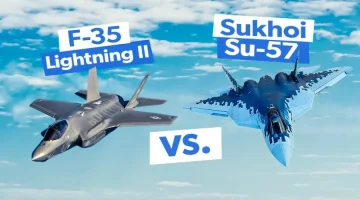
India’s strategy for upgrading its combat aircraft fleet heavily prioritizes advanced, twin-engine jets such as the upcoming Advanced Medium Combat Aircraft (AMCA) and, hypothetically, foreign platforms like theRafale, Su-57 and F-35.

While these heavy fighters deliver long-range dominance, exceptional survivability, and deep-strike power, their procurement exposes a critical vulnerability.

Currently, the Indian Air Force (IAF) is grappling with a severe shortage of combat aircraft, fielding roughly 29 to 31 squadrons against a sanctioned minimum of 42.5.

Twin-engine platforms, including the current Rafale fleet, are notoriously expensive to acquire and sustain, often demanding upwards of $30,000 per flight hour.

Relying exclusively on these premium, heavy-duty aircraft could severely bottleneck the IAF's ability to quickly restore its squadron numbers, leaving a potential gap in lower-tier stealth operations where quantity is just as crucial as quality.

To address this operational shortfall, defence strategists are increasingly pointing toward a single-engine, fifth-generation fighter—unofficially dubbed the "Mini-AMCA."

Envisioned as a 20-ton stealth jet sitting squarely between the 4.5-generation Tejas Mk2 and the heavier AMCA, this concept provides an ideal balance of cost-effectiveness, scalability, and modern survivability.

By taking over essential point defence and air superiority duties, a fleet of these lighter stealth fighters would allow the IAF to reserve its expensive twin-engine assets for complex, high-risk missions such as strategic strikes and the suppression of enemy air defences (SEAD).

The feasibility of this lightweight stealth fighter rests entirely on securing a capable powerplant.

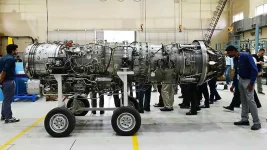
At present, the domestically manufactured GE F-414 engine, which generates around 98 kN of thrust, is perfectly suited for the Tejas Mk2 but lacks the raw power needed for a 20-ton fifth-generation fighter to achieve supercruise and extreme agility.

However, a major technological breakthrough is on the horizon. The Indian government is advancing a joint venture between the Defence Research and Development Organisation (DRDO) and France's Safran to co-develop a new 110–120 kN class high-thrust engine.

Originally intended for the AMCA Mk2, this advanced engine could serve as the perfect catalyst for a single-engine stealth platform, delivering the precise thrust-to-weight ratio required for true fifth-generation performance.

In combat scenarios, a single-engine stealth jet would act as a perfect companion to the AMCA rather than a competitor.

While the twin-engine AMCA is engineered with a massive payload capacity for extended missions, a lighter counterpart would excel in airspace denial, rapid reaction alerts, and high-frequency sorties.

Its internal weapons bay would be capable of housing two to four beyond-visual-range (BVR) missiles—more than enough firepower for standard air defence operations while preserving its stealth profile.

Most importantly, the combination of lower fuel consumption and simpler maintenance routines would drastically reduce lifecycle costs.

This financial flexibility could allow the IAF to procure these jets in vast quantities, potentially acquiring upwards of 150 units without breaking the defence budget.

Beyond domestic requirements, this single-engine platform holds immense potential for the global export market.

Numerous nations desire modern stealth combat capabilities but cannot afford premium Western platforms like the F-35, or they wish to avoid the geopolitical complications tied to Russian or American hardware.

A cost-effective, Indian-made stealth fighter could dominate this unfulfilled niche, performing a role similar to the F-16 during the fourth-generation era.

Exporting such an aircraft would not only boost India's defence manufacturing sector but also forge stronger strategic alliances across Latin America, Africa, and Asia.

Despite the clear benefits, India has yet to officially launch a "Mini-AMCA" program. This hesitation stems from an already saturated domestic aerospace pipeline.

Hindustan Aeronautics Limited (HAL) and the Aeronautical Development Agency (ADA) are currently heavily invested in delivering the Tejas Mk1A, developing the Tejas Mk2, creating the Twin Engine Deck Based Fighter (TEDBF) for the Navy, and managing the core AMCA project—which recently received a ₹15,000 crore clearance from the Cabinet Committee on Security (CCS) in March 2024 to begin prototype development.

Initiating an entirely new, clean-sheet fighter design could overburden engineering teams and risk cascading delays across all vital defence programs.

Additionally, there are concerns about the aircraft overlapping with the medium-weight role currently assigned to the non-stealth Tejas Mk2.

To bypass these logistical hurdles, the most pragmatic strategy is to develop the single-engine stealth jet directly from the existing AMCA framework.

By borrowing the AMCA’s established design architecture, sensor fusion technology, avionics suite, and stealth geometries, Indian engineers could create a scaled-down variant alongside the maturation of the new DRDO-Safran engine.

This derivative approach would drastically slash research and development costs, minimize technical risks, and guarantee parts commonality across the IAF's future fleet.

Ultimately, a derivative "Mini-AMCA" would serve as India's accessible answer to the F-35—a highly adaptable, mass-produced stealth fighter that bridges the critical void between legacy aircraft and top-tier heavy combat jets.
 
India’s fighter fleet faces a critical transition phase over the next 10–15 years. With ageing platforms like MiG-21, SEPECAT Jaguar, and Mirage 2000 nearing retirement, the Indian Air Force (IAF) risks a significant dip from the current ~29 squadrons against the sanctioned strength of 42. By 2035–40, nearly 300–350 aircraft could phase out, and with annual attrition, the total requirement may rise to around 450–500 new jets just to maintain force levels.
On the induction side, confirmed programs like HAL Tejas Mk1A (180 units), additional 12 units Sukhoi Su-30MKI, and Dassault Rafale (including 26 naval variants) ,will provide some relief. However, larger decisions on HAL Tejas Mk2, 114 multi-role fighters like Rafale,60 to 100 units Su57, and the indigenous HAL AMCA 120 units remain crucial and time-sensitive.
The idea of a indigenous low-cost single-engine stealth fighter,mini AMCa 100unit or co development of 100 units Sukhoi Su-75 Checkmate may appear attractive to boost numbers quickly, but starting a new program now would delay outcomes beyond 2040. Instead, the priority must be scaling up domestic production, ensuring engine supply (notably General Electric F414), and accelerating decision-making.
Private sector participation is crucial to boost pace to manufacture 35 to 40 aircraft per year.Bring private players (Tata, L&T) into final assembly lines along with HAL.

Ultimately, India’s challenge is not just aircraft acquisition but industrial capacity. Without rapid expansion in manufacturing and strategic clarity, achieving 42 squadrons by 2035 will remain difficult.
France’s Safran is in advanced discussions with India to co-develop a high-thrust jet engine (around 110-120 kN class) for the HAL AMCA Mk2. This is a critical step because India currently depends on foreign engines like the General Electric F414 for HAL Tejas Mk2.
India prepares for historic three to four parallel fighter jet manufacturing line.
India’s plan to acquire 30 Predator drones + 60 indigenous Ghatak drone with missiles is a major step in strengthening long-range surveillance and precision strike capability.
Upgrade existing fleet (quickest gains)
Extend life and upgrade Mirage 2000 and MiG-29
Super-upgrade Sukhoi Su-30MKI with AESA radar, EW, and weapons.
Force multipliers (increase power without more jets)
More AWACS
Mid-air refuellers
Drones like MQ-9B Predator
GhatakAct as a “loyal wingman” in future combat scenarios.
India won’t reach 42 squadrons by just current programs. It needs:
(1) a mass-producible low-cost fighter + (2) 2–3x production speed + (3) temporary imports/leasing + (4) drone integration.
Without these bold steps, the gap you calculated (400–500 jets) will remain unresolved.
 
As is, India having a hotch potch of fighter aircraft projects which have been initiated without having any particular philosophy. No point in adding in more based on an afterthought !
 
The point now is desperation is clearly visible any project indigenously is unsafe until you don't have an engine or a supplier you can rely on and clearly GE isn't one
 
India’s fighter fleet faces a critical transition phase over the next 10–15 years. With ageing platforms like MiG-21, SEPECAT Jaguar, and Mirage 2000 nearing retirement, the Indian Air Force (IAF) risks a significant dip from the current ~29 squadrons against the sanctioned strength of 42. By 2035–40, nearly 300–350 aircraft could phase out, and with annual attrition, the total requirement may rise to around 450–500 new jets just to maintain force levels.
On the induction side, confirmed programs like HAL Tejas Mk1A (180 units), additional 12 units Sukhoi Su-30MKI, and Dassault Rafale (including 26 naval variants) ,will provide some relief. However, larger decisions on HAL Tejas Mk2, 114 multi-role fighters like Rafale,60 to 100 units Su57, and the indigenous HAL AMCA 120 units remain crucial and time-sensitive.
The idea of a indigenous low-cost single-engine stealth fighter,mini AMCa 100unit or co development of 100 units Sukhoi Su-75 Checkmate may appear attractive to boost numbers quickly, but starting a new program now would delay outcomes beyond 2040. Instead, the priority must be scaling up domestic production, ensuring engine supply (notably General Electric F414), and accelerating decision-making.
Private sector participation is crucial to boost pace to manufacture 35 to 40 aircraft per year.Bring private players (Tata, L&T) into final assembly lines along with HAL.

Ultimately, India’s challenge is not just aircraft acquisition but industrial capacity. Without rapid expansion in manufacturing and strategic clarity, achieving 42 squadrons by 2035 will remain difficult.
France’s Safran is in advanced discussions with India to co-develop a high-thrust jet engine (around 110-120 kN class) for the HAL AMCA Mk2. This is a critical step because India currently depends on foreign engines like the General Electric F414 for HAL Tejas Mk2.
India prepares for historic three to four parallel fighter jet manufacturing line.
India’s plan to acquire 30 Predator drones + 60 indigenous Ghatak drone with missiles is a major step in strengthening long-range surveillance and precision strike capability.
Upgrade existing fleet (quickest gains)
Extend life and upgrade Mirage 2000 and MiG-29
Super-upgrade Sukhoi Su-30MKI with AESA radar, EW, and weapons.
Force multipliers (increase power without more jets)
More AWACS
Mid-air refuellers
Drones like MQ-9B Predator
GhatakAct as a “loyal wingman” in future combat scenarios.
India won’t reach 42 squadrons by just current programs. It needs:
(1) a mass-producible low-cost fighter + (2) 2–3x production speed + (3) temporary imports/leasing + (4) drone integration.
Without these bold steps, the gap you calculated (400–500 jets) will remain unresolved.
Remove HAL to achieve our goals of single engine jet fighter. HAL has always had qualities, delay in delivery and expensive retrofit.
 
ONLY Su57 is worth the money spent. The others are just good in movies, lobbying and propaganda. As was seen in operation Sindoor and the ,"paper fighter" Rafale! Hope good sense prevails. Jai Bharat Jai Hind!!!
 
Remove HAL to achieve our goals of single engine jet fighter. HAL has always had qualities, delay in delivery and expensive retrofit.
Identify and rectify HAL's problems. Our true enemies (ex colonialist) would like closing down all our PSUs. In the ongoing conflicts western private sector driven mighty forces of US and Israel are made to bleed through their noses by a sovereign third world country with its ancient wisdom and patriotism. Jai Bharat Jai Hind!
 
Su-75 shows no signs of going anywhere. I think it's a private venture without the funding to go further at the moment. If India might want to develop a lighter 5G aircraft, could be an idea to join Sukhoi on that one. While Sukhoi has failed to generate interest in the aircraft so far, worldwide demand for a low cost 5G could emerge in the future.

Would IAF be interested in a lower operational cost 5G fighter?
 
What ever be the project - the mistake of opting for GE engine should not be repeated. Since M88 appears to be too less powerful, better to consider 177S of Russia with full TOT
 

Forum statistics

Threads
7,018
Messages
65,231
Members
5,278
Latest member
OMer ali
Back
Top