In a bid to protect its crucial aerial surveillance assets, Pakistan is reportedly setting the stage for a major mid-life upgrade (MLU) of its Saab 2000 Erieye Airborne Early Warning and Control (AEW&C) fleet.
Spearheaded by the National Aerospace Science and Technology Park (NASTP), this extensive modernisation effort aims to drastically improve the survivability of the Pakistan Air Force's (PAF) key force multipliers.
Early details indicate that the aircraft will undergo significant structural changes and receive advanced mission systems, alongside a powerful radar upgrade designed to push detection ranges far beyond current limits.
Currently, the Saab 2000 Erieye serves as the central pillar of Pakistan’s airborne monitoring grid.
The fleet of nine aircraft currently relies on an Active Electronically Scanned Array (AESA) radar operating within the S-band, which is widely understood to reach a maximum instrumental range of about 450 kilometres under the best possible conditions.
However, the region's evolving air defence landscape demands greater capabilities.
The NASTP, established to boost Pakistan’s self-reliance in cutting-edge aerospace engineering, system integration, and repair, will oversee the complex overhaul.
Integrating modern radar systems, superior electronic support measures (ESM), and stronger power generators will likely require physical changes to the Saab 2000's frame.
These alterations will help manage heavier electrical loads and cooling needs, ultimately aiming to extend the service life of these critical aircraft well into the 2040s.
The driving force behind this ambitious upgrade is the rapidly changing nature of aerial warfare. Airborne early warning planes rely on staying far away from danger while peering deep into enemy skies.
With the deployment of highly capable, long-range surface-to-air missiles by India, the safety of large, slow-moving airborne radar platforms is no longer guaranteed.
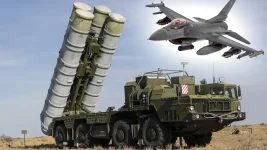
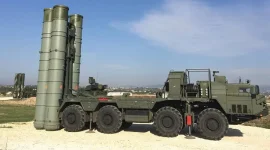
A major catalyst for this modernisation drive is rooted in the events of Operation Sindoor in May 2025. During the intense four-day conflict, an Indian Air Force S-400 air defence battery successfully engaged and took down a PAF Saab 2000 Erieye.
Firing a 40N6E missile, the system reportedly achieved the kill at an astonishing distance of over 300 kilometres, marking a historic milestone for long-range surface-to-air missile engagements.
Whatever the precise circumstances of that specific incident may have been, the underlying military reality is undeniable.
The S-400 system's most advanced interceptor boasts a maximum reach of 400 kilometres against suitable targets. This poses a massive threat to large, unagile command aircraft attempting to operate anywhere near contested border zones.
By pursuing an Erieye Extended Range (ER) equivalent, Pakistan hopes to rewrite this tactical equation.
A radar system with a significantly longer reach would enable PAF operators to fly much deeper within the safety of their own airspace while still keeping a watchful eye on cross-border activities.
This greater stand-off distance is essential for reducing the risk posed by long-range air defence networks during periods of high tension.
Adding to the urgency of Pakistan's upgrade programme is India's steady deployment of additional S-400 batteries.
Reports indicates that India recently received components for its fourth S-400 regiment, which is being positioned along the western operational front in Rajasthan to strengthen its layered air defence shield.
This continuous build-up places further pressure on Pakistan’s airborne radar fleet, forcing them to operate even further away from potential conflict zones.
Ultimately, the overhaul of the Saab 2000 fleet is much more than a standard maintenance update for Pakistan.
It is a vital strategic push to save an essential command-and-control tool from becoming obsolete in a highly contested environment dominated by modern missiles and electronic warfare.
Whether the final upgrade features a complete Erieye ER radar swap, the integration of Gallium Nitride (GaN) technology, or a vastly improved electronic warfare suite, the goal is straightforward: stretch the detection range, boost aircraft survival rates, and ensure the PAF's flying radar network can withstand the region's mounting threats.