As the Indian Air Force (IAF) moves forward with the ambitious Rs 3.25 lakh crore Multi-Role Fighter Aircraft (MRFA) programme to acquire 114 new combat jets, France's Dassault Rafale has emerged as a prominent contender.
While public and media discourse has primarily focused on the number of jets, domestic manufacturing clauses, and technology transfer, an equally crucial factor must take centre stage: contractual autonomy.
To ensure true strategic independence, India must secure the legal and technical right to replace foreign mission systems with homegrown technologies over the aircraft's lifespan.
The Rafale is globally recognised as a formidable 4.5-generation fighter. The IAF already operates a fleet of 36 Rafales—procured under a 2016 agreement—which have proven their tactical worth through advanced sensors, heavy payload capacity, and electronic warfare capabilities.
If the new MRFA deal is finalised, these 114 additional fighters will become the backbone of India's aerial defence, likely serving well into the 2060s as older Soviet-era jets are phased out.
Because of this multi-decade operational lifespan, defence planners must look beyond the initial purchase and safeguard the country from becoming perpetually dependent on foreign manufacturers for future technology cycles.
The most practical approach is to embed specific clauses in the initial contract that grant India the right to perform a mid-life upgrade (MLU) after the jets complete their first decade of service.
This provision would allow the IAF to swap out original French avionics for advanced, indigenous alternatives once they reach operational maturity.
Historically, foreign aerospace companies have maintained a monopoly on fighter upgrades, locking purchasing nations into costly, decades-long dependencies.
For operators, paying for these mandatory foreign modernization packages over 30 or 40 years can ultimately cost nearly as much as the initial purchase of the aircraft itself.
Securing upgrade autonomy is highly practical today because India’s domestic aerospace sector is maturing rapidly.
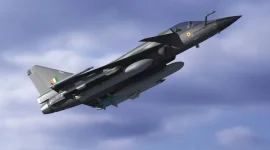
The Defence Research and Development Organisation (DRDO) and the Aeronautical Development Agency (ADA) are making significant strides with hardware like the Uttam Active Electronically Scanned Array (AESA) radar, which is currently being prepared for the indigenous LCA Tejas Mk1A and Mk2 fighters.
Alongside the Uttam radar, India is heavily investing in homegrown electronic warfare suites, secure data links, and advanced mission computers. By the mid-2030s, these domestic systems could easily match, or even surpass, the factory-standard equipment that comes with the initial Rafale delivery.
To make future integration possible, India must negotiate upfront access to the Rafale’s software architecture, digital interfaces, and essential technical blueprints.
Acquiring these technical rights does not mean ending collaboration with the original French manufacturer; rather, it ensures that India holds the ultimate authority over how and when its fighter fleet evolves, free from external hardware lock-ins.
This strategy directly aligns with the government’s "Atmanirbhar Bharat" initiative.
By utilizing standard Indian radars, communication networks, and sensors across the entire Air Force—from the Tejas to the upcoming Advanced Medium Combat Aircraft (AMCA) and a future Rafale fleet—India would dramatically reduce long-term logistics and maintenance costs.
Furthermore, operating a unified, homegrown electronic ecosystem would simplify pilot training and allow the IAF to integrate new domestic weapons on its own schedule, without having to wait for a foreign government's approval or export timelines.
Ultimately, insisting on contractual autonomy will provide a massive industrial boost to India’s defence manufacturing sector.
Allowing domestic companies the opportunity to integrate complex, cutting-edge avionics into one of the world's most advanced fighters would build invaluable engineering experience.
This hands-on expertise will be critical for the success of India's future military aviation endeavours, laying the groundwork for complete self-sufficiency in the next generation of manned and unmanned aerospace platforms.