- Views: 2K
- Replies: 3
The Indian Air Force's (IAF) long-standing quest for 114 Multi-Role Fighter Aircraft (MRFA) has reached a critical juncture.
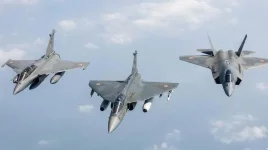
While the French-made Rafale remains a top contender following its successful deployment and strategic performance, new hurdles regarding technical sovereignty have emerged.
Although the procedural "logjam" for the multi-billion dollar acquisition has cleared, the path forward remains complicated by specific contractual demands.
The "Interface Control Document" (ICD) Standoff
The primary obstacle currently stalling negotiations is the Interface Control Document (ICD) authority.The Indian Government and the Ministry of Defence have established a firm "red line" regarding this technical data.
Why the ICD matters:
- Weapon Integration: It provides the digital "blueprints" necessary to integrate indigenous Indian weaponry, such as the Astra Beyond Visual Range (BVR) missile and the Rudram anti-radiation missiles, onto the foreign platform.
- Sovereignty: Without ICD authority, India would remain dependent on the original equipment manufacturer (OEM) for every software update or weapon modification.
- Cost-Effectiveness: High-stakes contracts involving a large fleet require the buyer to have the autonomy to maintain and upgrade the jets locally over their 40-year lifespan.
The American Alternative: Boeing’s F-15EX Eagle II
Amidst the Rafale uncertainty, the Boeing F-15EX Eagle II, often described as a "Missile Tanker" due to its massive payload capacity, has entered the spotlight.In April 2026, Air Chief Marshal AP Singh conducted a flight in the aircraft at Nellis Air Force Base in Nevada.
This visit, coupled with anticipated diplomatic announcements during high-level US visits in May, has sparked global interest.
However, incorporating an American fighter presents significant logistical challenges:
- Infrastructure: The IAF currently operates no US-origin fighter jets. Introducing the F-15EX would require entirely new maintenance hangars, training facilities, and supply chains.
- Timeline: Even with a fast-tracked deal, establishing these systems could take a decade—a delay India cannot afford as its squadron strength continues to decline.
- Existing Fleet: While the Indian Navy successfully operates the Boeing P-8I Poseidon, the requirements for a high-tempo fighter squadron are far more complex.
The Fifth-Generation Threat and the Russian Proposal
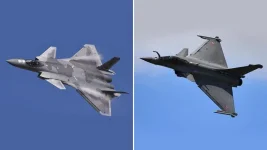
The regional security landscape is shifting rapidly. China has begun promoting the export version of its J-35 stealth fighter, with reports suggesting potential acquisition by the Pakistan Air Force.While India is developing its own Advanced Medium Combat Aircraft (AMCA), the platform is not expected to be fully operational for several years.
In response, Russia has proposed the Su-57MkI, a 5th-generation fighter. Unlike Western offers, Moscow has historically shown more flexibility regarding deep technology transfer and "Make in India" manufacturing.
For New Delhi, the Su-57MkI could serve as a "stop-gap" measure to ensure air parity in the region until the domestic AMCA fleet arrives.
A Pragmatic "Quick Fix": The Super Sukhoi
Many experts argue that the most logical solution to the falling squadron numbers lies with the existing backbone of the IAF: the Sukhoi Su-30MKI.| Feature | Advantage of the Su-30MKI Platform |
|---|---|
| Weaponry | The only jet currently capable of launching the air-launched BrahMos supersonic cruise missile. |
| Production | Existing production lines at Hindustan Aeronautics Limited (HAL) can be reactivated quickly. |
| Upgrades | The "Super Sukhoi" program is already modernizing the fleet with indigenous "Virupaksha" AESA radars. |
| Logistics | No new infrastructure is required; pilots and technicians are already trained on the airframe. |
With 12 additional Su-30MKIs already on order for delivery by 2027, increasing this order could provide a faster and more cost-effective boost to air power than waiting years for a complex foreign contract to materialize.
The Road Ahead
India faces a "now or never" situation regarding its air superiority.With a multi-front threat environment, the government must balance the desire for high-end foreign technology with the practical need for immediate numbers.
Whether through the Rafale, the F-15EX, or an expanded domestic Sukhoi fleet, the decision will determine the security of Indian skies for the next half-century.
The focus must now shift from perpetual testing to rapid delivery to ensure the IAF maintains its decisive edge.