- Views: 4K
- Replies: 13
The Aeronautical Development Agency (ADA) has indicated that India’s Advanced Medium Combat Aircraft (AMCA) initiative is positioned to emerge as the most financially efficient fifth-generation fighter project globally.
According to a senior ADA representative, the entire research and development (R&D) allocation for the aircraft is capped at approximately $1.8 billion (₹15,000 crore).
This exceptionally low financial footprint makes it one of the most economical next-generation aviation efforts undertaken by any modern military.
The Cabinet Committee on Security (CCS) formally cleared this ₹15,000 crore budget in March 2024, officially greenlighting the full-scale prototype development phase.
While the AMCA boasts state-of-the-art features such as a low-observable stealth profile, an internal weapons bay, supercruise performance, advanced sensor fusion, and a network-centric architecture, its developmental costs are a fraction of those seen in comparable international projects.
Even excluding the separate funding required for engine development—where the initial Mk1 variants will utilise the proven, domestically manufactured GE F-414 engine, while a new modular 110-120 kN powerplant is currently being evaluated for co-development for the Mk2—ADA officials stress that the AMCA represents the most cost-effective attempt by a major world power to build a stealth fighter from the ground up.
To contextualise this achievement, one must look at similar international initiatives.
The American F-35 Lightning II is widely recognised as the costliest fighter program in history, with R&D expenses surpassing an estimated $55 billion.
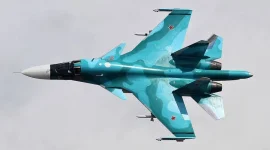
In comparison, both Turkey’s TF Kaan and Russia’s Su-57 Felon—a platform whose export variant, the Su-57E, has been historically assessed by the Indian Air Force—are estimated to have absorbed over $10 billion each during their respective development cycles.
Meanwhile, the Chinese J-20 Mighty Dragon, which shares a similar operational role and design philosophy with the AMCA, is believed to have required approximately $5 billion to develop.
Therefore, even the most conservatively funded stealth programs among India’s regional rivals cost nearly three times as much as the ₹15,000 crore allocated for the Indian jet.
The secret to this extreme cost efficiency lies in ADA’s modern engineering methodologies.
By leveraging sophisticated digital design tools, relying heavily on simulation-driven testing, implementing modular architectures, and recycling reliable subsystems, developers have drastically reduced overhead.
Furthermore, the technical expertise accumulated during previous homegrown fighter projects has been highly instrumental. Officials emphasise that this strict financial discipline does not dilute the aircraft's critical fifth-generation capabilities.
Currently, ADA has laid out a roadmap to build five flying prototypes at a staggered interval, with the first rollout expected by late 2028.
The financial scale of the AMCA project also looks highly favourable when weighed against India’s historical aviation efforts.
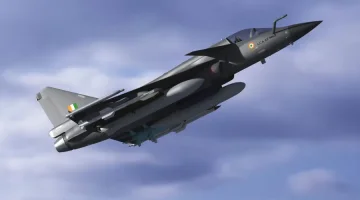
The development of the Light Combat Aircraft (LCA) Tejas Mk1 cost about $1.1 billion, while the ongoing 4.5-generation LCA Tejas Mk2 program requires an estimated $1.5 billion in funding.
Given that the Tejas series is already lauded internationally for its cost-effectiveness, the budget for the AMCA demonstrates remarkable fiscal restraint.
At $1.8 billion, the AMCA is only slightly more expensive to develop than the Tejas Mk2. This is a significant accomplishment, considering the AMCA is an exponentially more complex machine.
Integrating low-observable stealth shaping, cutting-edge composite materials, internal payload bays, and next-generation avionics usually drives costs up exponentially, yet India has managed to keep these expenses remarkably low.
ADA representatives highlight that the national aerospace sector has matured into a highly efficient ecosystem, capable of producing world-class defence technology without the inflated price tags seen elsewhere.
To streamline production further and ensure competitive efficiency, the Ministry of Defence has actively sought greater private sector participation, recently shortlisting domestic industry giants like Tata Advanced Systems, Larsen & Toubro, and Bharat Forge for prototype manufacturing.
By integrating engineering, flight testing, and mass production planning from day one, the AMCA proves that a fifth-generation jet does not mandate a multi-billion-dollar bottomless pit of funding.
Upon entering active service in the mid-2030s, the AMCA will elevate India into an exclusive club of nations possessing the capability to field a locally manufactured fifth-generation fighter.
More importantly, it will simultaneously establish an unprecedented global benchmark for how to develop stealth combat aviation economically and efficiently.