- Views: 6K
- Replies: 33
During its recent Q4 FY26 earnings conference call, Hindustan Aeronautics Limited (HAL) shared a crucial update on India's flagship fighter jet project.
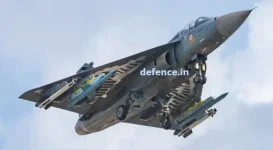
The state-run aerospace manufacturer announced that it has successfully built, flown, and evaluated approximately 30 Tejas Mk1A aircraft, including both fighter and trainer variants.
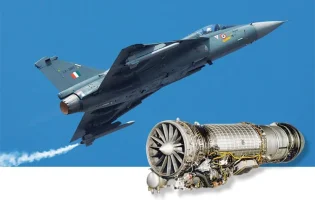
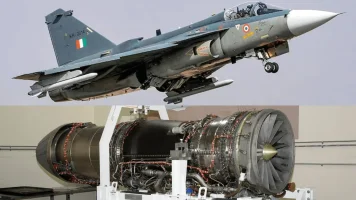
However, the formal handover of these jets to the Indian Air Force (IAF) is currently on hold because of a delay in the delivery of GE F404 engines from the United States.
To ensure the project did not stall, HAL engineers utilised Category-B (CAT B) GE F404 engines to carry out necessary flight trials and comprehensive testing on all 30 completed airframes.
Since CAT B engines are specifically designated for certification and developmental trials rather than active combat duty, this workaround permitted the company to successfully finish the integration and validation phases without waiting for the final production-grade powerplants from GE Aerospace.
With the preliminary testing complete, these jets are now parked and ready for the final step: the installation of combat-ready engines. Once this integration is finished, the aircraft will be officially transferred to the IAF.
HAL anticipates that the induction process will commence between August and September 2026, coinciding with the expected arrival of new GE F404-IN20 engine consignments from America.
Because the critical stages of structural assembly, systems integration, and aerial validation are already behind them, HAL is positioned to act swiftly as soon as the supply chain normalises.
The company's leadership confirmed that the fleet of fully constructed jets can be equipped with the new engines and prepared for deployment in a very short timeframe.
This approach demonstrates HAL's commitment to maintaining momentum on a vital national defence project despite facing severe logistical bottlenecks.
By refusing to halt the manufacturing line, the aerospace firm managed to sustain continuous progress in airframe construction, software integration, and structural proving, effectively minimising the overall impact of the international supply chain disruption.
Defence analysts point out that this proactive manufacturing strategy will enable a massive surge in deliveries once the supply of American engines becomes steady.
Recently, HAL Chairman and Managing Director Ravi Kota verified that the company has already taken delivery of six GE F404 engines, which are currently undergoing airframe integration. Furthermore, HAL expects to receive an additional 15 to 20 engines by March 2027.
The Tejas Mk1A is a cornerstone of India's push for self-reliance in the defence sector and is slated to replace the IAF's ageing fleet of Soviet-era MiG-21 fighters.
The Ministry of Defence initially signed a ₹48,000 crore contract in 2021 for 83 of these jets, and recently cleared the acquisition of 97 additional units, bringing the total order book to 180 aircraft.
Compared to earlier versions, the Mk1A variant boasts significant technological leaps that make it a highly potent platform.
It comes equipped with an indigenous Active Electronically Scanned Array (AESA) radar, advanced electronic warfare (EW) suites, and the capability to deploy Beyond-Visual-Range (BVR) missiles.
As the engine supply stabilises, the IAF stands ready to significantly bolster its operational combat squadrons with these modern, domestically produced fighters.