- Views: 3K
- Replies: 4
India’s ambition to master hypersonic technology has rapidly shifted from a future goal to a present reality.
The nation is actively developing a comprehensive, multi-tiered hypersonic strike network designed for nuclear deterrence, naval dominance, and highly accurate conventional strikes.
Leading this strategic leap are three highly advanced, interconnected weapon systems: the Dhvani Hypersonic Glide Vehicle (HGV), the Long-Range Anti-Ship Hypersonic Missile (LR-AShM), and the Extended Trajectory Long Duration Hypersonic Cruise Missile (ET-LDHCM).
The Dhvani HGV marks a major milestone for India, introducing a long-range, maneuverable platform capable of delivering nuclear payloads.
Travelling at speeds well over Mach 5, with an estimated reach approaching 10,000 kilometres, Dhvani is designed to glide along the upper atmosphere in an unpredictable flight path.
This extreme maneuverability makes it incredibly difficult for standard ballistic missile defence shields to track and intercept.
Throughout 2026, ongoing trials are expected to prove the reliability of its heat-resistant materials, targeting software, and final-stage navigation—essential features for surviving heavily protected enemy airspace.
Operating alongside India's nuclear deterrent is the LR-AShM, a weapon specifically built to secure the Indian Ocean Region.
With a striking distance of roughly 1,500 kilometres, this hypersonic glide missile can destroy both moving naval vessels and stationary land targets.
It acts as a powerful tool to prevent adversaries from operating freely in Indian waters.
Notably, the LR-AShM relies entirely on locally produced electronics and sensors, ensuring true self-reliance and severing dependence on foreign targeting networks.
Furthermore, the development of land, sea, and air-launched versions of this missile proves that India now views hypersonic weapons as practical tools for active combat, not just ultimate deterrents.
This modern capability builds significantly upon the foundational success of India’s historic first long-range hypersonic flight test conducted from Dr APJ Abdul Kalam Island off the coast of Odisha in late 2024.
Bridging the gap between standard cruise missiles and ultra-fast glide vehicles is the ET-LDHCM, which underwent crucial testing in 2025.
Travelling at blistering speeds exceeding Mach 8 and covering distances greater than 1,500 kilometres, this missile is highly adaptable.
It can change course mid-flight and can be fired from aircraft, naval ships, and ground launchers.
This versatility makes the ET-LDHCM a highly effective weapon for penetrating advanced enemy air defence networks, whether carrying conventional explosives or nuclear warheads.
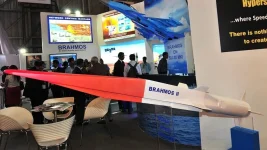
The driving force behind these advanced missiles is India's recent breakthrough in scramjet engine technology, a triumph built upon years of rigorous research with the Hypersonic Technology Demonstrator Vehicle (HSTDV) program.
In January 2026, the Defence Research and Development Organisation (DRDO) achieved a massive milestone by successfully running an actively cooled scramjet engine on the ground for more than 12 minutes.
This sustained combustion is the vital technological key that allows cruise missiles to maintain hypersonic speeds over long distances, moving India permanently past the phase of short-duration experimental flights.
Together, these advanced systems represent a fundamental change in India's military doctrine.
Instead of relying solely on the threat of retaliation, India is developing the capability to pierce through layered enemy defences and strike with virtually no warning time.
In a geopolitical environment where neighbouring China has already aggressively deployed hypersonic weaponry, India is responding not just by matching numbers, but by creating an unpredictable, flexible, and completely indigenous defence ecosystem.