- Views: 2K
- Replies: 13
The possibility of building Russia's Su-57E fifth-generation stealth fighter in India now rests squarely in the hands of the Indian government, according to Hindustan Aeronautics Limited (HAL).
During the company's Q4 FY26 earnings call in mid-May 2026, HAL's newly appointed Chairman and Managing Director, Ravi Kota, made it clear that accepting Russia's proposal to manufacture the export version of the Su-57 locally is a strategic policy decision, not a choice HAL can make on its own.
When questioned by analysts about potential orders related to the jet, Kota kept his response brief, noting simply that "it is the government's call."
This clarification arrives as rumours intensify about Russia aggressively marketing the Su-57E to New Delhi.
Moscow's offer reportedly includes a comprehensive package featuring full technology transfer, local assembly, and licensed production that would leverage India's existing aerospace infrastructure.
In fact, earlier in April 2026, former HAL CMD D.K. Sunil revealed that a Russian delegation had already assessed HAL's manufacturing plants.
The joint assessment concluded that nearly half of HAL's current facilities could be repurposed for Su-57 production, though some fresh investments would be required.
While HAL stands ready and equipped to take part in this massive manufacturing effort if instructed, Kota stressed that the authority to proceed belongs exclusively to national policymakers and top defence officials.
The state-run aerospace giant will only step in once formal directives are issued by the Ministry of Defence.
Over the last year, Russia has significantly ramped up its efforts to pitch the Su-57E to India.
This push coincides with the Indian Air Force's ongoing evaluation of its future requirements for advanced, fifth-generation combat planes.
Russian state-owned defence conglomerate Rostec and its subsidiary United Aircraft Corporation have publicly stated their readiness to share technology without restrictions.
They have assured that any technical demands from India regarding the stealth fighter would be completely acceptable, aiming to build on the historical success of joint manufacturing projects like the Su-30MKI.
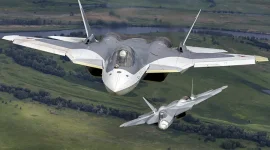
Developed by the Sukhoi Design Bureau, the Su-57E is the export model of Russia's premier stealth fighter. It is built to dominate airspace and conduct multirole strike missions.
The advanced jet features a radar-evading stealth design, cutting-edge avionics, the ability to sustain supersonic speeds without afterburners (supercruise), internal bays for carrying weapons, and modern sensor fusion to give pilots a comprehensive view of the battlefield.
At the same time, India is heavily invested in its own domestic fifth-generation fighter project, known as the Advanced Medium Combat Aircraft (AMCA).
The AMCA is intended to be the cornerstone of India's future aerial stealth capabilities. However, because the homegrown fighter is still in its developmental phase, it is not expected to officially join the fleet until well into the next decade.
During the same earnings call, HAL management clarified that current AMCA tenders only relate to prototype development, and the designated production agency for the indigenous jet has not yet been finalised.
Defence analysts suggest that New Delhi's final verdict on the Su-57E will require a complex balancing act.
The government must weigh the immediate operational needs of the Air Force against the specifics of the technology transfer terms and potential boosts to local industry.
Furthermore, policymakers have to carefully consider international geopolitical alignments and ensure that buying a foreign jet does not derail the progress of India's own AMCA program.
To date, the Indian government has kept silent on whether it will accept Russia's Su-57E offer.
The recent remarks from HAL’s leadership confirm that any ongoing conversations about the fighter jet are happening strictly within the highest levels of strategic and national defence planning, far above the corporate operational sphere.