A recent tender issued by the Defence Research and Development Organisation (DRDO) for a domestic "Safety-Arming Mechanism Assembly" points to a major leap in India's military manufacturing capabilities.
While the procurement might look ordinary, it signals that the nation is laying the groundwork to mass-produce next-generation smart weapons, including kamikaze drones, lightweight precision munitions, and glide bombs.
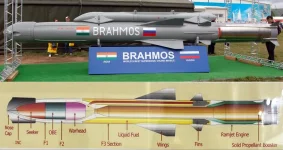
Although the tender details are highly technical, defence experts consider the Safety and Arming Mechanism (SAM) to be one of the most vital components of any modern guided weapon.
These devices serve as a crucial barrier between the explosive charge and the detonation system. They guarantee that the warheads stay completely secure during handling, storage, and transport, only activating when fired under very specific, controlled conditions.
In today's smart munitions, the safety-arming unit acts as the mechanical and electronic brain that controls the shift from a dormant state to an active, combat-ready mode. Advanced weapons simply cannot function, detach, arm, or explode safely without these sophisticated internal systems.
This technology is especially vital for modern precision-guided systems that require exact timing and highly dependable safety protocols.
The mechanisms ensure that the bombs or drones become armed only after satisfying strict launch criteria, such as reaching a certain speed, completing a set flight time, achieving specific altitudes, or moving a safe distance away from the aircraft firing them.
In the past, India relied heavily on international vendors for these sensitive technologies, including electronic fuzes, pyrotechnic starters, and micro-electromechanical systems (MEMS).
Because these components form the foundation of precision strike capabilities, foreign nations tightly control their export and distribution.
The latest push by the DRDO clearly indicates that India aims to manufacture the entire safety and arming sequence within its borders.
Achieving domestic production of these systems is a crucial milestone, as self-reliance in this area is a prerequisite for the large-scale, independent manufacturing of advanced weaponry.
Defence analysts note that this localization drive complements India’s rapidly growing precision strike sector.
Over recent years, the DRDO and domestic industries have fast-tracked several smart weapon projects, including loitering munitions, indigenous kamikaze drones, and the ULPGM lightweight precision-guided bomb family.
Highlighting this rapid progress, the DRDO and the Indian Air Force successfully conducted the maiden flight trial of the Tactical Advanced Range Augmentation (TARA) weapon off the coast of Odisha on May 7, 2026, demonstrating India's ability to upgrade unguided bombs into high-tech precision strike systems.
Every one of these advanced systems relies on highly dependable, miniaturized arming electronics that can fit inside small airframes and survive intense launch stresses.
As India moves these weapons from the testing phase into full-scale production, the demand for standardized, locally made fuzing and arming subsystems has grown exponentially.
The release of this tender is a strong indicator that various weapon programs are entering the serial production phase.
When a country begins building its own safety-arming devices, it usually points to a broader strategy: scaling up manufacturing, developing new weapon variants, actively pursuing export markets, and ending reliance on imported fuze technology.
This development comes at a critical time, as the Indian Air Force, Army, and Navy rapidly expand their arsenals of precision weapons.
All three branches are placing a high priority on acquiring stand-off strike capabilities, autonomous kamikaze drones, and affordable guided munitions tailored for both standard warfare and high-altitude operations.
Loitering munitions and kamikaze drones demand exceptionally reliable safety electronics because they can fly for long durations before locking onto a target.
Likewise, glide bombs like the newly tested TARA system require complex arming sequences to guarantee they remain safe while attached to an aircraft's wings and only activate after being successfully dropped.
Furthermore, creating these systems domestically directly boosts India's arms export goals. International buyers generally prefer purchasing guided weapons from nations that fully control their own safety systems and fuzing technologies, free from third-party licensing constraints.
By mastering this critical technology, India will have the freedom to supply advanced precision weapons to friendly countries without facing foreign export hurdles.
Ultimately, the drive for local manufacturing is about operational sovereignty. Procuring arming technologies from abroad often brings unwanted conditions, including integration challenges and strict end-user agreements.
Designing indigenous safety mechanisms provides India with absolute control over future weapon upgrades, customized mission programming, and seamless integration with locally developed guidance systems.