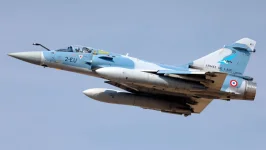
France has approved a new, cost-effective way for its Dassault Rafale fighter jets to shoot down enemy drones.
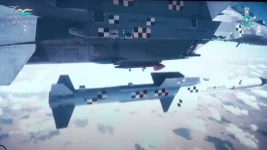
The system, known as LADAC (Lutte Anti-Drone sur Avion de Chasse), uses 68mm laser-guided rockets made by Thales.
These Aculeus-LG rockets are fired from TELSON 12 JF pods and are guided by the aircraft’s TALIOS targeting pod.
Recently completing its accelerated test campaign in July 2026, this upgrade provides a much cheaper method for destroying unmanned aerial vehicles (UAVs) and loitering munitions.
This advancement solves a major economic problem in modern air warfare: the high cost of using expensive missiles to destroy cheap drones.
For the Indian Air Force (IAF), which deals with increasing drone activities along its western and northern borders, adopting this technology could be a valuable enhancement for its current fleet of 36 Rafale fighters.
Recent global conflicts have shown that unmanned systems are now a core part of military action, rather than a side feature.
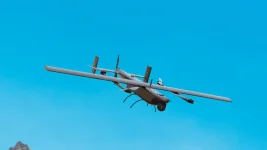
Low-cost weapons like Iran's Shahed drones and first-person view (FPV) drones have proven capable of threatening military bases, air defence networks, and critical infrastructure without a huge financial investment from the attacker.
France's own military experiences highlighted this issue. During recent deployments, such as protecting airspace in the Middle East during Operation Epic Fury in early 2026, French Rafales used MICA air-to-air missiles to shoot down Shahed-style drones.
While this worked well, the financial exchange was unsustainable. A single MICA missile can cost over a million euros, whereas the drones they were destroying cost roughly $50,000. Continuing this practice during a long war would quickly drain missile stocks and create massive operational costs.
The LADAC programme provides a direct solution to this financial imbalance. By using 68mm laser-guided rockets, which cost between $25,000 and $40,000, Rafale pilots can easily target slow-moving drones.
Since each TELSON pod holds 12 rockets, a Rafale carrying two pods can engage up to 24 targets in a single flight. This dramatically increases the aircraft's ability to handle multiple threats compared to a standard missile loadout.
These guided rockets fill a crucial gap in the Rafale's weaponry. The jet's built-in 30mm cannon is only useful at close range, while MICA missiles are excellent but expensive.
The Aculeus-LG rockets provide a practical middle option, allowing pilots to precisely hit targets several kilometres away while saving their expensive missiles for higher-priority threats like enemy fighter jets or cruise missiles.
The new anti-drone system is deeply integrated into the Rafale's advanced electronics. The aircraft uses its modified RBE2 radar to detect drones, while the TALIOS pod tracks the target and guides the rocket using a laser.
Additionally, the jet's SPECTRA electronic warfare system helps the pilot stay aware of the surrounding airspace by detecting and classifying threats before firing.
Because the LADAC system is part of the latest French F4 software standard, adding it to India's Rafales would mostly require software updates rather than major physical changes to the jets.
India's Rafale fleet already has several unique enhancements, making software upgrades a routine part of maintaining the aircraft.
One way for the IAF to acquire this capability would be to include the LADAC software package in future scheduled maintenance upgrades. Dassault Aviation and Thales could install the necessary digital tools and weapon controls without needing to significantly redesign the aircraft's hardware.
A more strategic option for India would be to integrate its own locally made weapons. India has long pushed for access to the software interfaces of its imported aircraft so it can use indigenous weapons.
If granted this access, India's Defence Research and Development Organisation (DRDO) could potentially adapt future Indian-made laser-guided rockets to work with the Rafale's anti-drone logic.
This path would support India's goal of reducing its reliance on foreign weapons while boosting local manufacturing. Instead of buying French rockets, the IAF could eventually use home-grown alternatives that function seamlessly with the Rafale's computers.
Working with French companies is another strong possibility. Thales already has a large presence in India, partnering with various local defence firms. If a technology transfer agreement were reached, Indian companies could potentially manufacture the Aculeus-LG rockets or their components locally.
Companies like Bharat Electronics Limited (BEL), Bharat Dynamics Limited (BDL), or private sector firms could help build these weapons. Manufacturing them in India would lower costs, ensure a steady supply during emergencies, and allow the military to build larger stockpiles without waiting for international shipments.
The need for this type of weapon is growing urgent for India. The rising number of drone swarms, quadcopters, and loitering munitions near India's borders shows the necessity for multiple layers of defence.
While ground-based jammers, anti-drone guns, and surface-to-air missiles are vital, having fighter jets armed with cheap, precise rockets would provide a fast-moving airborne defence against sudden drone attacks.
This system would also be highly useful during overseas or naval missions. Rafales flying from forward bases or aircraft carriers could patrol large areas armed with numerous anti-drone rockets. This would allow them to protect naval fleets or critical facilities from large-scale drone swarms without wasting their most valuable missiles.
Looking to the future, India's plans to buy more fighter jets under the Multi-Role Fighter Aircraft (MRFA) programme make the LADAC system even more appealing.
Equipping a larger fleet of Rafales with this affordable anti-drone technology would greatly improve the IAF's ability to handle modern aerial threats, ensuring its premium weapons are kept ready for major combat operations.