- Views: 2K
- Replies: 5
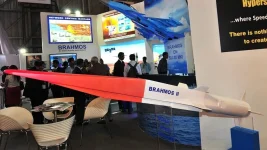
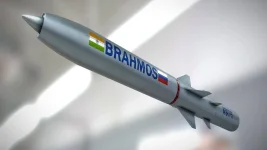
India’s Defence Research and Development Organisation (DRDO) is actively advancing the development of the BrahMos-ER, an extended-range variant of the formidable supersonic cruise missile capable of striking targets up to 800 kilometres away.
Designed primarily for the Indian Army and the Indian Air Force, this advanced weapon system will empower the armed forces to execute precision strikes against high-value assets from significantly safer, long-range stand-off distances.
India's official entry into the Missile Technology Control Regime (MTCR) in 2016 paved the way for this technological leap, allowing engineers to extend the weapon's reach without altering the physical dimensions of the original missile.
This upgraded system will drastically improve India's capacity to target vital hostile infrastructure, including command networks, logistical hubs, and air bases situated deep within enemy territory.
Because the launch platforms can remain well outside the reach of hostile air defence networks, the safety of frontline assets is assured.
Capable of soaring at blistering speeds of Mach 3, the BrahMos is already recognised globally as one of the fastest operational cruise missiles, and the 800-kilometre variant cements India’s posture in long-range, conventional offensive capabilities.
Alongside the land and aerial variants, DRDO is outlining a submarine-launched version of the BrahMos-ER. This maritime variant is specifically designated for integration with the Indian Navy's forthcoming Project-77 nuclear-powered attack submarines (SSNs).
Recently cleared by the Cabinet Committee on Security (CCS) with a substantial budget allocation to construct the first two vessels, these indigenous SSNs are poised to become the cornerstone of India’s future subsurface fleet.
The foundational technology for underwater launches is not entirely new to India. Approximately ten years ago, the nation successfully test-fired a 290-kilometre range submarine-launched cruise missile (SLCM) version of the BrahMos from a submerged pontoon.
However, despite the technical success of the vertical launch, the weapon was never inducted into active service.
The primary limitation was that India’s existing fleet of conventional diesel-electric submarines did not feature the large Vertical Launch System (VLS) cells necessary to house such heavy projectiles.
The introduction of the Project-77 SSNs will completely eliminate this constraint. While early estimates projected a displacement of 6,000 tonnes, more recent open-source intelligence suggests these advanced nuclear vessels could displace closer to 10,000 tonnes submerged.
They will feature sophisticated vertical launch mechanisms conceptually similar to those on the Arihant-class nuclear ballistic missile submarines (SSBNs).
However, unlike the SSBN fleet which carries nuclear deterrents, the VLS cells on the Project-77 boats will be custom-built to fire heavy conventional cruise missiles.
This versatile design architecture ensures that the new attack submarines can carry a diverse arsenal of munitions, allowing commanders to adapt to various combat scenarios.
According to defence experts, the upcoming SSN squadrons will not be limited to the Mach 3 BrahMos. They will also be armed with long-range subsonic cruise missiles capable of striking targets well beyond 2,000 kilometres.
These subsonic alternatives will provide extended endurance and reach while offering a highly cost-effective solution for specific tactical operations.
Fielding both supersonic and subsonic variants simultaneously will grant the Indian Navy unprecedented tactical flexibility.
The blistering speed of the BrahMos makes it the weapon of choice for time-sensitive, heavily guarded targets, as it drastically reduces the enemy's window for interception.
Conversely, subsonic missiles excel in deep-strike missions requiring maximum range, allowing the submarines to remain hidden in the depths much further away from the combat zone.
Looking toward the long-term future, DRDO scientists are also studying the feasibility of submarine-launched hypersonic cruise missiles.
Travelling at phenomenal velocities exceeding Mach 5, these next-generation weapons would practically eliminate enemy reaction times, thereby creating an unmatched underwater strike deterrent for the Indian Navy.
Nevertheless, the immense financial burden and engineering complexities tied to hypersonic technology mean that such systems will not be immediately widespread.
Defence planners anticipate that the balanced combination of supersonic and subsonic cruise missiles will form the primary offensive loadout for the Project-77 SSNs for the foreseeable future.
This blended approach guarantees optimal combat performance, mission adaptability, and financial viability.