- Views: 7K
- Replies: 32

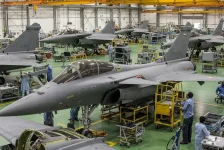
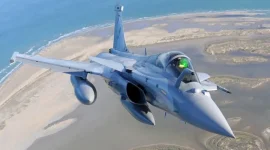
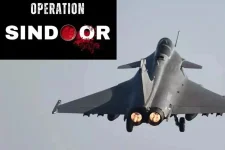
For many years, the Dassault Rafale, a multirole fighter jet from France, has been recognized globally for its advanced technology, adaptability, and proven combat record.
However, the Rafale's dominance might soon be challenged, not by established rivals such as the F-35 or Su-57, but by two newer aircraft: South Korea's KF-21 Boramae and India's Tejas Mk2.
These emerging fighters offer similar, and in some cases, superior, capabilities at a significantly lower price point, highlighting what some analysts view as a vulnerability in the Rafale's business model: its high cost.
The Rafale has always been positioned as a high-end product, with a price to match. While its sophisticated radar, electronic warfare capabilities, and versatility have secured contracts in countries like India, Qatar, and Egypt, the associated long-term costs are becoming a concern.
Maintenance, upgrades, and the integration of weapons systems for the Rafale are expensive, a financial burden that some nations are finding increasingly difficult to justify.
India's experience provides a clear example. In 2016, India agreed to purchase 36 Rafale jets for approximately $8.7 billion, a deal intended to significantly enhance its air force capabilities.
However, integrating India's own domestically-produced weapons, such as the Astra air-to-air missile and the Smart Anti-Airfield Weapon (SAAW), has resulted in substantial additional expenses.
Reports indicate that India is spending millions more to adapt these systems to the French aircraft, a cost that might have been avoided with a more flexible platform.
This issue of high upgrade costs is not limited to India; it is a recurring problem for Rafale operators, and it is starting to diminish the aircraft's attractiveness.
The KF-21 Boramae and Tejas Mk2 are emerging as strong competitors, offering competitive performance at a more affordable price.
The KF-21, a 4.5-generation fighter developed by Korea Aerospace Industries (KAI) in South Korea, is designed to compete with aircraft like the Rafale and Eurofighter Typhoon.
Featuring an Active Electronically Scanned Array (AESA) radar, advanced avionics, and compatibility with a broad range of current weapons, the KF-21 presents an attractive package.
Its estimated unit cost is around $65 million, significantly less than the Rafale's estimated price of over $120 million. The final cost of Rafale is subject to the specific configuration and associated equipment, but publicly available figures and estimates consistently place it well above the KF-21.
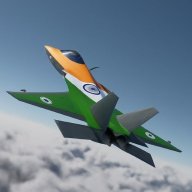
India's Tejas Mk2, an improved version of the domestically-produced Tejas Mk1, is expected to be operational by the late 2020s. It boasts an upgraded GE F414 engine, improved avionics, and seamless integration with Indian-made weapons like the Astra and BrahMos missiles.
The Tejas Mk2 is designed for affordability and self-sufficiency. With an estimated price of $50-60 million per unit, it is considerably cheaper than the Rafale while offering a level of customization that Dassault has been less willing to provide.
A key advantage of both the KF-21 and Tejas Mk2 is their cost-effective design. They are built with open architectures, simplifying weapons integration and upgrades, and therefore reducing the long-term financial strain on the countries operating them. For nations that are wary of France's high pricing and strict contract terms, these aircraft offer a more appealing alternative.
Beyond the financial aspect, the KF-21 and Tejas Mk2 are also making technological advancements. The KF-21's AESA radar, developed by Hanwha Systems, is comparable to the Rafale's RBE2-AA, and its electronic warfare system is designed for advanced survivability.
South Korea has also collaborated with international partners, including Lockheed Martin, ensuring the aircraft benefits from established expertise without the high costs associated with a completely Western-developed platform.
The Tejas Mk2 leverages India's expanding defence manufacturing capabilities. Its Uttam AESA radar and locally-produced missile systems provide a solution tailored to India's needs and those of potential export customers.
While the Rafale often requires costly modifications to integrate non-French weapons, the Tejas Mk2 is designed to incorporate India's existing weaponry from the outset, a potential advantage for buyers in Asia and other regions.
Dassault's strategy for Rafale sales has faced criticism for being focused on short-term gains. The company's insistence on high profit margins and its reluctance to share technology or reduce costs has reportedly created frustration among customers. India's Rafale deal, for example, did not include substantial offsets or local production, requiring New Delhi to bear the full cost of any upgrades.
By contrast, South Korea and India are promoting the KF-21 and Tejas Mk2 with more adaptable terms, including technology transfers and co-production agreements. These incentives could be decisive for air forces with limited budgets.
As global defence spending becomes more constrained, nations are increasingly prioritizing value for money. The Rafale's premium image may have been sufficient in a less competitive market, but with the KF-21 and Tejas Mk2 entering the scene, potential buyers now have alternative options that do not require such a significant financial commitment.