Discussions between New Delhi and Paris regarding the purchase of 114 new Rafale fighter jets are accelerating.
According to French defence media, India is firmly negotiating for the technical independence to equip these French-made aircraft with Indian weapon systems.
Recent open-source reports suggest this massive deal could be worth nearly $40 billion, with up to 90 of the jets being manufactured locally in India under technology transfer agreements to boost domestic defence production.
To push these critical talks forward, Chief of the Air Staff, Air Chief Marshal A.P. Singh, is scheduled to visit France in early June. His trip aligns with the major Eurosatory defence exhibition taking place in Paris from June 15 to 19, 2026.
This visit sets the stage for Prime Minister Narendra Modi’s upcoming travel to Évian-les-Bains, France, for the 52nd G7 Summit scheduled for June 15 to 17.
Together, these high-level engagements aim to finalise what would be one of the world's most significant modern fighter jet purchases.
Indian leaders are aiming to seal the deal by the end of 2026. However, several complex details must still be ironed out, including the final cost, manufacturing roles, and delivery dates.
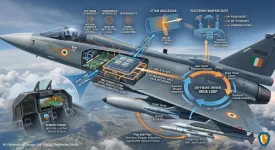
The most challenging point of debate revolves around India's request for the Rafale Interface Control Documents (ICDs). These highly classified blueprints explain exactly how the jet’s internal computers communicate with its weapons and external hardware.
Indian defence officials argue that having these documents is vital.
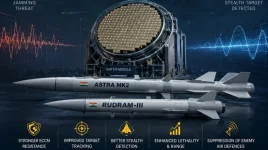
It would allow the Indian Air Force (IAF) to seamlessly link homegrown weapons—like the Astra beyond-visual-range missiles and the upcoming BrahMos-NG supersonic cruise missile—to the Rafale without constantly relying on Dassault Aviation for technical support.
This level of control would give India the freedom to continuously customise and upgrade its fleet over the coming decades.
On the other side, France hesitates to share the Rafale's deepest software secrets. French authorities are focused on protecting their intellectual property and are particularly concerned that integrating Indo-Russian weapons, like the BrahMos, could expose Western technology.
Negotiators are currently trying to find a compromise that grants India enough technical access to attach its missiles without handing over the aircraft's foundational source code.
This acquisition of 114 jets is a crucial step for the IAF, which is actively working to restore its declining fighter squadron numbers.
Alongside the production of India's own Tejas Mk1A fighters, a larger Rafale fleet would heavily bolster the nation's combat readiness.
This is particularly urgent as neighbouring Pakistan is reportedly looking to acquire advanced Chinese J-35 stealth fighters in the near future, making technological superiority a top priority for New Delhi.
For the French defence industry, India is a vital, long-term ally.
Because India’s own next-generation stealth fighter, the Advanced Medium Combat Aircraft (AMCA), is not expected to be ready for combat until the mid-2030s, the Rafale will serve as the IAF's top-tier fighter for the next decade.
Engine manufacturer Safran is also heavily invested in these extended timelines as it pursues future contracts for India's domestic aircraft programs.
The IAF’s strong preference for the Rafale stems from positive real-world performance.
During "Operation Sindoor," the aircraft successfully used its advanced sensors and long-range Meteor missiles to secure absolute control of the skies.
Currently, India maintains a strategic reserve of roughly 350 to 500 Meteor missiles. Because these weapons are highly expensive and feature an unmatched ramjet propulsion system, they are strictly reserved for high-value enemy targets like radar planes and refuelling aircraft.
By successfully integrating the more affordable, domestically built Astra Mk1 and upcoming Mk2 missiles, the IAF will be able to handle routine combat patrols while saving its premium Meteor missiles for critical wartime needs.