- Views: 99
- Replies: 1
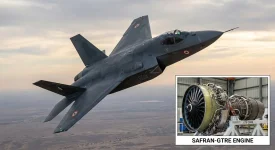
India's Hindustan Aeronautics Limited (HAL) has successfully developed a new set of home-grown technologies for the Light Combat Aircraft (LCA) Mk2 Medium Weight Fighter, as highlighted in the company's recent annual report.
Key advancements include an optical fuel-level sensing system and an advanced RS422 data acquisition system, which manages the aircraft's electrical units and overall health monitoring.
This breakthrough marks a strategic shift for HAL, moving from relying on foreign suppliers for essential parts to designing and manufacturing critical onboard systems internally.
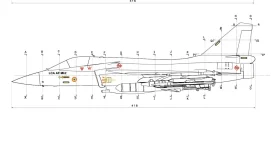
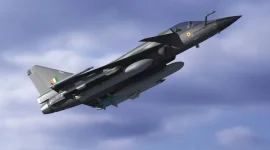
This transition enhances the combat efficiency, safety, and upkeep of the aircraft. Co-developed by HAL and the Aeronautical Development Agency (ADA) under the Defence Research and Development Organisation (DRDO), the LCA Mk2 is an advanced 4.5-generation multirole fighter.
According to current estimates, the first prototype is slated for a rollout around late 2026 to March 2027, followed by its maiden flight expected between March and July 2027.
The newly introduced optical fuel sensing system replaces older, less reliable methods of measuring fuel in fighter jets.
Older capacitance-based systems were prone to measurement errors caused by extreme vibrations, temperature shifts, and electromagnetic interference typical in military aviation.
By contrast, the new optical system uses light-based sensors to calculate the exact amount of fuel with high accuracy. This ensures that the mission computer receives real-time, precise fuel data, which is vital for planning routes, calculating range, and helping pilots make quick decisions during missions.
Importantly, because HAL has built this technology from scratch, the company retains total control over its design, software, and future maintenance. This self-reliance protects the Indian Air Force from the high costs and supply chain risks associated with foreign manufacturers.
Another major milestone is the development of the RS422 data acquisition system. The RS422 is a standard communication framework widely used in the aerospace sector to securely transfer digital information between different electronics over moderate distances without signal interference.
HAL's version of this system continuously gathers performance data from the jet's electrical parts and sends it to a central health monitoring hub.
This setup acts as an early warning system, allowing ground maintenance teams to spot failing components and predict maintenance needs before they completely break down.
As a result, the aircraft spends less time in the repair hangar and more time ready for deployment. Maintaining high availability is a critical operational metric for the Indian Air Force, which must be prepared to launch combat missions at a moment's notice.
These upgrades are just one part of a larger mission to build the LCA Mk2 using domestic technology.
HAL is also creating an integrated electronic unit to control the jet's fuel monitoring and environmental systems, which handle crucial life support functions like cockpit air conditioning and cabin pressure.
Furthermore, the company is building a new Radio Altimeter to accurately measure low altitudes, alongside navigation and landing systems to assist pilots in bad weather.
Open-source records confirm that the fighter jet will also be equipped with India's own Uttam Active Electronically Scanned Array (AESA) radar, a Unified Electronic Warfare Suite, and an Infrared Search and Track (IRST) sensor for advanced target detection.
To process all this information, the jet will feature a robust three-tier computing setup—including a flight control computer, a mission management system, and an auxiliary computer—ensuring the aircraft has backup power for heavy tasks like mapping terrain and identifying electronic threats.
The LCA Mk2 project received a crucial ₹10,000 crore clearance from the Cabinet Committee on Security in September 2022.
This aircraft is intended to fill the operational void between the current lightweight Tejas Mk1A and India's upcoming fifth-generation Advanced Medium Combat Aircraft (AMCA).
The fighter will have a maximum takeoff weight of 17.5 tonnes and can carry up to 6,500 kilograms of weapons across 11 mounting points.
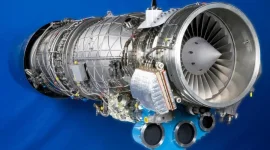
Powered by the American-origin General Electric F414-INS6 engine, which generates 98 kilonewtons of thrust, the jet will boast an internal fuel capacity exceeding 3,400 kilograms.
Recent updates from HAL leadership confirm that the structural building of the first prototype is well on track. Once operational, the Tejas Mk2 will gradually replace the aging Mirage 2000, Jaguar, and MiG-29 squadrons in the Indian Air Force between 2035 and 2040.
Ultimately, these home-grown innovations are more than just simple replacement parts; they establish a foundation of national technological independence.
These advancements will seamlessly integrate into the future AMCA project, potentially cutting long-term lifecycle costs by up to 30 percent by using shared system designs.