- Views: 5K
- Replies: 41
For Indian aviation enthusiasts and defence observers, the wait for definitive proof is finally over. The Indian Air Force (IAF) has publicly confirmed that its fleet of Dassault Rafale fighters is fully equipped with the lethal Meteor beyond-visual-range air-to-air missiles (BVRAAMs).
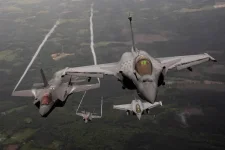
This confirmation came in the form of high-resolution imagery captured during today’s Republic Day flypast over Kartavya Path, effectively putting an end to months of suspense regarding the weapon system's operational status.
Ending the Speculation
For a considerable period, the defence community has been rife with questions regarding the integration of the Meteor missile with the Indian Rafale fleet.The Meteor is widely regarded as a game-changer in aerial combat, featuring a unique ramjet propulsion system that allows it to throttle its engine during flight.
Unlike traditional solid-fuel missiles that burn out quickly, the Meteor maintains powered flight to the target, offering an operational range in excess of 100 km and a "no-escape zone" significantly larger than comparable weapons.
This capability was a primary driver behind India’s procurement of the Rafale, promising unmatched dominance against regional aerial threats.
Despite these capabilities on paper, doubts had lingered in the public sphere.
Speculation was fuelled by the absence of the missile in previous public displays and exercises, leading some analysts to theorise that certification hurdles or supply chain delays might be hindering its deployment.
The lack of clear visual evidence had sparked intense debate on online defence forums about whether the IAF had truly cleared the weapon for frontline combat duties.
Visual Confirmation over Kartavya Path
The narrative shifted decisively on 26 January as the IAF executed a spectacular aerial display for the 77th Republic Day celebrations.During the flypast, multiple Rafale jets participated in complex formations, including the "Sindoor" spearhead group and the six-aircraft "Vajraang" formation.
Sharp-eyed observers immediately noted that several of these jets were carrying live ordnance under their wings.
Within minutes, images taken by broadcasters and amateur spotters began circulating on social media.
Although some initial photos were grainy—zoomed-in shots from vantage points along the parade route—they provided undeniable evidence.
The missile’s distinctive intake ducts, elongated fuselage, and specific fin configuration matched the profile of the MBDA Meteor perfectly.
Veteran aviation trackers, some of whom have chronicled IAF serial numbers for decades, corroborated the sighting, celebrating it as the first public validation of the Meteor in Indian skies.
Operational Maturity
The timing of this reveal is significant, coming shortly after "Operation Sindoor," a high-intensity aerial campaign where the Rafale fleet played a central role in precision strikes.The display serves as a subtle yet powerful rebuttal to earlier scepticism. It signals that the IAF has not only taken delivery of the missiles but has also fully integrated them into its standard operating procedures.
For defence experts, these visuals represent a critical milestone. The presence of the Meteor in a high-visibility national parade indicates that the system is no longer merely a contractual promise or a test asset; it is a fully operational reality.
This integration substantially enhances India's air defence posture, providing a credible deterrent in contested airspace.
As the roar of the engines faded over Delhi, the message delivered by the images remained clear: the Rafale’s most potent long-range capability is active, cleared, and ready for deployment.
In an age where visual proof often carries more weight than official statements, today’s flypast has settled the debate once and for all.