- Views: 413
- Replies: 1
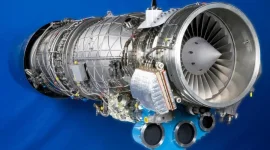
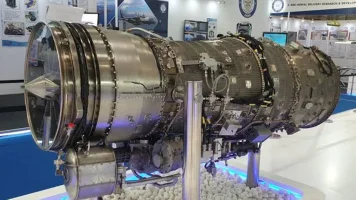
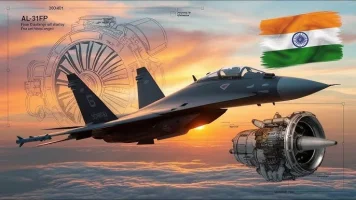
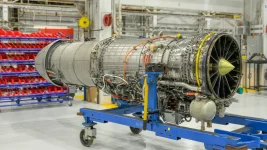
Hindustan Aeronautics Limited (HAL) has successfully increased the Total Technical Life (TTL) of the AL-31FP turbofan engine to 2,500 flying hours, marking a major breakthrough for the Indian Air Force (IAF).
On 8 January 2026, the first engine to benefit from this life-extension upgrade was overhauled and officially handed over to the IAF. This achievement serves as a critical boost to the long-term operational readiness of India's primary air superiority fighter, the Su-30MKI.
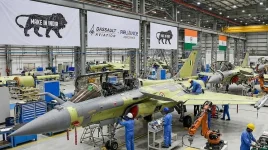
Produced under a deep technology transfer agreement at HAL’s Koraput facility in Odisha, the AL-31FP engine is the driving force behind the Su-30MKI. The twinjet fighter forms the core of India's aerial combat power, with roughly 260 jets currently active.
Historically, the base AL-31FP possessed a certified service life of 2,000 hours. Pushing this threshold higher and minimising the need for frequent overhauls is vital for keeping a larger number of aircraft flight-ready at any given time, while simultaneously driving down overall maintenance costs.
The importance of this domestic production line was recently underscored in September 2024, when the Ministry of Defence placed a massive ₹26,000 crore order with HAL for 240 new AL-31FP engines.
Expanding the engine's TTL allows every AL-31FP unit to safely log 2,500 hours in the air prior to its final retirement. Practically, this upgrade dramatically cuts down on the rate of engine swaps and intensive depot-level repairs.
Consequently, squadrons can expect a higher sortie generation rate and vastly improved logistical efficiency across airbases.
Featuring advanced thrust-vectoring control (TVC) for extreme manoeuvrability and generating roughly 12.5 tonnes-force of thrust with afterburners engaged, ensuring these complex powerplants stay on the wing longer is a significant operational win for the IAF.
This milestone was not achieved overnight; it is the culmination of rigorous engineering assessments, ground testing, and strict validation protocols executed during the overhaul cycle.
By independently certifying this prolonged lifespan, HAL has proven its maturing expertise in managing advanced military jet engines domestically. It represents a vital step away from relying on Russian original equipment manufacturers (OEMs) for the sustainment of critical hardware.
Following its comprehensive overhaul and life-extending modifications, the first unit was officially delivered to the IAF on 8 January 2026. This initial delivery sets a new benchmark and structural baseline for all future AL-31FP overhauls, which will now be processed under this enhanced maintenance framework.
Strategically, this development is incredibly timely for the IAF. The Sukhoi fleet is slated to remain India's frontline guardian well into the 2030s and is currently undergoing the ambitious 'Super Sukhoi' modernisation.
This includes outfitting the jets with state-of-the-art indigenous avionics, modern electronic warfare suites, and advanced Indian-made weaponry.
Lengthening the engine's lifespan perfectly complements these upgrades, ensuring the airframes can carry out their modernised roles without being grounded by premature engine fatigue.
Finally, this success directly supports the government's Aatmanirbhar Bharat vision by solidifying the nation's domestic Maintenance, Repair, and Overhaul (MRO) ecosystem.
Over the years, HAL has steadily increased the indigenous content in the AL-31FP—aiming for over 54% average indigenisation in recent batches—mastering complex manufacturing and repair processes.
Expanding their technical life guarantees that a substantial portion of the Su-30MKI's lifecycle management remains firmly on Indian soil.