India Briefs Greece on Tejas Mk1A, Offering Cost-Effective Modern Solution to Replace Legacy F-4 Phantom Aircraft

India Briefs Greece on Tejas Mk1A, Offering Cost-Effective Modern Solution to Replace Legacy F-4 Phantom Aircraft


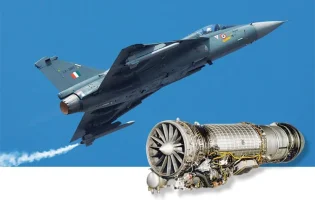
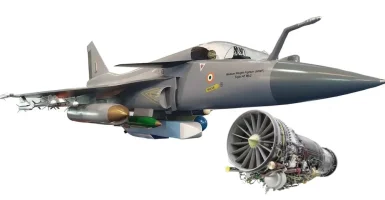
India has showcased its indigenous Light Combat Aircraft (LCA), the Tejas Mk1A, to Greece as a potential solution for the Hellenic Air Force's (HAF) fleet modernization requirements.

During a significant diplomatic visit to New Delhi in February 2026, the Greek Minister of National Defence, Nikolaos-Georgios S. Dendias, was given a comprehensive presentation on the fighter jet.

This briefing has sparked serious dialogue regarding future defence aviation collaboration between the two nations, aligning with Greece's "Agenda 2030" military reform plan.

The timing of this proposal is critical as Greece actively seeks to update its air power amidst persistent regional complexities in the Eastern Mediterranean.

The HAF is currently looking to retire its legendary but aging F-4 Phantom II aircraft. These Cold War-era jets, upgraded years ago under the "Peace Icarus 2000" programme to include modern avionics and radar, have long been the backbone of Greek ground-attack capabilities.

However, as maintenance becomes costlier and airframes reach the end of their service life, a strategic gap is emerging that requires a prudent, long-term solution.

Following the high-level briefing with Indian Defence Minister Rajnath Singh, industry observers suggest that New Delhi is positioning the Tejas Mk1A as an ideal replacement for these retiring platforms.

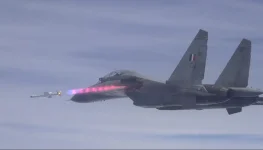
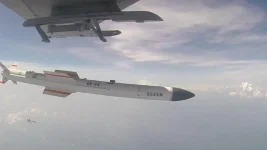
The pitch highlights the Tejas as a state-of-the-art, single-engine fighter equipped with Active Electronically Scanned Array (AESA) radar, a sophisticated electronic warfare suite, and the ability to carry a diverse array of weaponry, including the indigenous Astra air-to-air missiles and precision-guided bombs.

Experts note that while the Tejas Mk1A and the F-4 Phantom II are vastly different in design, they may be strategically complementary. The Phantom is a heavy, twin-engine interceptor and bomber with a maximum takeoff weight of over 28 tons.

In comparison, the Tejas is a nimble light fighter, weighing in at roughly 13.5 tons fully loaded—about half the size of the Phantom. While this means the Tejas carries a lighter payload and has a shorter range than the heavy-class Phantom, it offers superior agility and drastically lower operational costs.

For the Hellenic Air Force, the logic behind considering the Tejas lies in creating a balanced and sustainable fleet. Greece already operates French Rafales and is in the process of acquiring stealthy F-35 jets from the United States.

In this mix, the Tejas Mk1A could serve as an affordable, high-volume "workhorse" for daily patrols and tactical missions, preserving the expensive flight hours of heavy stealth fighters for high-threat scenarios.

Additionally, India’s offer likely includes attractive terms for technology transfer and local industrial cooperation, fitting well with the "Make in India" initiative and Greece’s desire to boost its domestic defence sector.

The engagement between Ministers Dendias and Singh further cements the growing strategic partnership between New Delhi and Athens.

Beyond aviation, the two sides recently signed a joint declaration to deepen defence industrial ties and agreed to position a Greek liaison officer at India's Information Fusion Centre (IFC-IOR).

While a formal procurement deal for the Tejas has not yet been signed, this detailed briefing signals a new chapter in Indo-Greek relations, potentially opening the door for joint training, technology sharing, or future procurement.
 
Good start by Govt of India.. we need to supply weapons to Greece, Armenia and Cyprus especially to cut the Influence of Turkey across the region...
 
HAL sarkari dumbo mediocre factory not able to service orders already pending half decades but running around these IAS officials with wooden models to market for export??
even dumbest of the dumbest can read it and wont order from Bharat but these IAS officials wont miss foreign tours no matter how embarrasing it is to carry around these LCA wooden models from last 2-3 decades.
my friend retired, irony, he started his career when LCA was conceptualised and wooden model there on factory floor.
 
From where are they going to supply the jets????
Is there any secret factory with them which is not known to public? A laughable news. A company unable to supply one jet in a decade out of 180 jet order, claiming to export jets. Offcourse it may be possible in 2050 after fulfilling IAF order.
 
You don't have one and offering to others that one. First build up numbers and then talk about offerings.
 
HAL has been unable to fulfill orders of IAF on mk1a how can it possibly start exporting and even if they get the necessary deal and investment what are we gonna do about engine deliveries which are still dependent on whether US wants a defense competition against it's own self in defense export markets until we make our own engines domestically there is no chance of boosting exports
 
Somehow selling fighters still looks like a pipe dream.
It is... Till the time the first one happens. India opened it arms sells in real sense only after it sold some heavyweight weaponry to Armenia. World took notice. Of course the Op Sindoor helped a lot. The point is you nedd that first ice breaker to happen.
 
Those who often wonder aloud where are they going to supply these planes from... HAL is this, that... They should remember two things.

1. This govt is extremely business centric. And they acutely understand what business commitments mean. So when they are actively pitching these planes they wound have a full plan of action in their back pocket. I'm sure they are not waiting to read our comments here and then say, aahaa... Yeh to humne socha hi nahi...

2. We saw what it did with the AMCA. Suddenly HAL finds itself out of the race for now! Although what people are not realizing there is that internally they have been put on notice. They are still not fully out of this race, but have got a 5 year intervening period to clean up their act. They do things right, and they will be back in the race for the serial production somewhere in 2032-35 frame as a secondary or tertiary vendor at least, if not as the primary one, but that's a matter for another day. The same can though happen if India wins a serious international order for the Tejas. Suddenly the big Tier-1 private sector firms that partner with HAL for the Tejas manufacturing as suppliers will find themselves in a consortium, getting tech transfer to start building these in the parallel to execute the international orders. And they will be happy to do so as the margins will be vastly superior for such orders.


Only challenge with point 2 above is the engine part. I'm not sure how will they manage the engines, unless GE has given them enough assurances to scale up if required. Afterall the engine line was brought alive by GE especially for India by spending a lot of moolah. Now that they have done so they will be very keen I'm sure to start expanding that line if needed to produce even more of those engines based on the orders.
 
Last edited:

Forum statistics

Threads
6,356
Messages
62,833
Members
4,960
Latest member
kolkataau
Back
Top