- Views: 2K
- Replies: 11
Sources indicate that India is poised to be offered an observer role in the Global Combat Air Programme (GCAP), a major multinational initiative led by the United Kingdom, Japan, and Italy to build a sixth-generation fighter jet.
While these core nations are highly interested in involving New Delhi, a full-fledged partnership is currently off the table due to the sheer complexity of integrating a new member and the risk of derailing the project's strict timelines.
Recent disclosures to a parliamentary panel by the Indian Ministry of Defence confirm that India is actively exploring options regarding sixth-generation fighter programmes to modernise its air power.
Bringing India on board as a primary development partner right now could significantly disrupt the programme's fast-paced schedule.
The GCAP consortium has laid out an ambitious path, aiming to fly a demonstrator jet by next year (2027) and fully induct the advanced fighter into service by 2035.
To meet this rigid deployment goal, the core members cemented their collaboration late last year by establishing "Edgewing," a joint corporate venture involving BAE Systems, Leonardo, and Mitsubishi Heavy Industries.
This venture essentially locked in production workshares, meaning expanding the primary partnership could cause unwanted friction and manufacturing delays.
As an alternative, granting India observer status offers a highly strategic, albeit limited, level of participation.
This arrangement would allow Indian officials to view select technical and classified data concerning next-generation combat technologies.
Crucially, it achieves this without forcing the original GCAP partners into sudden industrial restructuring or requiring India to make massive, immediate financial commitments.
This observer position is widely viewed as a foundational step that could lead to much closer ties down the road.
By participating as an observer, India can study the fighter's underlying technological framework, its industrial supply chain, and new operational doctrines.
If both sides agree, this initial access could eventually pave the way for India to join later phases of the project, potentially taking part in procurement choices, production, or advanced developmental stages.
Even though being an observer does not inherently promise a future full partnership, it grants India a front-row seat to one of the most advanced military aviation projects on the planet.
This carefully balanced approach fits perfectly with New Delhi's overarching defence strategy.
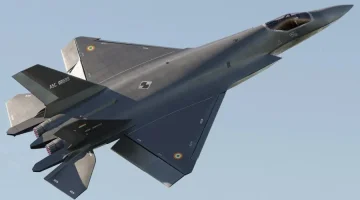
It allows the Indian Air Force to evaluate top-tier global platforms without diverting crucial, multi-billion-dollar funding away from its own domestic Advanced Medium Combat Aircraft (AMCA) project, which recently saw an influx of ₹15,000 crore for prototype development.
The GCAP platform is designed to be a revolutionary leap in aerial warfare, merging British, Japanese, and Italian engineering to field a stealthy, highly networked aircraft.
It will feature cutting-edge advancements like artificial intelligence-driven decision support and next-generation sensors.
For observers, the programme also offers a window into futuristic concepts like directed energy weapons and "loyal wingmen" drone-teaming.
For India's defence establishment, absorbing knowledge from these technologies through an observer role will be immensely valuable for shaping the country's own future combat aviation ecosystem.