- Views: 192
- Replies: 3
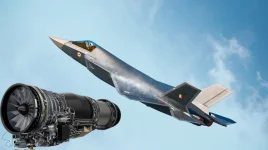
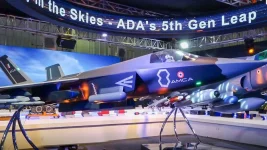
In a major development for India's aerospace sector, British engineering giant Rolls-Royce and Reliance Industries Limited (RIL) have formed a strategic partnership to create a fully indigenous jet engine for the Advanced Medium Combat Aircraft (AMCA) programme.
Announced in August 2026, the collaboration aims to establish a specialized centre of excellence within India.
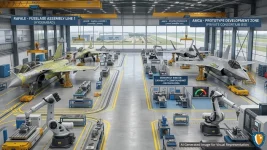
This new facility will handle the complete lifecycle of the engine, spanning from original design and extensive testing to mass manufacturing and long-term operational support.
The joint venture's initial goal is to deliver a powerplant capable of generating 120 kilonewtons (kN) of thrust with the afterburner engaged, relying on a core that produces 73kN of dry thrust.
However, the blueprint includes a highly scalable upgrade path. As future AMCA variants demand more power, the engine's dry core can be enhanced to 88kN, which will allow it to output a formidable 145kN of wet thrust.
A key pillar of this proposal is absolute technological sovereignty. Rolls-Royce has committed to developing the engine entirely in India with a local core engineering team.
Crucially, the Government of India will retain 100 percent of the intellectual property (IP) rights.
Because this will be an official government-sanctioned programme, India will have the freedom to upgrade, tweak, or modify the technology in the future without needing any outside approval. This level of control is highly sought after in modern defence acquisitions.
The operational implications of this engine are substantial. Equipping an advanced fighter with twin 145kN engines would yield a total thrust of 290kN.
This immense power is ideally suited for a heavy, 33-to-35-tonne aircraft, which aligns perfectly with the design expectations of an authentic, 6th-generation air-superiority fighter.
Such future-generation jets require heavier takeoff weights to accommodate larger internal weapons bays, extra fuel for long-range missions, and the complex electronics necessary to coordinate with "loyal wingman" combat drones.
According to additional open-source reports, this joint pitch sets an aggressive timeline, targeting an engine core test by 2030, a maiden flight by 2034, and full-scale production by 2036.
This proposal places Rolls-Royce in direct competition with a rival engine offer from French aerospace manufacturer Safran, as India moves closer to securing a sovereign aviation ecosystem for its future defence needs.