- Views: 47
- Replies: 1
The Russian state technology corporation Rostec has revealed new insights into the extraordinary thermal endurance of the Su-57 fifth-generation fighter jet.
According to a statement released on September 1, the aircraft’s power plant can withstand internal temperatures of nearly 2,000 degrees Celsius during extreme combat maneuvers, highlighting its structural reliability and advanced engineering.
Defying Gravity to Evade Missiles
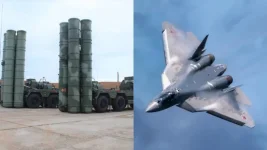
This capability was publicly demonstrated by legendary Russian test pilot Sergey Bogdan during his flight at the Aero India airshow.Flying at an altitude of approximately 600 meters, Bogdan executed a complex series of aerobatics, including a signature move that effectively brings the aircraft to a near-standstill in mid-air.
When a fighter jet "freezes" in this hover mode, any drop in thrust could lead to an uncontrollable spin and a rapid descent. However, the intense thermal load—pushing the engine to a critical limit of 2,000°C—is successfully managed by its durable design.
Rostec emphasised that these dizzying maneuvers are not just for show. The ability to dramatically alter speed and trajectory allows the Su-57 to evade incoming enemy missiles, making super-maneuverability a highly practical survival tool in modern aerial combat.
The Power Behind the Fighter
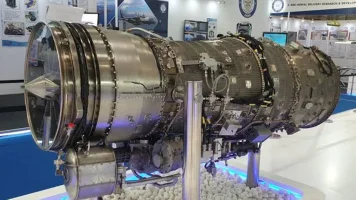
At present, the Su-57 relies on the AL-41F-1 engine (also known as "Product 117"), an advanced, thrust-vectoring derivative of the Soviet-era AL-31F. While highly capable, this is considered a transitional "first stage" powerplant for the fighter.Russia’s United Aircraft Corporation (UAC) initially designed the Su-57 to integrate a completely new, clean-sheet engine known as the AL-51F (or "Product 30").
However, the development of this next-generation engine has faced major delays. It is now expected to enter service around 2030, where it will power an enhanced variant of the aircraft designated as the Su-57M1.
A Push for Global Exports
Rostec’s new statements arrive as Russia intensifies its efforts to market the Su-57 on the global aerospace and defence market.By promoting the jet's unmatched aerodynamic control and real combat experience, Russia aims to present it as a formidable competitor to other modern fighters.
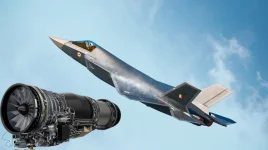
However, the global engine race remains highly competitive. The United States currently fields the powerful F135 engine in its F-35 stealth fighter, while China has successfully integrated the advanced WS-15 engine into its J-20 fleet.
As Russia pushes toward the 2030 timeline for its own AL-51F, the current engine's ability to survive extreme 2,000°C thermal stress proves that the Su-57 remains a highly agile platform in the skies today.