- Views: 3K
- Replies: 10
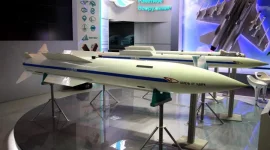
Recent developments indicate that the Indian Air Force (IAF) is securing the Russian-made R-37M long-range air-to-air missile, a move that promises to significantly alter the balance of air power in South Asia.
Defence analysts point out that this acquisition serves as a robust response to the expanding inventory of Chinese combat aircraft in the Pakistan Air Force, while simultaneously strengthening India's defensive posture along its borders with both Pakistan and China.
In fact, recent open-source intelligence from May 2026 suggests India has moved forward with an estimated $1.2 billion contract for roughly 300 of these formidable weapons.
According to Shounak Set, a research fellow at the S. Rajaratnam School of International Studies in Singapore, the introduction of the R-37M hands India a major tactical advantage.
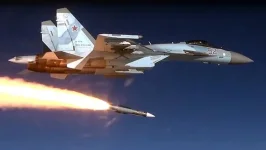
The missile, known by its NATO reporting name AA-13 Axehead, has seen extensive and highly successful use by Russian forces in the ongoing Ukraine conflict.
Capable of reaching hypersonic speeds of up to Mach 6 and boasting an operational range of nearly 400 kilometres, the R-37M leaves adversary aircraft with almost no time or space to execute evasive manoeuvres.
Rather than being deployed for close-quarters aerial dogfights, the true value of the R-37M lies in its ability to eliminate high-value assets from extreme distances.
Set highlights that the weapon is tailor-made for taking down crucial support aircraft, such as Airborne Warning and Control System (AWACS) planes or aerial refuelling tankers.
When effectively linked with ground radars and airborne sensors, the missile transforms from a single weapon into a massive force multiplier, highly effective during short but intense regional conflicts.
The urgency for such advanced countermeasures stems from Pakistan’s rapid military modernisation.
As the only international buyer of China's Chengdu J-10C fighter jet, Pakistan has aggressively upgraded its capabilities.
Islamabad has reportedly inducted over 20 of its planned 36 J-10C aircraft, pairing them with the Chinese PL-15E beyond-visual-range missiles, which possess an estimated export range of 145 kilometres.
This growing reliance on Beijing’s hardware has driven New Delhi to seek out superior interception capabilities.
Jagannath Panda, head of the Stockholm Centre for South Asian and Indo-Pacific Affairs, characterises the R-37M as a critical countermeasure against Pakistan's newly acquired Chinese platforms.
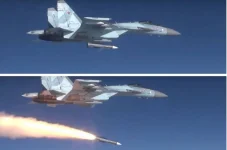
Open-source data confirms that India intends to mount the R-37M on its frontline Sukhoi Su-30MKI heavy air superiority fighters.
Panda notes that combining this heavy fighter with a 400-kilometre range missile will severely complicate Pakistan's aerial strategies, forcing their critical support aircraft to operate much further away from the combat zone and thereby severely reducing their tactical effectiveness.
Beyond the western border, this procurement also carries profound strategic implications for the Line of Actual Control.
Panda adds that the deployment of the R-37M serves as a definitive message to Beijing, demonstrating India's commitment to building a formidable, long-range aerial denial zone capable of handling a two-front threat.
Despite the impressive specifications, defence specialists warn that a missile's raw range does not automatically guarantee victory.
Panda stresses that the R-37M's ultimate success will rely heavily on seamless system integration.
To unlock the weapon's full potential, the IAF must effectively weave it into a broader, network-centric combat architecture that instantly shares data between satellites, ground stations, and fighter jets.
Liselotte Odgaard, a senior fellow at the Hudson Institute, observes that the R-37M effectively plugs tactical gaps seen during recent India-Pakistan skirmishes, where the latter temporarily displayed an edge in situational awareness.
By introducing such a long-range threat, India drastically increases the operational risks for Pakistani support aircraft, compelling Islamabad to rethink its air combat doctrine for the years ahead.
Furthermore, because Pakistan is slated to receive even more advanced Chinese weaponry in the near future, Odgaard views the R-37M less as a tool for unprovoked escalation and more as a necessary stabiliser to maintain regional parity.
As the Indian Air Force pushes forward with its comprehensive modernisation plans amidst enduring geopolitical friction, the R-37M stands out as a pivotal upgrade.
While no single weapon can single-handedly win a war, the integration of this hypersonic missile with India's current fleet and enhanced digital networks creates a highly credible deterrent.
In the event of future high-intensity aerial clashes, the R-37M possesses the sheer reach and speed to dramatically tilt the skies in India's favour.