- Views: 2K
- Replies: 15
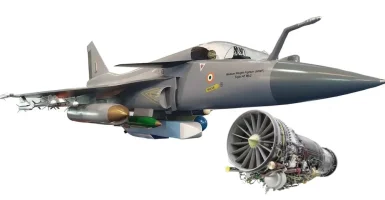
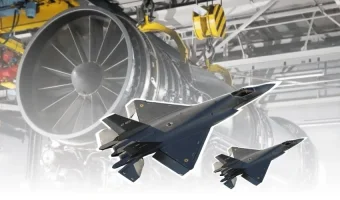
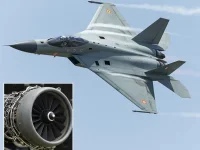
India is taking a massive leap in its aerospace capabilities by initiating a state-funded project to develop a powerful 120-kN turbofan engine for the Advanced Medium Combat Aircraft (AMCA) Mk2.
Unlike past procurement deals, New Delhi plans to finance this massive undertaking directly, ensuring that India will hold the exclusive intellectual property (IP) rights for the resulting technology rather than the foreign partner.
Reports confirm that two European aerospace giants—France's Safran and the UK's Rolls-Royce—have officially submitted their financial projections for co-developing this next-generation powerplant.
The total investment for this ambitious programme is estimated to cross the $5 billion mark, establishing it as one of the most expensive and critical indigenous aviation projects in Indian history.
This development comes as recent negotiations with American manufacturer General Electric over the F414 engine reportedly faced hurdles regarding soaring costs and restrictive technology transfer conditions.
The structural framework of this new initiative breaks away from traditional models of arms procurement. Historically, foreign manufacturers retained the core intellectual property while granting India limited rights to build engines under license.
Under the new arrangement, the Indian government's financial backing ensures that the nation owns the IP outright. The chosen foreign partner will be tasked purely with providing engineering expertise, advanced technology, and design mentorship.
This marks a transformative moment in India's defence strategy. The objective is no longer just to buy an engine or assemble imported parts. Instead, New Delhi is determined to establish a self-reliant, sovereign engine manufacturing ecosystem.
Rolls-Royce, for instance, has proposed not only creating the fighter engine but also setting up a broader aero gas-turbine complex in India with complete technology transfer. This foundation will dramatically reduce future dependence on foreign suppliers for combat aircraft programmes.
A major focus of the project is ensuring that the physical work—from the initial design phase to prototyping and ground testing infrastructure—takes place on Indian soil.
This effort will foster a robust domestic industrial base, equipping India's research agencies and private sector to handle advanced propulsion systems for a variety of future military platforms and potential civil aviation needs.
The projected schedule for the AMCA engine remains highly aggressive. Current roadmaps suggest that the core engine could be ready for ground trials by 2030 to 2032.
If milestones are met, the first flight tests could occur around 2034, paving the way for full-scale production by 2035 or 2036. This timeline aligns perfectly with the anticipated induction of the advanced AMCA Mk2 stealth fighter into the Indian Air Force.
Delivering over 120 kN of thrust, this new engine will provide the raw power necessary for a true fifth-generation stealth fighter.
It will enable the AMCA Mk2 to perform sustained supercruise (supersonic flight without afterburners), execute highly demanding aerial manoeuvres, and carry a heavier weapons payload.
Such capabilities are a significant step up from the interim engines planned for the early AMCA prototypes and will fulfill the aircraft's long-term tactical requirements.
Crafting a modern fighter jet engine is globally recognised as a monumental engineering challenge.
To succeed, India and its chosen partner must overcome hurdles in advanced metallurgy, such as manufacturing single-crystal turbine blades, applying thermal barrier coatings, and building complex digital engine controls that can withstand immense heat and pressure.
Notably, Indian scientists have recently made domestic breakthroughs in single-crystal technology, giving the country a stronger technical footing in these joint ventures.
Because of these technical hurdles, the project will rely on deep collaboration between India's research organisations, local manufacturing industries, and either Safran or Rolls-Royce.
Ultimately, by absorbing the bulk of the financial risk, India is investing in a strategic national asset. The expertise and complete IP rights gained from this $5 billion venture will safeguard the country's defence independence for decades to come.