Safran and Rolls-Royce Submit Cost Estimates for India’s 120-kN AMCA Engine Project, Could Exceed $5B with India Retaining Full IP

Safran and Rolls-Royce Submit Cost Estimates for India’s 120-kN AMCA Engine Project, Could Exceed $5B with India Retaining Full IP


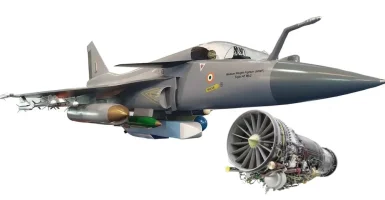
India is taking a massive leap in its aerospace capabilities by initiating a state-funded project to develop a powerful 120-kN turbofan engine for the Advanced Medium Combat Aircraft (AMCA) Mk2.

Unlike past procurement deals, New Delhi plans to finance this massive undertaking directly, ensuring that India will hold the exclusive intellectual property (IP) rights for the resulting technology rather than the foreign partner.

Reports confirm that two European aerospace giants—France's Safran and the UK's Rolls-Royce—have officially submitted their financial projections for co-developing this next-generation powerplant.

The total investment for this ambitious programme is estimated to cross the $5 billion mark, establishing it as one of the most expensive and critical indigenous aviation projects in Indian history.

This development comes as recent negotiations with American manufacturer General Electric over the F414 engine reportedly faced hurdles regarding soaring costs and restrictive technology transfer conditions.

The structural framework of this new initiative breaks away from traditional models of arms procurement. Historically, foreign manufacturers retained the core intellectual property while granting India limited rights to build engines under license.

Under the new arrangement, the Indian government's financial backing ensures that the nation owns the IP outright. The chosen foreign partner will be tasked purely with providing engineering expertise, advanced technology, and design mentorship.

This marks a transformative moment in India's defence strategy. The objective is no longer just to buy an engine or assemble imported parts. Instead, New Delhi is determined to establish a self-reliant, sovereign engine manufacturing ecosystem.

Rolls-Royce, for instance, has proposed not only creating the fighter engine but also setting up a broader aero gas-turbine complex in India with complete technology transfer. This foundation will dramatically reduce future dependence on foreign suppliers for combat aircraft programmes.

A major focus of the project is ensuring that the physical work—from the initial design phase to prototyping and ground testing infrastructure—takes place on Indian soil.

This effort will foster a robust domestic industrial base, equipping India's research agencies and private sector to handle advanced propulsion systems for a variety of future military platforms and potential civil aviation needs.

The projected schedule for the AMCA engine remains highly aggressive. Current roadmaps suggest that the core engine could be ready for ground trials by 2030 to 2032.

If milestones are met, the first flight tests could occur around 2034, paving the way for full-scale production by 2035 or 2036. This timeline aligns perfectly with the anticipated induction of the advanced AMCA Mk2 stealth fighter into the Indian Air Force.

Delivering over 120 kN of thrust, this new engine will provide the raw power necessary for a true fifth-generation stealth fighter.

It will enable the AMCA Mk2 to perform sustained supercruise (supersonic flight without afterburners), execute highly demanding aerial manoeuvres, and carry a heavier weapons payload.

Such capabilities are a significant step up from the interim engines planned for the early AMCA prototypes and will fulfill the aircraft's long-term tactical requirements.

Crafting a modern fighter jet engine is globally recognised as a monumental engineering challenge.

To succeed, India and its chosen partner must overcome hurdles in advanced metallurgy, such as manufacturing single-crystal turbine blades, applying thermal barrier coatings, and building complex digital engine controls that can withstand immense heat and pressure.

Notably, Indian scientists have recently made domestic breakthroughs in single-crystal technology, giving the country a stronger technical footing in these joint ventures.

Because of these technical hurdles, the project will rely on deep collaboration between India's research organisations, local manufacturing industries, and either Safran or Rolls-Royce.

Ultimately, by absorbing the bulk of the financial risk, India is investing in a strategic national asset. The expertise and complete IP rights gained from this $5 billion venture will safeguard the country's defence independence for decades to come.
 
Why not choose both? We saw what happened when we selected the lowest costing engine for tejas mk1a. We saw what happened to our kaveri engine when we Didn't give enough funds for it, 300M were just peanuts. I hope BJP allocates enough fund to kaveri 2.0
No country will give you 100% latest technology they will either give you 1 down if it's 100% TOT or 80-90% max if it's latest TOT. So why not work with both safran and RR so that they can keep some of their critical tech but even after that we will get 100% technology if we mix both engines into our kaveri 2.0
If not both then Rolls Royce I is offering more TOT and even 120-140 KN engine. + Their company director or something like that is an Indian.
 
Serious efforts could be made to redesign Kaveri to make a usable engine but what use would it be? Tejas Mk1A production would have finished/be soon to finish by the time a redesigned Kaveri went into production.

A working Kaveri needed to be in production 5 or more years ago for it to be useful.
 
Serious efforts could be made to redesign Kaveri to make a usable engine but what use would it be? Tejas Mk1A production would have finished/be soon to finish by the time a redesigned Kaveri went into production.

A working Kaveri needed to be in production 5 or more years ago for it to be useful.
It will still be useful for midlife engine upgrades for Tejas mk1a.
 
In an ideal world I would want
1. Safran-GTRE in AMCA mk2 and later as midlife engine upgrade for AMCA mk1
2. Rolls Royce engine into TEDBF (as the design isn't locked in)
3. F414 in Tejas mk2 and AMCA mk1 (later to be replaced by Safran-GTRE in AMCA mk1) as the dimensions are similar.
4. F404 in Tejas mk1a and later Kaveri as midlife engine upgrade.

But from logistics POV, it will be a nightmare for us to maintain these four engines plus the AL31 and later AL51 engine by Sukhoi.
 
So, Kaveri is successfully put to rest with that 49 kN limiting it to Ghatak UAV.

When the decision makers themselves don't believe in ourselves and Kaveri and didn't allocate even one fifth of this budget, what can we expect?

Should we ALWAYS ride on the shoulders of the West like an intellectually paralyzed and crippled and handicapped and disabled and debilitated nation?
 
It will still be useful for midlife engine upgrades for Tejas mk1a.
Agreed.

India could have provided engines for 200+ LCA aircraft if it had invested money and talent into Kaveri. Assuming 1 engine replacement per aircraft in its service life, 400+ engines (build engine + replacement) would have been needed for 200 aircraft. Unit cost to build 400 is lower than to build 200.

If production of Kaveri 2.0 were behind schedule, F404 might need to be bought as a replacement for some LCA original build engines. Based on past performance Kaveri 2.0 project would fall miles behind schedule, perhaps so far behind schedule that all LCA F404 engines had been replaced by the time Kaveri 2.0 reached production. in which case there would be no need to produce any Kaveri 2.0 engines at all.

Not worth it IMO. Too risky. It might be different if there were more than one application for a home-built 85kN engine to increase the production run. There isn't.

I have not heard that GOI has announced building a high altitude test chamber or acquiring an FTB. India is not equipped to develop and test fast jet engines. Why try again if India is not prepared to spend money buying the tools needed to do the job?

Still, won't have these scheduling problems if an engine for AMCA is developed by a properly equipped SAFRAN or RR - provided GOI does not interfere.
 
Last edited:
Agreed.

India could have provided engines for 200+ LCA aircraft if it had invested money and talent into Kaveri. Assuming 1 engine replacement per aircraft in its service life, 400+ engines (build engine + replacement) would have been needed for 200 aircraft. Unit cost to build 400 is lower than to build 200.

If production of Kaveri 2.0 were behind schedule, F404 might need to be bought as a replacement for some LCA original build engines. Based on past performance Kaveri 2.0 project would fall miles behind schedule, perhaps so far behind schedule that all LCA F404 engines had been replaced by the time Kaveri 2.0 reached production. in which case there would be no need to produce any Kaveri 2.0 engines at all.

Not worth it IMO. Too risky. It might be different if there were more than one application for a home-built 85kN engine to increase the production run. There isn't.

I have not heard that GOI has announced building a high altitude test chamber or acquiring an FTB. India is not equipped to develop and test fast jet engines. Why try again if India is not prepared to spend money buying the tools needed to do the job?

Still, won't have these scheduling problems if an engine for AMCA is developed by a properly equipped SAFRAN or RR - provided GOI does not interfere.

You know what my biggest gripe with the ADA and GTRE is ?

You simply cannot use your first iteration of an engine in a "Single jet" fighter plane. The decision was doomed from day 1 itself. Even a company like Samsung which is expert in building mobile phones took multiple iterations to produce a fold phone which can survive the rigors, how they expected the engine to pass all tests in the first attempt itself.

US, France, UK, Russia etc are able to use the single engine fighter jet coz their tech has matured and their engines (Russia is bit behind but still there) are reliable. China was struggling with engine tech (and still they're to some extent), but they kept on creating double engine jets to ensure loss of one engine doesn't mean loss of an entire jet and the pilot can bring it down safely.

Everyday, I curse ADA as why didn't they moved ahead with TEDBF land variant (ORCA) with twin Kaveri engines. It may not be powerful like Rafale or Su30MKI, but it will be our own and would still be able to compete with Tejas mk1/mk1a and mk2. I understand challenges with Navy as they have limited real estate on an aircraft carrier, but with Airforce, specially at the plains, this gamble was worth taking.

Anyway, last I read that in Feb 2026, our Kaveri has achieved a thrust of 81-82 kN (close to 84-85kN of F404), now it needs to quality the sustained load performance and for that they're converting one fighter jet into a Test bed (not sure if it's Su30MKI or Tejas mk1). Godrej Aerospace will probably do the mass production if the sustained load performance is a success.

One low hanging fruit for IAF is Ghatak, they can still put their energy is building those. It will resolve a lot of our issues, specially with regards to engine as dry Kaveri is generating enough thrust. It will save us from risk of CAATSA by procuring Su57 but also ensure we get a stealthier platform for first strikes before the big Boys (with big RCS) can join the party.
 
Serious efforts could be made to redesign Kaveri to make a usable engine but what use would it be? Tejas Mk1A production would have finished/be soon to finish by the time a redesigned Kaveri went into production.

A working Kaveri needed to be in production 5 or more years ago for it to be useful.
NO, KAVERI WILL NEVER EVRE BE REVIVED.

Howmuchever hard I thought, I couldn't understand the mindset behind the salivating for foreign engine / products from among the top, while having the best brains.
 
5 Billion dollars. 5 BILLION DOLLARS ? Roughly comes to 48,000 crores. Has India ever allocated that much - oh wait a min, not that much actually, at least 20 % of it - on Kaveri engine ? A simple google search states that, ever since the inception, Kaveri engine project had receiverd only about 2,100 crores. That's less than 20 times of this 5 Billion $.

WHY ?

ARE WE ADMITTING DIRECTLY OR INDIRECTLY THAT INDIAN ENGINEERS AND / OR SCIENTISTS ARE SO INFERIOR TO THEIR FRENCH AND UK COUNTERPARTS AND WON'T EVER BE ABLE TO BUILD OUR OWN ENGINE ?

OR DOESN'T INDIA WANT TO BOTHER THEM AT ALL BY MAKING REQUIRED INVESTMENTS (MONEY, INFRASTRUCTURE, MANPOWER ....) AND ORDERING THEM TO BUILD OUR OWN ENGINE ?
 
5 Billion dollars. 5 BILLION DOLLARS ? Roughly comes to 48,000 crores. Has India ever allocated that much - oh wait a min, not that much actually, at least 20 % of it - on Kaveri engine ? A simple google search states that, ever since the inception, Kaveri engine project had receiverd only about 2,100 crores. That's less than 20 times of this 5 Billion $.

WHY ?

ARE WE ADMITTING DIRECTLY OR INDIRECTLY THAT INDIAN ENGINEERS AND / OR SCIENTISTS ARE SO INFERIOR TO THEIR FRENCH AND UK COUNTERPARTS AND WON'T EVER BE ABLE TO BUILD OUR OWN ENGINE ?

OR DOESN'T INDIA WANT TO BOTHER THEM AT ALL BY MAKING REQUIRED INVESTMENTS (MONEY, INFRASTRUCTURE, MANPOWER ....) AND ORDERING THEM TO BUILD OUR OWN ENGINE ?

We need another Manohar Parrikar...as simple as that.

He was the one who used to push the Generals and Air Chiefs to buy the indigenous options coz he knew the gap against expectations vs Design. Being from an IIT background helped, but he was also a extremely strong headed individual. Buying the S400 despite massive pushback from US was his biggest achievement, along with OROP and the push for LCA Tejas mk1 variant. IDDM was his brainchild.

Rajnath is a politician first and then a def minister. Hence the babus can easily influence/convince his decision making.

We also lack a CDS like Bipin Rawat, that man was leagues ahead. No disrespect to Anil Chauhan but Bipin Rawat was a beast.
 

Forum statistics

Threads
7,568
Messages
67,064
Members
5,541
Latest member
TomBouchier
Back
Top