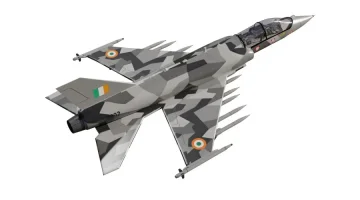
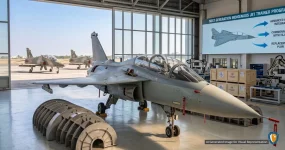
Tejas Mk2 Frontline Relevance Under Scrutiny as Former IAF Vice Chief Flags Timeline Delays and Emerging Regional Threats

Tejas Mk2 Frontline Relevance Under Scrutiny as Former IAF Vice Chief Flags Timeline Delays and Emerging Regional Threats


A few weeks following his retirement in June 2026 as the Vice Chief of the Air Staff for the Indian Air Force (IAF), Air Marshal Nagesh Kapoor shared a sharp review of India's homegrown Tejas Mk2 fighter jet programme. His comments have sparked major debates among defence experts.

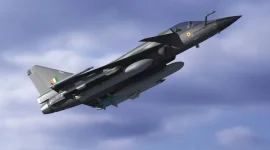
During an interview on NDTV's Ctrl Alt Defence, Kapoor was questioned about the future of the Tejas Mk2. The aircraft is a 4.5-generation medium-weight fighter that is anticipated to join the IAF in large numbers by the mid-2030s.

When asked if the jet would still be effective for frontline combat by that time, Kapoor gave a very clear answer: “No, operationally, definitely no.”

He based his conclusion on the fast-paced military advancements of neighbouring rivals.

By the middle of the next decade, China is expected to deploy up to 500 of its fifth-generation J-20 stealth fighters, alongside newer sixth-generation jets. Meanwhile, Pakistan is also looking into acquiring fifth-generation aircraft.

According to Kapoor, introducing a single-engine, 4.5-generation fighter without advanced stealth capabilities into frontline duty at a time when technology is two generations ahead would make it extremely difficult to handle high-level threats.

However, the former Vice Chief did not reject the Tejas Mk2 completely. He pointed out that India cannot afford to wait forever for locally made jets as regional threats grow.

He criticised the ongoing production delays and the apparent lack of urgency from the manufacturer, Hindustan Aeronautics Limited (HAL).

For example, deliveries of the current Tejas Mk-1A are falling behind schedule, and the Mk2’s first test flight has been pushed back to around 2027.

Despite these issues, Kapoor admitted that 4.5-generation planes will still be useful.

Since it is impossible to protect a massive country like India using only a small number of ultra-expensive fifth- and sixth-generation fighters, the IAF will still need the Tejas Mk2 for tasks like airspace defence and supporting ground troops.

"Indigenous is the way to go without a doubt, but how long do we keep waiting?" he stated. He also recommended speeding up India's own Advanced Medium Combat Aircraft (AMCA) project and suggested looking into foreign partnerships for sixth-generation fighter jets.

Kapoor's statements set off a major debate online and among military experts. Those who oppose buying more French-made Rafale jets questioned why the IAF wants to buy over 100 additional foreign fighters under the Multi-Role Fighter Aircraft (MRFA) scheme.

They argue that the homegrown Tejas Mk2 offers similar modern technology at a lower price.

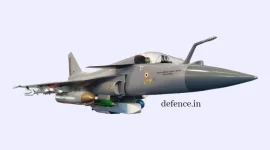
The Mk2 is a major upgrade over the earlier Tejas models; it is a heavier aircraft featuring a more powerful American GE-F414 engine, increased fuel capacity, and an indigenous Uttam Active Electronically Scanned Array (AESA) radar capable of tracking multiple targets over 100 kilometres away.

It can also carry up to 6.5 tonnes of weapons—including advanced munitions like the Astra beyond-visual-range missile and the BrahMos-NG cruise missile—across 11 hardpoints.

Supporters of the Tejas argue that focusing on self-reliance and building a larger fleet locally should be the top priority.

On the other side, experts who support buying foreign jets while developing local ones explain that the Rafale and Tejas Mk2 serve completely different purposes.

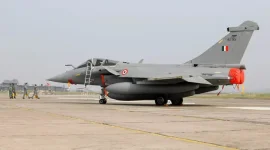
The Rafale is a heavier, twin-engine fighter with a maximum takeoff weight of 24.5 tonnes and a weapons payload of nearly 9.5 tonnes.

It boasts a longer flying range, a proven combat record, deep-strike capabilities, and the advanced SPECTRA electronic warfare system.

In contrast, the Tejas Mk2 is a single-engine, medium-weight fighter. Its main goal is to affordably replace the IAF's ageing fleets of Mirage 2000s, Jaguars, and MiG-29s, providing large numbers for tactical missions and local point defence.

Currently, the IAF's fighter squadron strength has dropped to near 30, which is dangerously below the approved level of 42. This creates an urgent need for more planes as older jets are retired.

Relying only on local production carries risks, such as delays in engine supplies and testing, especially while rival nations rapidly upgrade their forces.

Buying more Rafales, which could be delivered quickly and partly built in India, would provide a fast solution to cover the shortfall during the 2030s.

Meanwhile, the Tejas Mk2 and the upcoming AMCA are intended to form the long-term foundation of the air force.

Many military planners suggest a "high-low" mix: using high-end jets like the Rafale and AMCA for the most dangerous missions, while deploying cost-effective Tejas variants for widespread coverage.

Technical experts also point out that 4.5-generation fighters are still highly relevant globally if they receive continuous upgrades to their sensors, communication networks, and weaponry.

Modern jets like the latest Rafale F4 and the American F-15EX prove this point.

The Tejas Mk2 is built with room for future improvements and easily integrates with new Indian weapons.

Therefore, labelling it as outdated just because it lacks full stealth ignores the fact that modern air warfare relies heavily on advanced electronic systems and long-range missiles, not just invisible airframes.

Kapoor’s remarks highlight a growing frustration within the IAF regarding the slow pace of local manufacturing, despite strong support for national self-reliance.

His comments come at a critical time as India is negotiating the purchase of 114 additional multi-role fighters, alongside ongoing efforts to speed up the Tejas and AMCA projects with the help of private companies.

This situation underscores a major dilemma: the desire to build weapons at home versus the immediate reality of a shrinking fighter fleet and the advanced jets being deployed by neighbouring countries.

In the end, most defence professionals agree that India must pursue a balanced approach.

Waiting solely for the Tejas Mk2 and AMCA could leave the air force dangerously under-equipped in the 2030s, while depending entirely on foreign imports would harm India's long-term goal of military self-sufficiency.

Kapoor’s blunt warning demands a more realistic approach to production timelines, manufacturer accountability, and force structure priorities.

How the government balances expensive foreign imports with mass-produced local jets will ultimately decide the Indian Air Force's ability to protect the nation in an increasingly hostile region.
 
Situation is dire, no doubt.
Years of negligence, delays and lack of accountability has fallen us down to this level which in unprecendented in the history.

But calling out that Rafale or Tejas mk2 or Mk1a will be obsolete by 2035-2040, this something doesnt makes any sense. Every airforce in this world maintains a mix of 5th, 6th and even 4th gen fighter jets. The 4th or 4.5 gen fighter jets work as a missile truck causing a sweep of the area when the 5th and 6th gen fighter jet have neutralized the radar and AD of the enemy to a large extent.

Anyways, just from cost perspective as well, maintaining a 5th or 6th gen fighter jet is extremely costly as the coating will keep on coming out and have to be reapplied. Hence, it makes sense to keep 50% of Airforce which are easier to maintain and cost effective.
 
If 4.5G Fighters getting obsolete why we are excited to buy Rafale F4's why not Sukhoi-57 or F-35, so i feel statement is emotionally loaded due to delays. 4.5G jets could be paired with MUM-T aircrafts like Cats Warriors to fill missing capability of 5G/6G stealth and avionics which can make it far cheaper to operate from any 5G/6G standalone aircraft, which i think whole world is going to do eventually.

Why target Tejas-Mk1A/Mk2 specifically, every aircraft is 40-50 years old like Rafale, F16, Gripen etc. so they just get gradual upgrades & we are hell bent on buying them. I think they have role to play they will keep getting upgrades and will keep going on.

Will China stop making JF-17 or J-10C ? or will USA stop making F-16's or F-15's ? or will Russia stop making Sukhoi-35 variants ? or France will stop making Rafale F5-F6-F7-F8 ?. some country will eventually need aircraft which is affordable and can have Western weapons and Indian weapons and Russian weapons and Israeli weapons like all in one depot and without USA strings attached to it, so i think only India can pull this off.

I think we should stop worshipping Imported weapons & start focusing on our own potential, if we won't, we will never make our own Weapons/Aircrafts. an Indigenous Engine will solve everything, whether it is Fighter Jet (Low-Bypass) / Tank / Turboprop / Transport Jet (High-Bypass) / All type of engines exists.
 
What Air Marshal has pointed out is absolutely right. We keep comparing MK II with 4.5 generation jets, which is absolutely rubbish. No comparison between paper plane and combat proven jets. World is moving at a jets speed and HAL is sitting on a bullock cart waiting for someone to push the cart. 4.5 Gen jets would be relevant in the future too but with upgradations. Relying on only fourth generation jets like Rafales will be disastrous. India must go for two to three squadrons of Rafale and SU 57 each till the time our paper planes Mk IA and II come on to the tarmac.
 
Last edited:
Situation is dire, no doubt.
Years of negligence, delays and lack of accountability has fallen us down to this level which in unprecendented in the history.

But calling out that Rafale or Tejas mk2 or Mk1a will be obsolete by 2035-2040, this something doesnt makes any sense. Every airforce in this world maintains a mix of 5th, 6th and even 4th gen fighter jets. The 4th or 4.5 gen fighter jets work as a missile truck causing a sweep of the area when the 5th and 6th gen fighter jet have neutralized the radar and AD of the enemy to a large extent.

Anyways, just from cost perspective as well, maintaining a 5th or 6th gen fighter jet is extremely costly as the coating will keep on coming out and have to be reapplied. Hence, it makes sense to keep 50% of Airforce which are easier to maintain and cost effective.
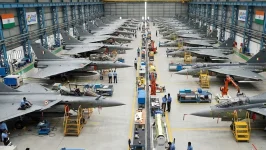
Your argument is very much valid. Every airforce keeps different types of inventory. A country like India can not afford all the squadrons full of imported fighters. If foreign suppliers stop giving spares and upgrades as well as service support at a critical point of time, the whole air defence will be crippled. Main focus on engines is required at present as HAL will be able to make 24 LCA per year with almost four lines of production and support of private sector in making fuselage and wings.
 
Your argument is very much valid. Every airforce keeps different types of inventory. A country like India can not afford all the squadrons full of imported fighters. If foreign suppliers stop giving spares and upgrades as well as service support at a critical point of time, the whole air defence will be crippled. Main focus on engines is required at present as HAL will be able to make 24 LCA per year with almost four lines of production and support of private sector in making fuselage and wings.

Exactly, Rafales are quite costly and to top it off MBDA Meteors are gonna cost us a lot as well.
While we know HAL is slower in delivering, we have to find alternates to cover for the lack of numbers.

My solutions (except for Imports) are Ghatak & indigenous Rocket force.

Build Ghatak UCAV in mass numbers and multiple variants. They will work as our stealth 5th gen LCA. As the entire tech is ours,

Similarly rocket force...whether its Pinaka variants from Artillery or Brahmos or Pralay..we need to ramp their production and order them in mass numbers so that we can fire them in waves after waves without worrying for their stockpile.

Then drones are there anyways.
 
Exactly, Rafales are quite costly and to top it off MBDA Meteors are gonna cost us a lot as well.
While we know HAL is slower in delivering, we have to find alternates to cover for the lack of numbers.

My solutions (except for Imports) are Ghatak & indigenous Rocket force.

Build Ghatak UCAV in mass numbers and multiple variants. They will work as our stealth 5th gen LCA. As the entire tech is ours,

Similarly rocket force...whether its Pinaka variants from Artillery or Brahmos or Pralay..we need to ramp their production and order them in mass numbers so that we can fire them in waves after waves without worrying for their stockpile.

Then drones are there anyways.
You are right. Now countries are focusing on unmanned aerial vehicles. We should work on advanced UAVs guided by satellites or pre programned to attack particular targets. We should also focus on advanced Air defence system. If 4.5 genration fighters will.not work as Vice Chief Marshal has stated then why France is producing Rafale. Even China and Pakistan have such aircraft. Each type of fighter has its own role. Where we have to use needle, we can not use sword.
 
Read all comments here. I think people are missing the woods for the trees.

His comments were about using the Mk2 for cutting edge ops. The pace at which it is developing would indeed make it irrelevant for cutting edge ops. However, he himself goes on to say, it will still be required to make up volume. The major point there was about delays, not whether the ac would be useful.

Those who think the Mk2 is going to match the Rafale are in dreamland. The Rafale is so far ahead, that there is no comparison. Mk2 is a replacement for legacy jets like the M2K, Jaguars and MiG-29. Rafale is in a different league.

There are some, who talk about MUM-T and Ghatak UCAVs. Pray where exactly are those UCAVs?? Secondly, if your jet itself is not ready, what MUM-T are we discussing?

The last point. Some say we should get more missiles of various kinds. Yes we do need more of them but not as replacement for fighters. The two weapon systems play completely different roles and one can not be treated as a replacement for the other.

Essentially the remarks are aimed at timelines not about hardware. Indigenous weapons are great but how long does the IAF have wait?? How is the IAF expected to do its job in the meanwhile??
 
Read all comments here. I think people are missing the woods for the trees.

His comments were about using the Mk2 for cutting edge ops. The pace at which it is developing would indeed make it irrelevant for cutting edge ops. However, he himself goes on to say, it will still be required to make up volume. The major point there was about delays, not whether the ac would be useful.

Those who think the Mk2 is going to match the Rafale are in dreamland. The Rafale is so far ahead, that there is no comparison. Mk2 is a replacement for legacy jets like the M2K, Jaguars and MiG-29. Rafale is in a different league.

There are some, who talk about MUM-T and Ghatak UCAVs. Pray where exactly are those UCAVs?? Secondly, if your jet itself is not ready, what MUM-T are we discussing?

The last point. Some say we should get more missiles of various kinds. Yes we do need more of them but not as replacement for fighters. The two weapon systems play completely different roles and one can not be treated as a replacement for the other.

Essentially the remarks are aimed at timelines not about hardware. Indigenous weapons are great but how long does the IAF have wait?? How is the IAF expected to do its job in the meanwhile??
There are individual intrests in speaking . Some are influenced by big business houses who are investing in aerospace industry and want business. TATA wants Rafale as well as AMCA which will take 10 years to the production but private sector will say 5 years.. Reliance wants helicopter and engine business, L& T and Bharat Forge want their shares..Mahindra also investing. Even if you want to purchase fighters to the capabilities of LCA Mark 2 from other countries they will take lots of timein supplying and three to four times the price. But people will say go for import. Kickbacks can not be ruled out in procurements. So many things are working in background. Let us force HAL to speed up. If required , an IAS officer or IAF person can sit in Bangalore and monitor it. Also the government must talk to the USA.fpr smooth supply of engine. The engine will be finally a big shoe stopper.
 
There are individual intrests in speaking . Some are influenced by big business houses who are investing in aerospace industry and want business. TATA wants Rafale as well as AMCA which will take 10 years to the production but private sector will say 5 years.. Reliance wants helicopter and engine business, L& T and Bharat Forge want their shares..Mahindra also investing. Even if you want to purchase fighters to the capabilities of LCA Mark 2 from other countries they will take lots of timein supplying and three to four times the price. But people will say go for import. Kickbacks can not be ruled out in procurements. So many things are working in background. Let us force HAL to speed up. If required , an IAS officer or IAF person can sit in Bangalore and monitor it. Also the government must talk to the USA.fpr smooth supply of engine. The engine will be finally a big shoe stopper.
The moment HAL is questioned the standard answer is ohh kickbacks, vested interests etc. The total failure of HAL to adhere to delivery and PRODUCT QUALITY must never be questioned. Some bloody holy cow it is. Would you like to tell us why HAL has failed to deliver a single Mk1A jet till date over 2 years from the contract date?? Why does the HAL wants to palm off incomplete and uncertified jets even now and wants IAF to provide Concessions?? How about IAF withold 50% of the contracted amount till the jets meet all contracted specs and are properly certified.

It is one thing to support HAL but really stupid to support them when they compromise national security without accountability.
 
There are some, who talk about MUM-T and Ghatak UCAVs. Pray where exactly are those UCAVs?? Secondly, if your jet itself is not ready, what MUM-T are we discussing?
Now when you have said this I think HAL's every project is on paper. Almost everything is tech demonstrator for optics.
 
Now when you have said this I think HAL's every project is on paper. Almost everything is tech demonstrator for optics.
They need a kick up their backsides periodically. Unfortunately, the Govt is reluctant to do that for certain other reasons. Personal experience says, when they get kicked, they actually work quite efficiently. Unfortunately, they are like the wind up toys of old. One has to keep winding them up. That is one area where Govt has been slipping up.
 

Forum statistics

Threads
7,961
Messages
68,298
Members
5,743
Latest member
shiv yadav
Back
Top