The Defence Research and Development Organisation (DRDO) has spent several years designing, testing, and building components for its Supersonic Target (STAR) missile.
Despite these ongoing efforts, this domestically produced, ramjet-powered system has yet to complete an officially confirmed flight test.
Consequently, a crucial programme meant to strengthen India's military capabilities remains in the testing phase, while other newer projects using similar technology are making faster progress.
The Purpose of STAR for India's Armed Forces
STAR is built to be a reusable, home-grown supersonic aerial target. Its primary job is to mimic the flight patterns of modern anti-ship cruise missiles and high-speed attack aircraft.By doing so, it provides naval and air defence teams with a highly realistic and affordable way to practice interceptions, reducing the need for costly foreign training drones.
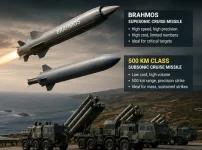
The missile relies on a two-stage propulsion system: a solid rocket booster for initial lift-off and a Liquid Fuel Ramjet (LFRJ) engine for sustained high-speed flight, similar to the technology used in the BrahMos missiles.
Open-source data indicates that STAR can reach speeds between Mach 1.8 and Mach 2.5, operating at altitudes ranging from 100 metres to 10 kilometres, with an operational range of 55 to 175 kilometres.
It is designed to perform sharp turns and sudden altitude drops, accurately simulating dangerous threats like the Exocet or Chinese anti-ship weapons.
A History of Delayed Deadlines
The development of STAR has experienced numerous delays over the years.Initial wind tunnel tests and design updates suggested that live demonstration flights would happen between 2023 and 2024, but those deadlines passed without any confirmed launches.
Throughout 2024 and 2025, reports indicated that the DRDO had moved the project into "Phase-III" development.
This stage involves combining the propulsion, guidance, and control systems into a fully functional prototype for live testing.
However, despite continuous updates on the manufacturing of parts and system integration, there has been no official confirmation of an actual flight.
The programme is constantly described as being on the verge of testing, but the trials have not yet materialised.
The Technical Challenges of Ramjet Engines
The extended waiting period before STAR's first flight is actually quite common for Indian missiles that use liquid fuel ramjet technology.For instance, the BrahMos-NG project, which uses a similar engine, also faced a year-long delay when new requirements were added late in the design process.
Ramjet engines are exceptionally difficult to test on the ground because they only work efficiently after the missile reaches a specific high speed.
As a result, engineers must rely on extensive wind tunnel and ground tests to ensure the initial rocket booster, the ramjet ignition, and the missile's shape all work together flawlessly before they can risk an actual test flight.
The design tweaks made to STAR since 2022 highlight this careful, step-by-step refinement. Every minor change to the missile's body or air intakes requires additional rounds of testing before it can be cleared to fly.
Expanding Goals Are Contributing to Delays
Another major reason for the delay is that STAR's purpose has grown beyond its original role as just a training target.Recently, the DRDO has shown interest in turning the STAR technology into an actual weapon. They are exploring its use in combat missions, such as destroying enemy radar systems (anti-radiation) or taking down airborne warning aircraft (anti-AWACS).
Additionally, they are developing an air-launched version that can be fired from fighter jets like the LCA Tejas. When a military project's goals are expanded halfway through development, engineers are forced to go back and conduct more tests.
Challenges such as shrinking the targeting sensors and ensuring the missile works in environments jammed by enemy signals require extra time to solve. While these new combat capabilities will be highly valuable, they naturally push the date of the first test flight further into the future.
Looking Ahead to Future Milestones
Current statements from the DRDO indicate that Phase-III integration and testing will continue throughout 2026.Independent defence analysts suggest that STAR might only reach limited manufacturing and actual user trials by late 2026 or early 2027.
Right now, the most important event to watch for is the missile's very first flight.
Until the DRDO or the Ministry of Defence officially announces a successful launch from a testing facility like Chandipur or Abdul Kalam Island, STAR remains a project that looks excellent on paper and in laboratories.
However, it still needs to complete that critical first flight to prove its capabilities in the real world.