- Views: 2K
- Replies: 3
The balance of military power in South Asia is poised for a major shift, drawing sharp reactions from Pakistani defence observers.
Defence experts in Pakistan are raising alarms that the Indian Navy’s future Carrier Strike Groups (CSGs) will heavily tilt the maritime and regional scales.
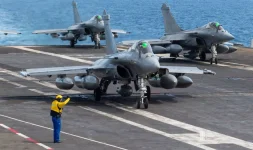
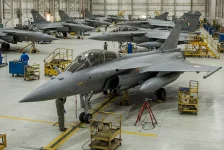
A primary concern is that just one fully equipped Indian aircraft carrier could eventually field a larger and more potent fleet of Dassault Rafale-M maritime fighters than the Pakistan Air Force’s (PAF) total inventory of Chengdu J-10CE multirole aircraft.
For context, the Pentagon recently confirmed that Pakistan's current fleet of Chinese-supplied J-10CE fighters stands at 36 aircraft.
These apprehensions are surfacing as New Delhi accelerates its long-term naval modernization.
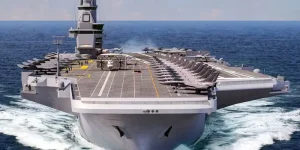
In early 2025, India sealed a landmark inter-governmental agreement worth approximately ₹63,000 crore (€7 Billion) to acquire 26 Rafale-Marine jets. These 4.5-generation aircraft are slated to operate from India's aircraft carriers, notably the indigenously built INS Vikrant.
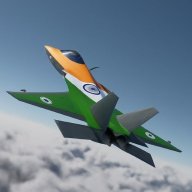
Looking ahead, India is also aggressively developing its own Twin Engine Deck-Based Fighter (TEDBF) to replace the older MiG-29K fleet.
Security analysts point out that as India expands its carrier-based air wing, its capacity to launch overwhelming combat missions at sea will grow exponentially.
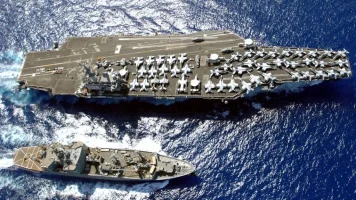
The worry among Pakistani commentators extends beyond just fighter jet numbers. They note that an Indian CSG operates as a formidable, heavily defended fortress at sea.
Escorted by state-of-the-art warships like the Visakhapatnam-class and Kolkata-class destroyers, an Indian carrier operates under a massive and highly advanced air-defence umbrella.
Observers argue that the concentrated medium-range surface-to-air missile (SAM) network of a single Indian CSG is more robust and layered than Pakistan’s entire ground-based medium-range air-defence grid.
This reality highlights the rapid maturation of the Indian Navy's operational task forces.
Today's Indian CSGs seamlessly fuse long-range radar surveillance, electronic warfare, and network-centric command structures to guard critical naval assets.
The defensive perimeter is multi-tiered: ship-launched missiles and combat management systems neutralize incoming anti-ship weapons, drones, and hostile aircraft.
Meanwhile, the carrier-borne Rafale-M fighters—armed with beyond-visual-range weapons like the Meteor missile—act as the outermost shield, eliminating threats long before they can approach the fleet.
Ultimately, these assessments from across the border highlight a growing recognition of India’s transformation into a dominant blue-water force.
As New Delhi pours resources into domestic warship production and upgrades its naval aviation capabilities, its maritime reach continues to widen.
With the Rafale-M induction underway, the ongoing TEDBF programme, and active deliberations for a third, larger next-generation aircraft carrier, India’s strategic posture in the Indian Ocean Region is set to become decisively more formidable.