- Views: 5K
- Replies: 18
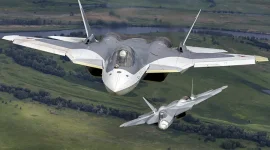
A future fighter aircraft combining the aerodynamic prowess of Russia’s Su-57 with India’s advanced avionics and mission software could ostensibly surpass the combat capabilities of the American F-35 Lightning II.
This assessment comes from Group Captain (Retd.) Dr. M. J. Augustine Vinod, a former Indian Air Force fighter pilot and military analyst, who suggests such a hybrid platform would offer a decisive advantage in modern aerial warfare.
The "Potent Combination" of Hardware and Software
Speaking to RT India, Dr. Vinod outlined a vision where the Su-57’s superior airframe performance is married to India’s rapidly maturing software and sensor technologies.He described this pairing as a "very potent combination" that could redefine air superiority.
This analysis arrives at a critical juncture for India’s defence planning.
The Indian Air Force (IAF) is currently evaluating long-term solutions to bolster its fighter squadrons while bridging the timeline gap before the indigenous Advanced Medium Combat Aircraft (AMCA) enters service.
While the AMCA remains the long-term goal, interim options involving deep technical partnerships are being actively explored.
Kinetic Performance vs. Stealth Philosophy
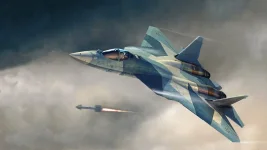
Dr. Vinod emphasised that the Su-57 is built on a philosophy of kinematic dominance.The aircraft features three-dimensional thrust-vectoring engines and a design optimised for high agility and supercruise—the ability to fly at supersonic speeds without using fuel-guzzling afterburners.
These traits allow the fighter to maneuver aggressively in both close-range dogfights and long-range engagements.
In contrast, the US-made F-35 is designed with a different priority: low observability (stealth) and network-centric warfare.
While the F-35 excels at remaining undetected by radar, Dr. Vinod notes that it compromises on raw aerodynamic performance, such as speed and maneuverability, compared to its Russian counterpart.
He argues that a Su-57 variant, if enhanced with modern Indian sensors, would retain these kinetic advantages while closing the digital gap, offering a more balanced and lethal platform.
The Indian Digital Edge
According to the former pilot, India’s specific contribution—and the key to unlocking this potential—lies in its indigenous avionics architecture.Over the last two decades, Indian defence laboratories and industries have successfully developed mission computers, electronic warfare (EW) suites, and sensor fusion technology for complex platforms like the Su-30MKI, the Tejas Light Combat Aircraft, and the Rafale.
Unlike older legacy systems, modern Indian avionics are largely software-defined. This allows for rapid updates, easier integration of new weapons, and customization to suit specific Indian operational doctrines—capabilities that are often "locked" in imported Western jets.
Dr. Vinod suggests that replacing standard Russian avionics with Indian-made mission computers would create an aircraft that is not only agile in the air but also digitally superior in managing the battlefield.
Strategic Fit for Himalayan and Maritime Operations
Dr. Vinod believes this specific configuration would be uniquely suited to India’s challenging geography.The Indian Air Force operates in some of the world's most extreme environments, from the thin air of high-altitude Himalayan airbases to long-range maritime strike missions over the Indian Ocean.
A fighter that combines the Su-57’s high-altitude performance and range with Indian software tailored for local threats would offer a strategic utility that an "off-the-shelf" import like the F-35 might struggle to match.
It would effectively provide a bespoke solution rather than a generic one.
From Buyer to Partner
While the concept remains theoretical, it highlights a significant shift in India’s approach to defence procurement.Following the lessons learned from the earlier FGFA (Fifth Generation Fighter Aircraft) programme—which India exited due to disagreements over work-share and technology transfer—there is a renewed focus on co-development rather than simple purchasing.
Dr. Vinod’s comments reflect a growing confidence within the Indian defence community.
Whether or not a "Super Su-57" ever takes to the skies, the assessment underscores that India’s avionics and software capabilities have matured enough to potentially enhance even the world’s most advanced fighter airframes.