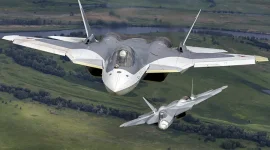
Experts Claim Su-57 Equipped with Indian Avionics and Mission Software Could Outclass F-35 in Combat

Experts Claim Su-57 Equipped with Indian Avionics and Mission Software Could Outclass F-35 in Combat


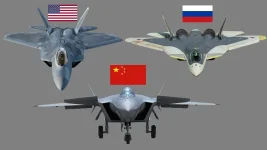
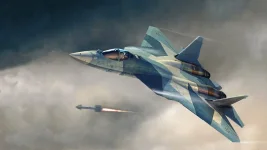
A future fighter aircraft combining the aerodynamic prowess of Russia’s Su-57 with India’s advanced avionics and mission software could ostensibly surpass the combat capabilities of the American F-35 Lightning II.

This assessment comes from Group Captain (Retd.) Dr. M. J. Augustine Vinod, a former Indian Air Force fighter pilot and military analyst, who suggests such a hybrid platform would offer a decisive advantage in modern aerial warfare.

The "Potent Combination" of Hardware and Software​

Speaking to RT India, Dr. Vinod outlined a vision where the Su-57’s superior airframe performance is married to India’s rapidly maturing software and sensor technologies.

He described this pairing as a "very potent combination" that could redefine air superiority.

This analysis arrives at a critical juncture for India’s defence planning.

The Indian Air Force (IAF) is currently evaluating long-term solutions to bolster its fighter squadrons while bridging the timeline gap before the indigenous Advanced Medium Combat Aircraft (AMCA) enters service.

While the AMCA remains the long-term goal, interim options involving deep technical partnerships are being actively explored.

Kinetic Performance vs. Stealth Philosophy​

Dr. Vinod emphasised that the Su-57 is built on a philosophy of kinematic dominance.

The aircraft features three-dimensional thrust-vectoring engines and a design optimised for high agility and supercruise—the ability to fly at supersonic speeds without using fuel-guzzling afterburners.

These traits allow the fighter to maneuver aggressively in both close-range dogfights and long-range engagements.

In contrast, the US-made F-35 is designed with a different priority: low observability (stealth) and network-centric warfare.

While the F-35 excels at remaining undetected by radar, Dr. Vinod notes that it compromises on raw aerodynamic performance, such as speed and maneuverability, compared to its Russian counterpart.

He argues that a Su-57 variant, if enhanced with modern Indian sensors, would retain these kinetic advantages while closing the digital gap, offering a more balanced and lethal platform.

The Indian Digital Edge​

According to the former pilot, India’s specific contribution—and the key to unlocking this potential—lies in its indigenous avionics architecture.

Over the last two decades, Indian defence laboratories and industries have successfully developed mission computers, electronic warfare (EW) suites, and sensor fusion technology for complex platforms like the Su-30MKI, the Tejas Light Combat Aircraft, and the Rafale.

Unlike older legacy systems, modern Indian avionics are largely software-defined. This allows for rapid updates, easier integration of new weapons, and customization to suit specific Indian operational doctrines—capabilities that are often "locked" in imported Western jets.

Dr. Vinod suggests that replacing standard Russian avionics with Indian-made mission computers would create an aircraft that is not only agile in the air but also digitally superior in managing the battlefield.

Strategic Fit for Himalayan and Maritime Operations​

Dr. Vinod believes this specific configuration would be uniquely suited to India’s challenging geography.

The Indian Air Force operates in some of the world's most extreme environments, from the thin air of high-altitude Himalayan airbases to long-range maritime strike missions over the Indian Ocean.

A fighter that combines the Su-57’s high-altitude performance and range with Indian software tailored for local threats would offer a strategic utility that an "off-the-shelf" import like the F-35 might struggle to match.

It would effectively provide a bespoke solution rather than a generic one.

From Buyer to Partner​

While the concept remains theoretical, it highlights a significant shift in India’s approach to defence procurement.

Following the lessons learned from the earlier FGFA (Fifth Generation Fighter Aircraft) programme—which India exited due to disagreements over work-share and technology transfer—there is a renewed focus on co-development rather than simple purchasing.

Dr. Vinod’s comments reflect a growing confidence within the Indian defence community.

Whether or not a "Super Su-57" ever takes to the skies, the assessment underscores that India’s avionics and software capabilities have matured enough to potentially enhance even the world’s most advanced fighter airframes.
 
Yes India should become a partner in production and make in India Su57 with option to integrate local avionics Optronics rafar wepon and missiles.
We must be given access to required sw for modificationd to integrate insigenious.
 
Su57 is not stealthy, what to do about that? 5th gen is all about stealth
Su57 is stealthy from the front aspects, like the chinese J20. American jets like F22 are all side stealth but cost havoc to maintain that, not worth at all for Indian operations. The main feature of 5th gen is internal weapon bay that itself cuts the RCS greatly, plus avionics design that redirects radar waves differently, both of which Su57 possesses. Where the current Su57 lacks is the EW suit and radar which are not 5th gen but older gen mechanical systems... But this is where Indian systems shall come in (we have become damn good in this part, Uttam radar and EW suits are dominating on world stage)... Once integrated, the new Su57 can eat Chinese J20 for breakfast... That's all we need before AMCA matures (which shall be a 5.5 gen tech)
 
This could be one of the best procurements ever... Almost 90%+ of this can be made in India with great amount of indigenous systems. 60 such jets and IAF gets stable for next 20 years minimum easily.
 
Su57 would be useful bcz AMCA is far yet, so it will again play a stopgap role (as MoD is obsessed with stopgaps) but it's relevance depends entirely on when it is introduced to IAF, also could the modified one stand in front of J17,J35
 
Totally agreed...I wrote the same assessment in response to a LinkedIn post from a former defence serviceman that the Su-57 airframe with improved stealth & RCS mated to Indian avionics & weapon systems would be relatively much superior to the F-35 and a better overall proposition for India over long term...
 
Su57 is stealthy from the front aspects, like the chinese J20. American jets like F22 are all side stealth but cost havoc to maintain that, not worth at all for Indian operations. The main feature of 5th gen is internal weapon bay that itself cuts the RCS greatly, plus avionics design that redirects radar waves differently, both of which Su57 possesses. Where the current Su57 lacks is the EW suit and radar which are not 5th gen but older gen mechanical systems... But this is where Indian systems shall come in (we have become damn good in this part, Uttam radar and EW suits are dominating on world stage)... Once integrated, the new Su57 can eat Chinese J20 for breakfast... That's all we need before AMCA matures (which shall be a 5.5 gen tech)
Su57's RCS is in the 0.1–0.5 m2 range thats orders of magnitude larger than F-22/F-35 figures. J-20 supposedly has strong frontal shaping but again the published RCS numbers for all these aircraft are estimates and semi classified.

"dominating on world stage" according to who ? I know we love to gas up our own systems but let's not go over to the point of peddling delusions of grandeur. Uttam isn't even widely deployed let alone it's kinks ironed out as with all newly deployed systems operational challenges and their resolution takes time and money, so to say we are dominating is either stupid or ignorant.
 
Su57 is stealthy from the front aspects, like the chinese J20. American jets like F22 are all side stealth but cost havoc to maintain that, not worth at all for Indian operations. The main feature of 5th gen is internal weapon bay that itself cuts the RCS greatly, plus avionics design that redirects radar waves differently, both of which Su57 possesses. Where the current Su57 lacks is the EW suit and radar which are not 5th gen but older gen mechanical systems... But this is where Indian systems shall come in (we have become damn good in this part, Uttam radar and EW suits are dominating on world stage)... Once integrated, the new Su57 can eat Chinese J20 for breakfast... That's all we need before AMCA matures (which shall be a 5.5 gen tech)
"Once integrated, the new Su57 can eat Chinese J20 for breakfast... That's all we need before AMCA matures (which shall be a 5.5 gen tech)"
You are making a lot of grand statements with absolute disregard for real and chronic challenges facing Indian military industrial ecosystem, we've had some wins with the corporatisation but that's not the same thing as fielding well rounded systems that are internationally competitive let alone dominating systems lime th J20 that have been around for nearly half a decade with a lot of iterative improvements(as you'd expect from advanced but nascent systems).
While we are yet to even field one. Just stop with this obnoxious grand standing. We are nowhere near where the Chinese were 10 years ago let alone being in a position to challenge their technical dominance 10-15 years from now. We simply don't have their industrial and technical depth, plus we take insufferable levels of pride in "respecting IP rights" so reverse engineering is out of the question.
We lack the Industrial SOE system(a single HAL is grossly insufficient to compete against AVIC and its n number of subsidies that aggressively compete with EACH OTHER, our domestic single entity monopoly focused systems simply are insufficient. Do you even know about any of these things ?).
Praying towards the sky for "preebat sector" to save Indian defense industries is not going to work, since they too are reliant on the demand generated by states. Our organizational and administrative systems need top to to bottom restructuring, without that there is no question of challenging the Chinese, because we'd have lost before we even begin
 
Su57's RCS is in the 0.1–0.5 m2 range thats orders of magnitude larger than F-22/F-35 figures. J-20 supposedly has strong frontal shaping but again the published RCS numbers for all these aircraft are estimates and semi classified.

"dominating on world stage" according to who ? I know we love to gas up our own systems but let's not go over to the point of peddling delusions of grandeur. Uttam isn't even widely deployed let alone it's kinks ironed out as with all newly deployed systems operational challenges and their resolution takes time and money, so to say we are dominating is either stupid or ignorant.
I will only critique your first Para. You talked about the Su-57 frontal RCS and the supposedly leagues ahead RCS of competitors. Do you have any AUTHENTIC data about this?? Or is it all conjectures put out as expert comments by western experts?? Frankly, I wouldn't expect anything less fron western experts but total praise for their systems.

Now for a moment, let us consider the actual impact of RCS in a combat scenario. First, any low-observable platform is designed for specific wavelengths, mostly X band ( older classification). Other Radars of different wavelengths will pick up that ac at longer ranges. It is simply a function of good signal processing. So a Voronez Radar will pick up even an F-22 Raptor or a B-2 at very large ranges, whether anyone likes it or not. Earlier the problem was of processing the return to generate smaller and more accurate return that could be used for targeting. Modern signal processing has achieved that.

Second part is about frontal vs all round low observabililty. No debate on the frontal bit. One wants detection to be delayed as much as possible to be within one's own weapon release ranges, without being threatened. However, with modern weapons, rear aspect detection isn't as crucial. Once weapons are released, just turn the hell around, and let Mr After Burner earn his pay. Catching a fleeing fighter in a tail chase for any missile is very difficult unless the range is extremely close. All of these fighters carry modern long range weapons whether AA or AG. So why would the hang around. The Su-57, will have extreme kinetic performance when the Izdeliye-30( the planned engine) is integrated, even better than the F-22 Raptor.

This also gives it a little noticed advantage. All round low observability is a night mare even in peace time. In war scenario, it will be much worse. Mission availability will come into play.

Just a few factors we need to consider, while placing low observability on the same pedestal as God.
 

Forum statistics

Threads
6,249
Messages
62,452
Members
4,898
Latest member
Vignesh22
Back
Top