- Views: 2K
- Replies: 10
Hindustan Aeronautics Limited (HAL) is gearing up to substantially boost the manufacturing of AL-31FP turbofan engines to support the Indian Air Force's (IAF) massive Su-30MKI fighter fleet.
While HAL currently produces about 30 engines annually, the aerospace manufacturer aims to scale this up to 50 units per year by 2030.
This planned increase aligns with a monumental ₹26,000 crore contract signed by the Ministry of Defence in September 2024 to procure 240 of these engines.
Transitioning to Fleet Sustainment
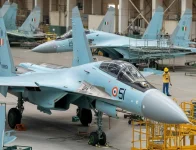
The expansion strategy highlights a crucial transition in the life cycle of India's frontline combat aircraft. With over 259 Su-30MKI jets currently in active service, the twin-engine platform acts as the absolute mainstay of the country's aerial defence.Because a significant portion of these fighters were rapidly inducted from HAL's Nashik facility during the mid-2010s, they are now approaching operational milestones that require their second set of powerplants.
As these original engines reach their maximum service life and overhaul limits, the demand for fresh AL-31FP replacements is projected to climb steeply in the latter half of this decade.
Ramping Up Capacity and Indigenisation
To address this impending requirement without jeopardising aircraft availability, HAL is expanding its infrastructure at its Koraput division in Odisha, where the engines are built from the raw material stage.| Production Metrics | Current / Contracted | Target (By 2030) |
|---|---|---|
| Annual Production Rate | 30 engines/year | 50 engines/year |
| Indigenous Content | > 54% | Up to 63% |
The push to 50 engines annually by 2030 will allow the IAF to build a comfortable reserve inventory. Furthermore, HAL is focusing heavily on indigenisation to reduce reliance on foreign supply chains.
The current batch of engines features over 54% local content, and HAL is actively working with domestic micro, small, and medium enterprises (MSMEs) to increase this share to 63% by the end of the current delivery programme.
Powering the "Super Sukhoi" Upgrades
The Russian-origin AL-31FP engine is vital to the Su-30MKI's renowned agility, primarily due to its thrust-vectoring control (TVC) nozzles that allow for extreme aerial manoeuvres. Securing a steady, domestic supply chain for these engines directly complements the IAF's long-term roadmap for the platform.The IAF is preparing to roll out the "Super Sukhoi" modernisation programme, an extensive ₹65,000 crore upgrade initiative. This will transform the aircraft to keep it viable well into the 2040s and 2050s. Key upgrades include:
- Integration of the indigenous Virupaksha Active Electronically Scanned Array (AESA) radar.
- Advanced electronic warfare (EW) suites and new mission computers.
- Upgraded long-range standoff weapons, including the Astra beyond-visual-range air-to-air missile.
By deepening domestic manufacturing capabilities, India is mitigating the risks of global supply disruptions and ensuring its primary fighters remain a dominant force in the region.