How Indian Defence Startups Are Propelling the Indian Army Far Ahead of Pakistan in the Tactical FPV and Kamikaze Drone Race

How Indian Defence Startups Are Propelling the Indian Army Far Ahead of Pakistan in the Tactical FPV and Kamikaze Drone Race


Unmanned aerial vehicles have shifted from being specialised military assets to the primary force multipliers along the volatile borders between India and Pakistan.

As both nations rush to adopt First Person View (FPV) drones, loitering munitions, and swarm technologies, the Indian Army has secured a commanding lead.

Driven by robust domestic research and a booming private sector, India is rapidly scaling its unmanned operations, establishing a level of self-reliance and tactical superiority that far outpaces its neighbour.

A Revolutionary Surge in Unmanned Capabilities​

The momentum of India's drone integration is unprecedented.

In early April 2026, the military released a comprehensive Technology Roadmap for Unmanned Aerial Systems and Loitering Munitions.

This blueprint targets the acquisition of 30 distinct drone variants, encompassing everything from heavy-lift cargo UAVs to low-cost suicide drones and advanced surveillance swarms.

To meet this strategic goal, the Army plans to deploy tens of thousands of locally manufactured drones over the next half-decade—a procurement scale never before seen in the region.

Emergency purchases have already yielded significant battlefield dividends.

Gujarat-based InsideFPV recently delivered kamikaze systems specifically engineered to withstand the freezing -35°C temperatures of high-altitude frontiers like Ladakh and Siachen.

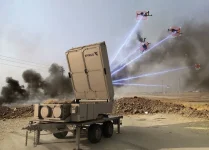
Concurrently, Droneyards has provided robust FPV units capable of navigating heavily contested airspace saturated with electronic warfare (EW) jamming.

The success of recent tactical initiatives, such as Operation Sindoor, has further accelerated these deployments.

For instance, systems like IG Drones’ Striker FPV have successfully completed rigorous combat-readiness trials along the Line of Actual Control.

The Power of India’s defence Ecosystem​

The true differentiator for India is the highly effective collaboration between government agencies and commercial enterprises.

Foundational technologies developed by the Defence Research and Development Organisation (DRDO) are quickly being transformed into field-ready equipment by agile startups and major defence corporations.

Industry leaders like IdeaForge—a pioneer in Indian UAVs—alongside NewSpace Research & Technologies, Adani defence, InsideFPV, and IG Drones, have been awarded multi-crore contracts.

This equipment spans from vertical take-off and landing (VTOL) units to complex, autonomous swarm systems.

To support this hardware influx, the Army has initiated a massive human resources push.

Over 100,000 drone operators have already been trained, and with 19 specialised training hubs slated for completion by late 2026, the military aims to make basic drone operation a universal skill for soldiers by 2027.

Furthermore, recent domestic orders exceeding ₹5,000 crore highlight a strict adherence to the Aatmanirbhar Bharat initiative, ensuring supply chains remain entirely free of Chinese components.

Pakistan’s Strategic Bottlenecks​

Across the border, Pakistan’s approach to unmanned warfare presents a stark contrast, relying heavily on foreign imports and basic local assembly.

While the Pakistani military has showcased VTOL and FPV capabilities during drills like Exercise Maiden Strike, its core fleet remains built on foreign designs.

This includes a notable inventory of Chinese CH-4 and Wing Loong drones, as well as the Turkish Bayraktar TB2, supplemented by domestically assembled Shahpar and Burraq models.

However, the scale of Pakistan's fleet is estimated to be roughly one-third the size of India's in critical categories.

By relying on cost-effective Chinese imports, Pakistan can adapt its tactics quickly, but it leaves itself exposed to major supply chain disruptions and a lack of domestic manufacturing depth in the event of a prolonged conflict.

The Qualitative Leap​

While Pakistani forces demonstrate tactical innovation with FPVs and kamikaze units at the squad level, they fundamentally lack the robust industrial ecosystem driving India's progress.

Pakistani manufacturers remain heavily tied to imported sensors, engines, and core components.

In contrast, India's defence corridors—bolstered by government Production-Linked Incentive (PLI) schemes—allow companies like Surat-based InsideFPV and swarm-pioneers NewSpace to deliver emergency batches of advanced munitions in a matter of weeks.

This public-private synergy has given India not just a massive numerical advantage, but a distinct qualitative leap.

Indian FPV and kamikaze platforms now routinely feature domestic thermal imaging, night-vision capabilities, and advanced electronic warfare resistance, ensuring the Indian Army maintains a decisive, future-proof edge on the modern battlefield.
 
Pakis have the Chinese industrial base with all its scale to lean on.
India's failure at defense will always be it's weaker manufacturing industry. We should never have privatized our banks.
 
Pakis have the Chinese industrial base with all its scale to lean on.
India's failure at defense will always be it's weaker manufacturing industry. We should never have privatized our banks.
You think that chinese system can hit india. For your kind of information Pakistan launch more than 400 drones towards india during op sindoor form that single drone can't hit India's land and many of them are Turkish and chinese drone.People like you are saying that India's defense system will failed.
 
While appreciative of the impetus provided by pvt sector in dronefare, we also must not forget that these drones require several specialised equipments, some of which are imported from other foreign nations where the plug can be pulled off under the pretext of "supply chain logistics" or "global slowdown"
 
Pakis have the Chinese industrial base with all its scale to lean on.
India's failure at defense will always be it's weaker manufacturing industry. We should never have privatized our banks.
What sort of comment is this? How is it linked to privatization of Banks, and for your information there are many Banks which are not privatized, so what?
 
In Op Sindoor 2.0, pakistan's two choke points need to be attacked and diasbled: Karachi Port and Karakoram highway, the second one even more so. Without an industrial base and no supplies, pakistan's army is finished
 
What sort of comment is this? How is it linked to privatization of Banks, and for your information there are many Banks which are not privatized, so what?
This guy netram is a troll. His pov is that ALL Indian defence systems are useless because they have not been tested in a war. I had long arguments with him on this forum before I realized he's a low iq momin. Don't waste your time.
 
What sort of comment is this? How is it linked to privatization of Banks, and for your information there are many Banks which are not privatized, so what?
You really don't understand how industrial development works do you ?
 
This guy netram is a troll. His pov is that ALL Indian defence systems are useless because they have not been tested in a war. I had long arguments with him on this forum before I realized he's a low iq momin. Don't waste your time.
Never said that.
Just stop with the use of "IQ" and "momin", you can't even form a coherent sentence without juvenile ad hominems that barely address the point.
I said that Indian systems are untested and they should be exported to active war zones to gauge their performance.
Fr somebody who makes n number of references to IQ you don't seem to have the cognitive bandwidth to recognise something as simple as "nuance".
 
What sort of comment is this? How is it linked to privatization of Banks, and for your information there are many Banks which are not privatized, so what?
Since some of you on this forum seem to be quite illiterate on how all the shiny machines work, Let me spell it out as simple as possible.
1. Heavy industries -> important for defense material production.
2. Defense material production -> Capital Intensive + Long Gestation periods.
3. Captial Intensive + Long Gestation = exorbitant costs for a capitalists in a capital poor country like India.
4. Private banks = Profit Driven + Risk Averse.
5. Govt takes over banks => Turns banks into policy instruments(which is what China does and which is why they have a massive civil military industrial complex, the state integrated the two under their civil military fusion initiatives, they've been doing it for a while).
6. Indian Private banks unable to bear the risk involved with long gestation projects, Returns uncertain.
But Indian state banks which are effectively policy instruments can funnel cheap credit into priority sectors(which is what every country from Japan, Germany, S.Korea to China does).
Industrial development at scale requires state control of capital and land, especially when you don't have access to American levels of resource wealth and capital depth.
This is why South Korea nationalized it's banks prior to their Heavy Chemical Industries drive, why China refused to privatize it's bank unlike India during its reforms.
Japanese govts lack of control over its banking is what accelerated their slow down(their banks were integrated into their sogo shoshas, State couldnt step in because it didn't have the leverage, unlike in S.korea where the govt nationalization meant that the state could discipline capital and force it towards industrial development).
If you want I can provide sources.
 
You think that chinese system can hit india. For your kind of information Pakistan launch more than 400 drones towards india during op sindoor form that single drone can't hit India's land and many of them are Turkish and chinese drone.People like you are saying that India's defense system will failed.
Didn't say we failed. Since we are comparing numbers, We did lose a plane(atleast 1 if not more) or does that not count. We were forced to switch to our premium arms.
 
While appreciative of the impetus provided by pvt sector in dronefare, we also must not forget that these drones require several specialised equipments, some of which are imported from other foreign nations where the plug can be pulled off under the pretext of "supply chain logistics" or "global slowdown"
Exactly. Input components are still dominated by the Chinese, Europeans and Americans. PLIs won't cut it. You need massive mobilization across multiple decades in multiple sectors to make a dent.
 

Forum statistics

Threads
6,898
Messages
64,815
Members
5,215
Latest member
Fragrant
Back
Top